



Global Economy Braces for Impact as Middle East Conflict Enters Eighth Week: Business Surveys to Reveal Broader Consequences
As the Middle East marks seven weeks of escalating conflict, the world is poised to witness its widening ripple effects on the global economy. Next week, a series of closely watched business surveys from multiple nations will offer the first comprehensive glimpse into how the protracted crisis is reshaping industries, trade flows, and consumer sentiment far beyond the region. The findings are expected to underscore the intricate interconnectedness of the modern global economy, where geopolitical upheaval in one corner of the world can reverberate across continents, disrupting supply chains, inflating costs, and dampening growth prospects.
The conflict, which began in early October, has already claimed thousands of lives, displaced countless families, and destabilized a region long regarded as a geopolitical powder keg. Beyond the immediate human toll, however, the economic ramifications are equally profound. From energy markets to global trade routes, the crisis has sent shockwaves through an already fragile global economy still grappling with the lingering effects of the COVID-19 pandemic, inflationary pressures, and the war in Ukraine.
The upcoming surveys, conducted by leading economic institutions across Europe, Asia, and the Americas, will provide critical insights into how businesses are navigating this volatile landscape. Analysts anticipate that the data will reveal declining business confidence, particularly in sectors reliant on stable energy prices and unimpeded trade routes. Manufacturing, logistics, and energy-intensive industries are likely to be among the hardest hit, with many companies reporting delayed shipments, rising input costs, and heightened uncertainty.
Energy Markets in Flux: A Global Crisis Amplified
One of the most immediate and visible impacts of the conflict has been on global energy markets. The Middle East, home to some of the world’s largest oil and gas producers, plays a pivotal role in meeting global energy demand. While the region’s major exporters have so far managed to maintain production levels, concerns over potential disruptions have driven oil prices to their highest levels in over a year. Brent crude, the international benchmark, has hovered around $90 per barrel, exacerbating inflationary pressures and squeezing household budgets worldwide.
For Europe, already reeling from an energy crisis triggered by Russia’s invasion of Ukraine, the situation is particularly precarious. The continent’s reliance on imported energy has left it vulnerable to price spikes, threatening to derail its fragile economic recovery. Similarly, emerging markets in Asia and Africa, many of which are heavily dependent on energy imports, face mounting challenges as rising fuel costs strain public finances and slow economic growth.
The business surveys are expected to highlight these pressures, with companies across industries reporting increased operational costs and declining profit margins. “The energy price shock is hitting businesses at a time when they are already struggling to cope with higher interest rates and weaker consumer demand,” said John Carter, chief economist at Global Insights Consultancy. “The cumulative effect could push some economies to the brink of recession.”
Supply Chain Disruptions: A Recurring Nightmare
The conflict has also reignited fears of supply chain disruptions, a persistent issue since the pandemic exposed the vulnerabilities of globalized production networks. Shipping routes through the Red Sea and the Suez Canal, which handle a significant portion of global trade, are now under heightened scrutiny due to their proximity to the conflict zone. Any escalation that disrupts these critical arteries could have catastrophic consequences for global commerce, delaying the delivery of goods and driving up transportation costs.
Automakers, electronics manufacturers, and retailers are among those most exposed to these risks. Many companies have already begun diversifying their supply chains or stockpiling essential components as a precautionary measure. However, such strategies come with their own costs and complexities, further weighing on corporate balance sheets.
“We’re seeing a lot of nervousness in boardrooms right now,” said Maria Alvarez, a supply chain expert at Adroit Analytics. “Businesses are bracing for the worst-case scenario, even as they hope for a swift resolution to the conflict.”
Regional Economies Under Siege
While the global spotlight has focused on the broader economic implications, the conflict has exacted a devastating toll on regional economies. Israel, the epicenter of the crisis, has seen its tourism and hospitality industries grind to a halt, while consumer spending has plummeted amid widespread uncertainty. The Palestinian territories, already grappling with chronic unemployment and poverty, face an even more dire situation, with infrastructure damage and restricted access to essential goods deepening the humanitarian crisis.
Neighboring countries, meanwhile, are contending with heightened security risks and economic instability. Jordan, Lebanon, and Egypt, all of which rely heavily on tourism and foreign investment, have seen their growth prospects dim as investors flee the region. The conflict has also reignited tensions between regional powers, further complicating efforts to broker a lasting peace.
A Fragile Global Economy at a Crossroads
The upcoming business surveys will serve as a critical barometer of the global economy’s resilience in the face of mounting challenges. While some nations, particularly those with diversified economies and robust fiscal buffers, may weather the storm better than others, the overarching picture is one of uncertainty and vulnerability.
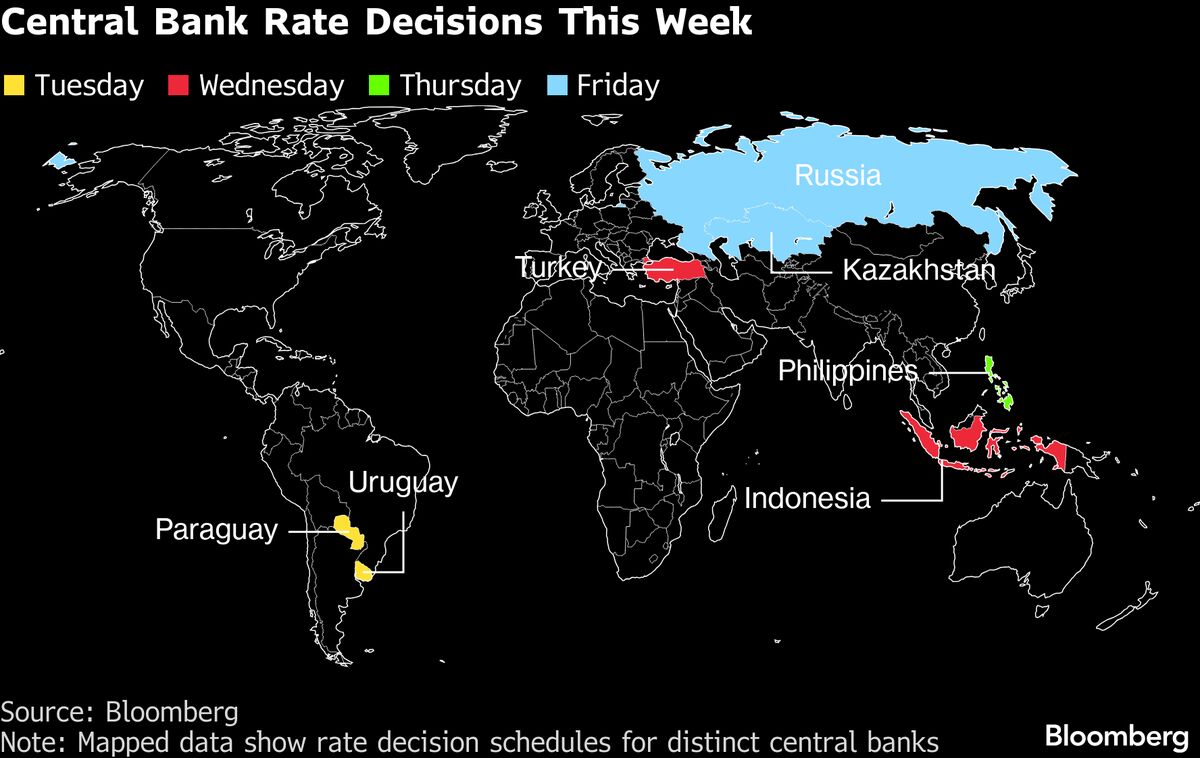
Central banks, already walking a tightrope in their efforts to curb inflation without stifling growth, face an unenviable task. Policymakers must navigate a complex landscape where geopolitical risks and economic instability are increasingly intertwined.
“The world is at a crossroads,” said Emily Zhang, director of the International Economic Policy Institute. “How governments and businesses respond to this crisis will shape the trajectory of the global economy for years to come.”
As the conflict enters its eighth week, the hope for a swift resolution remains elusive. For now, the global economy must brace itself for the unpredictable and far-reaching consequences of a crisis that shows no signs of abating. In this interconnected world, the reverberations of war echo far beyond the battlefield, leaving no nation untouched. Whether policymakers and business leaders can navigate these turbulent waters with foresight and resilience will determine the path to recovery.
The coming week’s surveys will not only highlight the economic fallout but also underscore the urgent need for diplomatic efforts to bring stability to a region—and a world—on edge. As the data unfolds, one thing is clear: the stakes could not be higher.
