



Moldova’s Oligarch Convicted in Landmark Fraud Case, Shaking Confidence in Post-Soviet Governance
By [Your Name]
The Dramatic Fall of a Political Titan
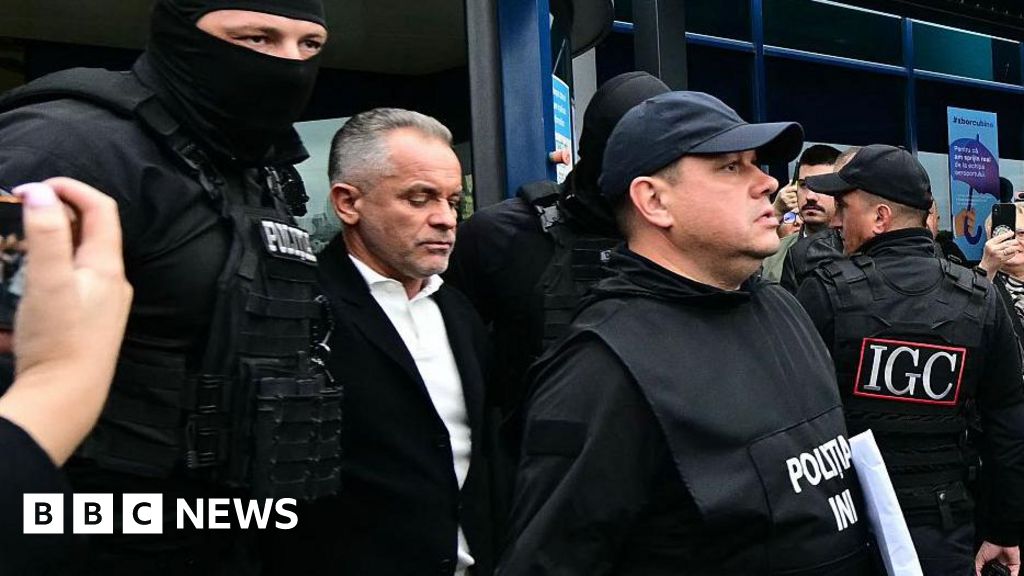
In a stunning verdict that has sent shockwaves through Moldova and beyond, Vlad Plahotniuc, once the country’s most powerful oligarch and a symbol of post-Soviet corruption, has been found guilty of orchestrating a fraud scheme that siphoned off approximately 12% of Moldova’s GDP. The ruling, delivered in absentia as Plahotniuc remains in exile, marks a pivotal moment in the Eastern European nation’s struggle to untangle itself from the grip of systemic corruption. For a country still grappling with the legacy of Soviet rule and the challenges of European integration, this case is more than a legal milestone—it is a litmus test for justice and accountability in a region often plagued by impunity.
The Scheme: A Billion-Dollar Heist
The fraud in question, known as the “Grand Theft of the Century” in Moldova, unfolded between 2012 and 2014, when Plahotniuc and his associates allegedly orchestrated the illegal withdrawal of $1 billion from three of the country’s largest banks. The funds, equivalent to roughly 12% of Moldova’s GDP, were funneled through a complex web of shell companies and offshore accounts, leaving the nation’s financial system in tatters. The scandal culminated in massive protests in 2015, as citizens took to the streets to demand accountability for the crippling economic crisis that followed.
Plahotniuc, who amassed his fortune through industries ranging from media to banking, leveraged his wealth to become a dominant political figure. As the leader of the Democratic Party of Moldova, he wielded significant influence over the country’s governance, enabling him to evade prosecution for years. His abrupt departure from Moldova in 2019, amid mounting pressure and accusations of political interference, left many wondering whether justice would ever be served.
Global Context: Corruption in Post-Soviet States
Moldova’s case is emblematic of a broader issue plaguing many post-Soviet states: the entrenchment of oligarchic systems that blur the lines between political power and economic control. Countries like Ukraine, Georgia, and Armenia have faced similar challenges, with powerful elites often exploiting weak institutions for personal gain. The European Union and international organizations such as the IMF have repeatedly underscored the need for judicial and economic reforms in the region as a prerequisite for closer integration and financial aid.
The Plahotniuc verdict comes at a critical juncture for Moldova, which gained EU candidate status in 2022. The ruling is seen as a litmus test for the country’s commitment to combating corruption and aligning with European standards of governance. However, critics argue that the absence of Plahotniuc from the courtroom raises questions about the effectiveness of the verdict. With the oligarch reportedly living in a luxurious villa abroad, the case also highlights the difficulties of prosecuting high-profile individuals who exploit international legal loopholes to evade justice.
Why It Matters: A Test for Moldova and Beyond
The conviction of Vlad Plahotniuc is more than a legal victory—it is a symbol of Moldova’s fraught journey toward democracy and transparency. For the Moldovan public, the verdict represents a glimmer of hope in a long-standing battle against corruption. However, it also underscores the challenges of dismantling entrenched power structures that have stifled economic growth and eroded public trust.
Globally, the case serves as a stark reminder of the corrosive effects of corruption on democratic institutions and economic stability. As Moldova seeks to strengthen its ties with the EU, the international community will be watching closely to see whether the country can translate this legal victory into sustained reform. The case also highlights the need for greater international cooperation in combating transnational corruption, particularly in cases where wealthy individuals exploit legal systems across borders.
A Turning Point, But Challenges Remain
While the verdict against Plahotniuc is a landmark moment for Moldova, it is far from the end of the story. The country’s journey toward transparency and accountability remains fraught with obstacles, from weak institutions to political resistance. Moreover, the absence of Plahotniuc from the courtroom raises questions about whether the ruling will have any real impact on his ability to continue wielding influence from abroad.
For Moldova’s citizens, the case is a reminder of the power of collective action. The 2015 protests, though met with repression at the time, played a crucial role in bringing the fraud to light and setting the stage for this verdict. As the country moves forward, the challenge will be to build on this momentum and ensure that similar abuses of power are prevented in the future.
Conclusion: A Beacon of Hope Amid Uncertainty
The conviction of Vlad Plahotniuc is a watershed moment for Moldova, a nation striving to shed its reputation as a haven for corruption and oligarchic control. It also serves as a cautionary tale for other post-Soviet states grappling with similar challenges. While the verdict is a step in the right direction, it underscores the long and arduous road ahead for Moldova and the region as a whole. As the global community watches, Moldova’s ability to turn this legal victory into lasting reform will determine not only its future but also its place in the broader struggle for justice and accountability in the 21st century.
For now, the case of Vlad Plahotniuc stands as both a triumph and a reminder: the fight against corruption is far from over, but the pursuit of justice remains a beacon of hope, however distant it may seem.
