


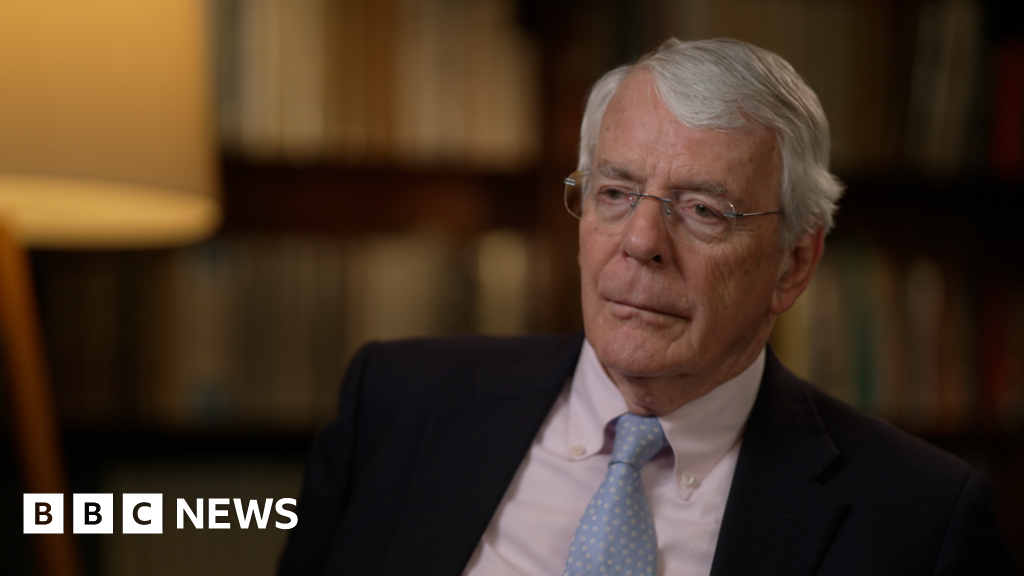

Former UK Prime Minister Criticizes Political Leaders for Failing Young People
LONDON – A former Conservative Prime Minister has launched a scathing critique of current political leaders, accusing them of failing to address long-term challenges that disproportionately affect young people. The remarks, delivered during a public appearance, underscore growing concerns over systemic issues such as housing affordability, climate change, and economic instability, which have left younger generations grappling with an uncertain future.
The former leader, who served during a period of significant political and economic upheaval, argued that short-termism and a lack of bold policy action have left young people disproportionately burdened. “We are failing to tackle the deep-rooted problems that will define the next generation’s lives,” they stated. “From the housing crisis to the climate emergency, political leaders are ducking the hard decisions, and it is young people who will pay the price.”
The critique comes amid rising frustration among younger voters, who feel increasingly disconnected from traditional political structures. Recent polls indicate that trust in government institutions is at a historic low among those under 30, with many citing a lack of meaningful action on issues that matter to them.
Housing Crisis at the Forefront
One of the most pressing issues highlighted by the former Prime Minister is the housing crisis, which has made homeownership an unattainable dream for millions of young people. Over the past decade, property prices in the UK have soared, outpacing wage growth and leaving many reliant on increasingly expensive rental markets.
“The failure to build enough affordable housing is nothing short of a betrayal,” the former leader said. “Young people are being priced out of the market, forced to live in precarious conditions, and denied the stability that previous generations took for granted.”
Efforts to address the crisis have been piecemeal at best, with successive governments falling short of ambitious housing targets. Critics argue that political leaders have prioritized short-term electoral gains over long-term solutions, leaving young people to bear the brunt of the problem.
Climate Crisis and Economic Uncertainty
The former Prime Minister also pointed to the climate crisis as a critical issue where political leaders have fallen short. Despite widespread public support for stronger environmental policies, governments have been slow to implement transformative measures, leaving young people to inherit a planet in peril.
“The climate crisis is not a distant threat—it is here, and it is now,” they said. “Yet we continue to see indecision and delay, as if future generations will somehow solve the problems we refuse to confront.”
Economic instability further compounds the challenges facing young people. The cost-of-living crisis, exacerbated by rising inflation and stagnant wages, has left many struggling to make ends meet. Meanwhile, the gig economy and precarious work arrangements have eroded job security, leaving younger workers vulnerable to economic shocks.
The former leader argued that political inaction on these issues risks alienating an entire generation. “If we continue to ignore the needs of young people, we risk losing their trust and their faith in democracy itself,” they warned.
Calls for Bold Leadership
The critique has reignited calls for bold, visionary leadership to address the systemic issues facing young people. Experts argue that tackling these challenges requires long-term planning and a willingness to make difficult decisions—qualities that have been in short supply in recent years.
“We need leaders who are willing to look beyond the next election cycle and focus on the future,” said one political analyst. “That means investing in affordable housing, accelerating the green transition, and creating economic opportunities for young people. Anything less is simply kicking the can down the road.”
The former Prime Minister’s remarks also highlight the growing generational divide in politics. While older voters often prioritize issues like healthcare and pensions, younger voters are increasingly focused on housing, climate change, and economic fairness. Bridging this divide will require a fundamental shift in how political leaders approach policymaking.
Future Implications
The failure to address these long-term challenges has far-reaching implications for society as a whole. If left unresolved, the housing crisis could lead to worsening inequality and social mobility, while the climate crisis threatens to destabilize economies and ecosystems. Economic insecurity, meanwhile, risks creating a “lost generation” of young people unable to thrive or contribute fully to society.
The former Prime Minister’s intervention serves as a stark reminder of the urgent need for action. “The time for excuses is over,” they said. “We owe it to young people to deliver the change they deserve.”
As the political landscape continues to evolve, the question remains: Will current leaders rise to the challenge, or will their inaction define a generation? For millions of young people, the answer could not be more consequential.
