



Global Markets Grapple with Geopolitical Uncertainty as Iran Conflict Sparks Portfolio Shifts
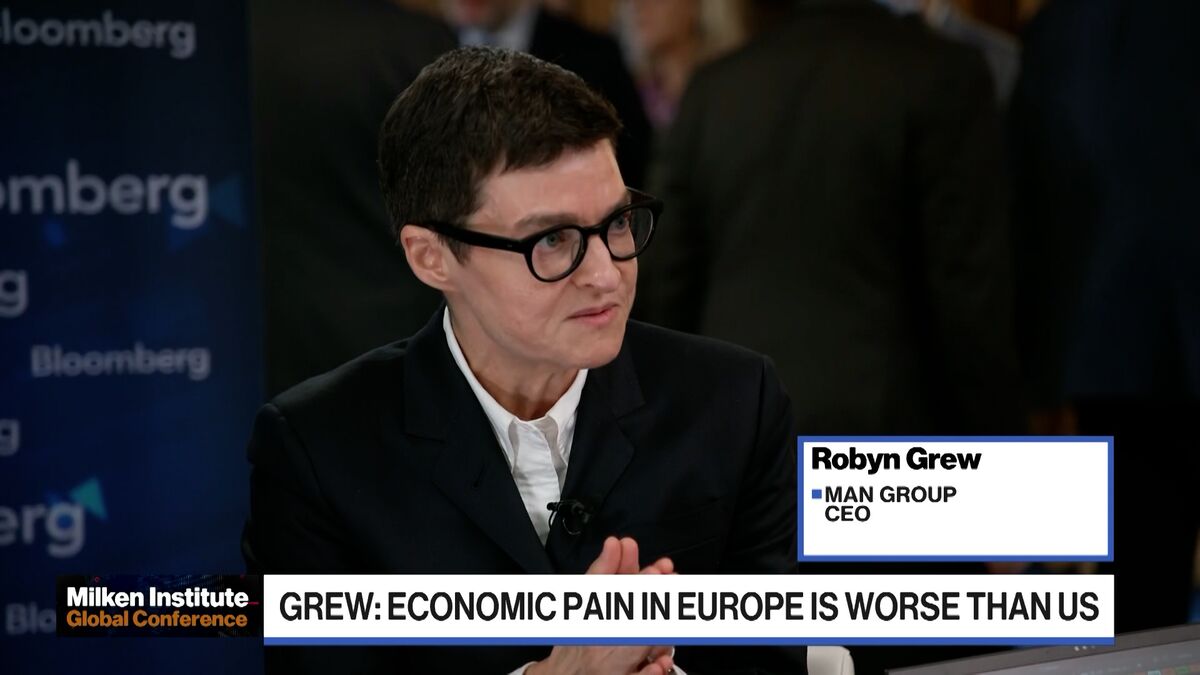
Beverly Hills, California — Amid escalating geopolitical tensions and the specter of a broader conflict in the Middle East, global financial markets are navigating uncharted waters. The ripple effects of the Iran crisis are reverberating across asset classes, prompting investors to rethink traditional strategies and pivot toward more diversified and resilient portfolios. At the Milken Institute Global Conference, Robyn Grew, CEO of Man Group, one of the world’s largest hedge fund managers, shed light on the evolving market dynamics and the critical need for adaptability in uncertain times.
In a candid discussion moderated by Bloomberg’s Katie Greifeld and Romaine Bostick, Grew emphasized the dual impact of the Iran conflict on both U.S. and European markets. Her insights come at a pivotal moment as investors globally confront the complex interplay of geopolitical risk, inflationary pressures, and tightening monetary policies. The conversation underscored a broader trend: the growing demand for portfolios that can withstand volatility and capitalize on emerging opportunities in a fragmented global economy.
Geopolitical Turmoil and Its Market Implications
The resurgence of geopolitical instability, particularly in the Middle East, has introduced a new layer of complexity for investors. The Iran conflict, with its potential to disrupt global energy supplies and escalate regional tensions, has sent shockwaves through commodity markets. Oil prices have surged, stoking fears of inflationary pressures at a time when central banks are already grappling with the aftermath of pandemic-era stimulus measures.
Grew noted that while the immediate impact has been most pronounced in energy markets, broader repercussions are being felt across equities, fixed income, and currency markets. “Geopolitical events like these act as a reminder of the interconnectedness of global markets,” she said. “Investors are increasingly recognizing that traditional models may not suffice in an era defined by uncertainty.”
The U.S. Federal Reserve and the European Central Bank are walking a tightrope as they attempt to balance inflation control with the need to avoid exacerbating economic slowdowns. Higher energy prices driven by geopolitical tensions complicate this delicate balancing act, potentially delaying rate cuts and prolonging market volatility.
The Shift Toward Diversified and Resilient Portfolios
Against this backdrop, Grew highlighted a notable shift in investor behavior. A growing number of market participants are moving away from concentrated bets and embracing diversified strategies designed to mitigate risk. This trend is particularly evident in the hedge fund industry, where alternative assets and multi-strategy approaches are gaining traction.
“Investors are seeking resilience,” Grew explained. “That means diversifying across asset classes, geographies, and investment styles to ensure portfolios can weather shocks and capitalize on opportunities.”
This shift is also reflected in the rising interest in thematic investing, where strategies are tailored to long-term trends such as energy transition, technological innovation, and demographic shifts. Grew pointed to the increasing importance of ESG (Environmental, Social, and Governance) considerations, which are now seen as both a risk management tool and a source of alpha.
Regional Dynamics: U.S. vs. Europe
The impact of the Iran crisis has not been uniform across regions. In the U.S., markets have shown relative resilience, buoyed by robust domestic economic data and the dominance of tech giants. However, Grew cautioned that complacency could be costly. “The U.S. is not immune to global shocks,” she said. “Investors must remain vigilant, especially as geopolitical risks intersect with domestic challenges like political polarization and structural deficits.”
In Europe, the situation is more precarious. The region’s heavy reliance on energy imports makes it particularly vulnerable to supply disruptions. Already grappling with sluggish growth and high inflation, European economies face heightened risks from prolonged geopolitical instability. Grew emphasized that this underscores the need for investors to adopt a nuanced, region-specific approach.
The Role of Hedge Funds in Navigating Uncertainty
As market participants seek to navigate this complex landscape, hedge funds are emerging as a key player. With their ability to employ a wide range of strategies—from long-short equities to macro trading—hedge funds are uniquely positioned to adapt to changing conditions. Grew pointed to the growing demand for alternative investments, which offer the potential for uncorrelated returns and downside protection.
“In an environment where traditional asset classes are increasingly volatile, hedge funds can provide a critical hedge against risk,” she said. “But success requires agility, deep research, and a disciplined approach.”
Looking Ahead: Challenges and Opportunities
The road ahead is fraught with challenges. Geopolitical tensions show no signs of abating, and the global economy remains in a state of flux. Yet, as Grew noted, uncertainty also breeds opportunity. Investors who can identify mispriced assets, anticipate structural shifts, and build robust portfolios will be well-positioned to thrive.
Technology is poised to play an increasingly central role in this process. Advances in data analytics, artificial intelligence, and machine learning are transforming the investment landscape, enabling deeper insights and more informed decision-making. Grew emphasized the importance of leveraging these tools to enhance risk management and uncover hidden value.
Conclusion: A Call for Pragmatism and Innovation
As the Milken Institute Global Conference underscored, the current moment demands both pragmatism and innovation. Investors must navigate a complex array of risks while remaining attuned to emerging opportunities. The lessons from the Iran crisis and its market impacts are clear: resilience, diversification, and adaptability are no longer optional—they are essential.
In Grew’s words, “The only certainty is uncertainty.” For global markets, the challenge lies in embracing this reality while charting a path forward that balances caution with ambition. Whether the current geopolitical turmoil will subside or intensify remains unclear, but one thing is certain: the investment landscape will continue to evolve, requiring flexibility and foresight from all participants.
