



Redistricting Battles Intensify Across the U.S. as Supreme Court Decisions and State-Level Conflicts Spark Nationwide Debate
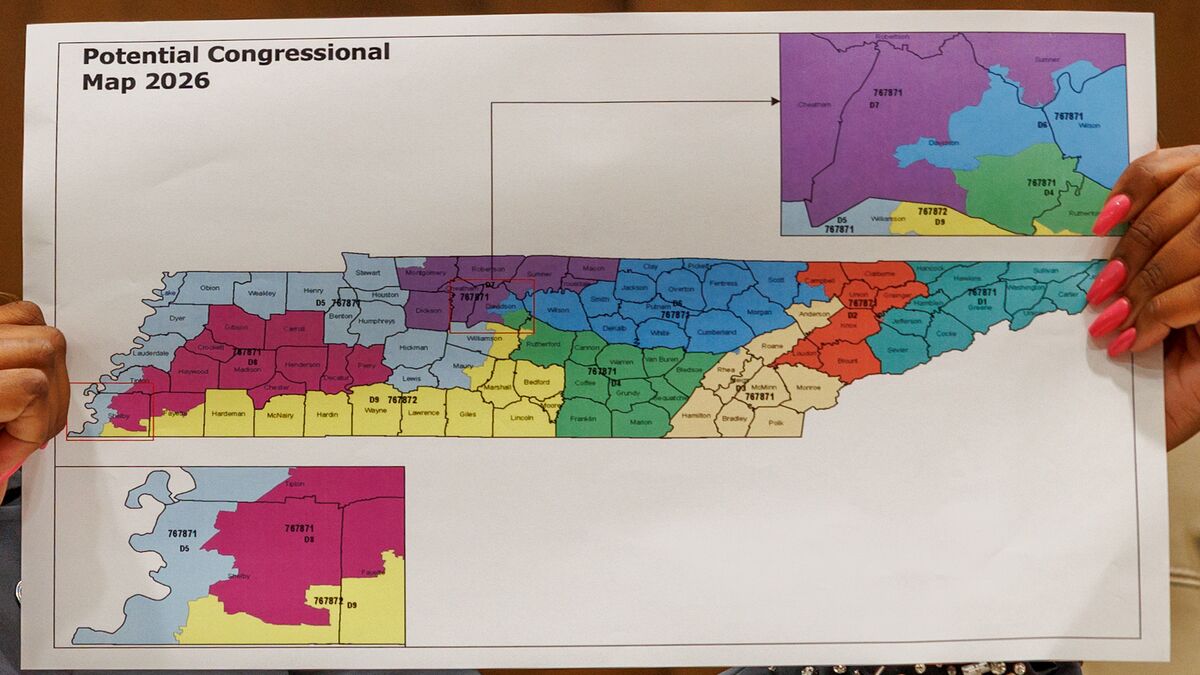
WASHINGTON, D.C. — The United States is once again embroiled in a heated battle over electoral redistricting, with recent Supreme Court rulings and state-level court decisions reigniting long-standing debates about fairness, representation, and the future of American democracy. At the heart of the controversy is the redistricting process, which determines the boundaries of congressional and state legislative districts and has profound implications for the balance of political power. As states grapple with the fallout of these rulings, legal experts, activists, and lawmakers are warning that the outcomes could shape the nation’s electoral landscape for decades to come.
The issue has gained renewed urgency following a series of landmark decisions by the U.S. Supreme Court, including its interpretation of the Voting Rights Act of 1965, a cornerstone of civil rights legislation designed to protect minority voters from discriminatory practices. In recent years, the Court has taken a more restrictive view of the Act, limiting its scope and leaving states with greater leeway in shaping district boundaries. Simultaneously, state courts, such as the Virginia Supreme Court, have issued rulings that further complicate the redistricting process, often pitting political parties against each other in a high-stakes game of legal and political chess.
The Supreme Court’s Role: A Shifting Legal Landscape
The U.S. Supreme Court’s approach to redistricting has evolved significantly over the past decade, with conservative justices increasingly favoring a narrow interpretation of federal oversight. In 2013, the Court’s decision in Shelby County v. Holder struck down a key provision of the Voting Rights Act that required states with a history of racial discrimination to seek federal approval before changing voting laws or district maps. This ruling effectively weakened the Act’s enforcement mechanisms and opened the door for states to implement changes without federal intervention.
More recently, the Court’s 2019 decision in Rucho v. Common Cause further altered the redistricting landscape by declaring that federal courts have no authority to adjudicate claims of partisan gerrymandering—the practice of drawing district lines to favor one political party over another. This decision left state constitutions and state courts as the primary avenues for challenging unfair district maps.
“The Supreme Court has effectively handed redistricting decisions back to the states,” said Tim O’Brien, Senior Executive Editor of Bloomberg Opinion, in a recent discussion on Bloomberg This Weekend. “This has created a patchwork of approaches across the country, with some states prioritizing fairness and others exploiting the system for partisan gain.”
Virginia’s Redistricting Saga: A Case Study in Conflict
Virginia has emerged as a focal point in the redistricting debate, with the state Supreme Court playing a pivotal role in shaping its electoral maps. Earlier this year, the court approved new congressional and legislative district boundaries after a bipartisan redistricting commission failed to reach an agreement. The court-appointed special masters tasked with drawing the maps emphasized fairness and adherence to state and federal laws, but their decisions have been met with mixed reactions.
Advocates for fair representation have praised the maps for reducing partisan manipulation and ensuring greater electoral competitiveness. However, critics argue that the process lacked transparency and that the court’s intervention sets a worrying precedent for judicial overreach in redistricting.
“Virginia’s experience highlights the challenges of achieving consensus in a deeply polarized political environment,” said Christina Ruffini, a correspondent on Bloomberg This Weekend. “When bipartisan commissions fail, courts are often left to step in, but this raises questions about who should ultimately have the final say.”
The Broader Implications: Democracy at a Crossroads
The redistricting battles unfolding across the U.S. are not merely technical disputes over boundary lines; they are existential struggles over the meaning of democracy itself. Gerrymandering—whether partisan or racial—has been used for centuries to entrench power and marginalize certain groups. Today, technological advancements have made it easier than ever for political actors to manipulate district lines with surgical precision, further complicating efforts to ensure fair representation.
Minority communities, in particular, have been disproportionately affected by redistricting practices. Critics argue that the dilution of minority voting power undermines the principles of equality and justice enshrined in the Voting Rights Act. Proponents of stricter redistricting rules, such as proportional representation and independent redistricting commissions, say these measures are essential to safeguarding democracy.
“Redistricting is about more than just geography; it’s about power, voice, and representation,” said David Gura, host of Bloomberg This Weekend. “The decisions being made today will have profound consequences for generations to come.”
Looking Ahead: A Nation Divided
As the midterm elections approach, redistricting remains a contentious issue in key battleground states such as Texas, Georgia, and North Carolina, where legal challenges are likely to continue shaping the electoral landscape. Meanwhile, Congress has debated legislation to reform the redistricting process, including the Fair Representation Act, which proposes the use of ranked-choice voting and multi-member districts to promote fairness and inclusivity.
However, with deep partisan divisions in Washington, the prospects for federal redistricting reform appear slim. This leaves states and courts to navigate the complexities of redistricting on their own, often with conflicting priorities and outcomes.
Experts warn that without meaningful reforms, the U.S. risks further eroding public trust in its democratic institutions. “Redistricting is a litmus test for the health of our democracy,” said O’Brien. “If we fail to address these challenges, we risk perpetuating a system that prioritizes partisan interests over the will of the people.”
Closing Thoughts
The redistricting battles unfolding across the United States underscore the fragile nature of democracy in an era of heightened political polarization. As courts, lawmakers, and activists grapple with these challenges, the nation stands at a crossroads, grappling with fundamental questions about fairness, representation, and the future of its electoral system. Whether these disputes lead to greater equity or deepen existing divides remains to be seen, but one thing is clear: the stakes could not be higher.
