



Global Markets Navigate Uncertainty Amid Mixed Signals: Investors Brace for Volatility
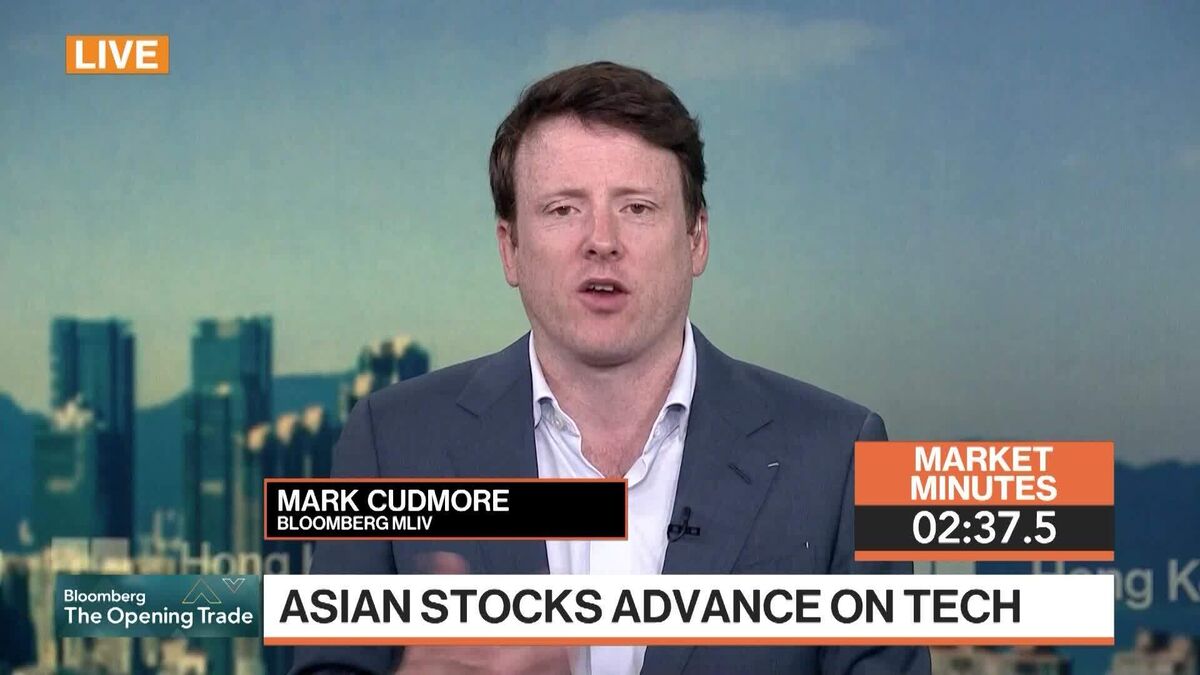
In a world grappling with geopolitical tensions, economic fragmentation, and shifting monetary policies, financial markets remain on edge, navigating a complex web of signals that defy easy interpretation. As investors brace for potential volatility, Bloomberg’s flagship morning program, The Opening Trade, delivered critical insights into today’s market themes, guiding analysts and traders through the labyrinth of economic data and geopolitical developments. Hosted by Anna Edwards, Guy Johnson, Tom Mackenzie, and Mark Cudmore, the show dissected the key drivers shaping global markets, from central bank decisions to corporate earnings and geopolitical flashpoints.
The backdrop to this week’s market activity is a global economy in flux. Inflationary pressures, though easing in some regions, remain stubbornly high in others, forcing central banks to maintain a delicate balance between curbing price growth and avoiding economic stagnation. The U.S. Federal Reserve’s aggressive rate-hiking cycle, aimed at taming inflation, has sent ripples across global markets, with emerging economies feeling the strain of a stronger dollar and tighter financial conditions. Meanwhile, the European Central Bank faces its own challenges as stagflation fears loom over the eurozone, while the Bank of England grapples with persistent inflation and sluggish growth. In Asia, China’s uneven post-pandemic recovery continues to weigh on commodity markets and global trade, adding another layer of uncertainty.
Central Banks in Focus: Decoding Monetary Policy Signals
One of the central themes discussed on The Opening Trade was the evolving stance of major central banks. The Federal Reserve’s recent decision to pause rate hikes in June fueled speculation that the U.S. tightening cycle may be nearing its peak. However, policymakers have emphasized that further hikes are not off the table, keeping markets on tenterhooks. “The Fed’s messaging has been deliberately opaque, reflecting the uncertainty surrounding the inflation trajectory,” noted Mark Cudmore, Bloomberg’s macro strategist. “Investors are parsing every word from policymakers for clues on the path forward.”
In Europe, the ECB remains committed to its hawkish stance, with President Christine Lagarde signaling that rates will stay high for an extended period. This divergence in monetary policy between the U.S. and Europe has fueled currency volatility, with the euro-dollar exchange rate swinging sharply in recent weeks. “The eurozone is caught in a tricky spot,” observed Anna Edwards. “While inflation is still above target, the economy is barely growing, leaving policymakers with limited room to maneuver.”
The Bank of Japan, meanwhile, continues to buck the global trend of monetary tightening, maintaining its ultra-loose policy stance. This divergence has sent the yen to multi-decade lows against the dollar, raising concerns about potential intervention by Japanese authorities. “The yen’s weakness is a double-edged sword,” remarked Tom Mackenzie. “While it benefits exporters, it also exacerbates inflationary pressures, complicating the BOJ’s policy calculus.”
Earnings Season: Mixed Results Fuel Market Jitters
Corporate earnings have also been a key focus for investors, with mixed results adding to market uncertainty. While some sectors, particularly technology, have delivered robust results, others have disappointed, reflecting the uneven impact of higher interest rates and shifting consumer demand. “The divergence in earnings performance highlights the challenges facing businesses in this environment,” said Guy Johnson. “Companies that can adapt to changing conditions are faring better, but others are struggling to maintain margins.”
The tech sector, buoyed by the artificial intelligence boom, has emerged as a bright spot, with companies like NVIDIA and Microsoft posting strong results. However, concerns remain about the sustainability of this rally, particularly as valuations reach historic highs. “The AI narrative has driven significant gains in the tech sector, but investors are becoming increasingly cautious,” noted Cudmore. “Valuations are stretched, and any misstep could trigger a sharp correction.”
On the flip side, sectors such as consumer discretionary and industrials have faced headwinds, as higher borrowing costs and softer demand weigh on profitability. Retailers, in particular, have struggled to pass on rising costs to consumers, leading to margin compression. “The consumer is under pressure, and that’s showing up in the earnings reports,” said Edwards. “Companies are having to navigate a tricky environment where demand is softening, but costs remain elevated.”
Geopolitical Tensions: A Persistent Risk Factor
Beyond economic and corporate factors, geopolitical tensions continue to cast a shadow over markets. The ongoing war in Ukraine, U.S.-China trade frictions, and the recent escalation of Middle East conflicts have heightened the risk of disruptions to global supply chains and commodity markets. “Geopolitics remains a wildcard for investors,” said Mackenzie. “While markets have become somewhat desensitized to these risks, the potential for escalation is always a concern.”
The U.S.-China relationship, in particular, remains a focal point, with tensions over trade, technology, and Taiwan showing no signs of abating. Recent moves by the Biden administration to restrict investment in Chinese tech companies have further strained ties, raising the specter of retaliation from Beijing. “The U.S.-China dynamic is a key risk for markets,” noted Johnson. “Any escalation could have far-reaching implications for global trade and investment flows.”
In the Middle East, the recent uptick in violence has raised concerns about potential disruptions to oil supplies, adding to volatility in energy markets. While OPEC+ has sought to stabilize prices through production cuts, geopolitical risks remain a key driver of oil price movements. “Energy markets are particularly vulnerable to geopolitical shocks,” said Cudmore. “Any major disruption could quickly send prices higher, complicating the inflation outlook.”
Investor Sentiment: Navigating Uncertainty
Against this backdrop, investor sentiment remains fragile, with many adopting a cautious approach. The CBOE Volatility Index (VIX), a key gauge of market fear, has risen in recent weeks, reflecting growing unease among traders. “Investors are clearly on edge,” observed Edwards. “The combination of economic uncertainty, geopolitical risks, and stretched valuations has made for a challenging environment.”
In response, many investors are seeking refuge in safe-haven assets such as gold and government bonds, while others are diversifying into alternative investments like private equity and real estate. “The search for yield has driven investors to explore new avenues,” said Johnson. “But even these strategies come with risks, particularly as the economic outlook remains uncertain.”
Looking ahead, the trajectory of global markets will hinge on several key factors, including the path of inflation, central bank policies, and geopolitical developments. While some analysts remain optimistic about the prospects for a soft landing, others warn of heightened risks and potential turbulence. “The next few months will be critical,” concluded Cudmore. “Markets are at a crossroads, and the stakes are high.”
As always, the only certainty in financial markets is uncertainty. Investors, armed with insights from programs like The Opening Trade, must navigate this complex landscape with caution and flexibility, ready to adapt to an ever-evolving global environment.
