


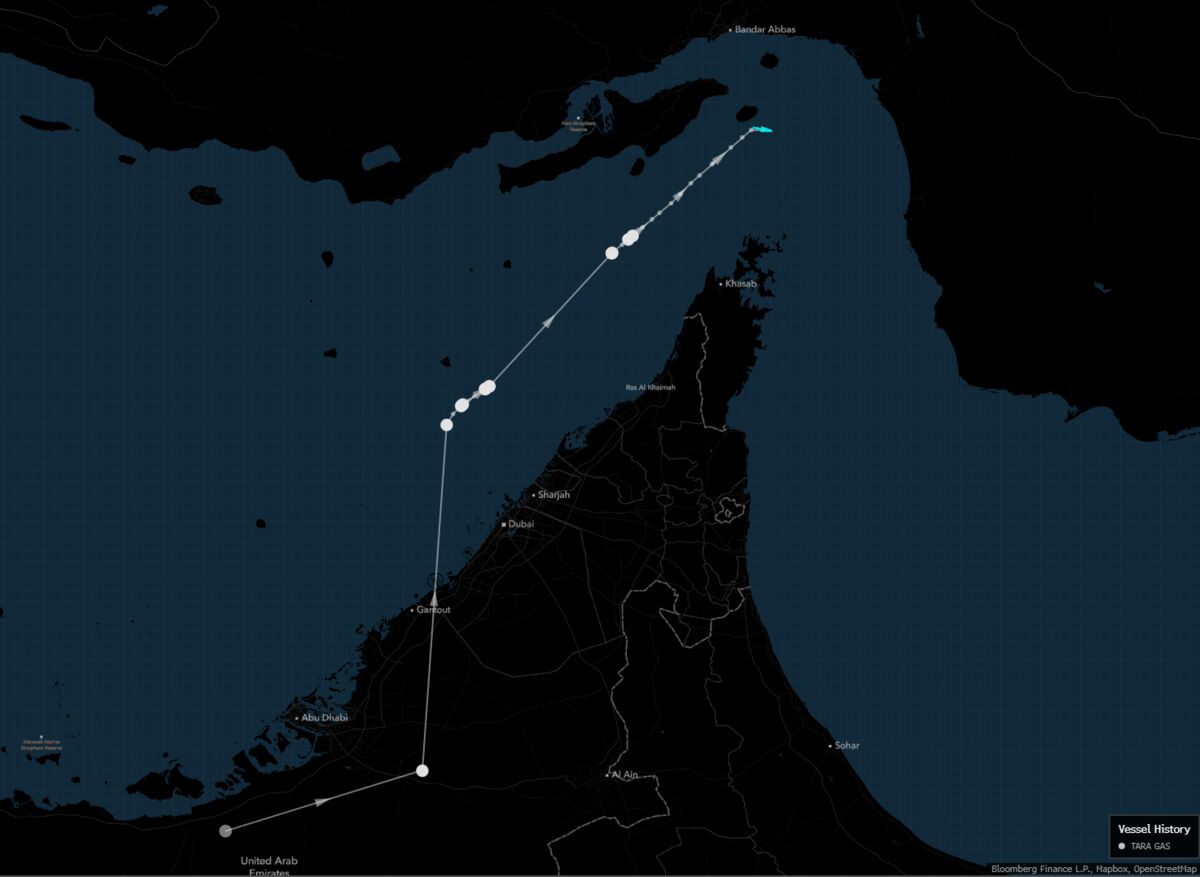

Indian-Owned Gas Carrier Navigates Strait of Hormuz Amid Rising Tensions
The Strait of Hormuz, a narrow passageway that serves as the lifeline for global oil and gas shipments, has once again become the focal point of international scrutiny. This time, an Indian-owned liquefied petroleum gas (LPG) carrier, historically linked to Iranian cargoes, is making its way through the strategically vital waterway. According to ship-tracking data, the vessel is actively broadcasting its Indian ownership and crew, a move interpreted by analysts as an attempt to avoid potential complications in a region fraught with geopolitical tensions.
The vessel’s transit comes at a delicate moment for global shipping and energy markets. The Strait of Hormuz, which connects the Persian Gulf to the Gulf of Oman and beyond, is a critical artery for the transport of crude oil and liquefied natural gas (LNG). Accounting for approximately one-fifth of the world’s oil supply, the strait has long been a flashpoint for conflicts involving Iran, the United States, and their respective allies. Recent months have seen escalating tensions between Tehran and Western powers, particularly over Iran’s nuclear program and its alleged support for regional militia groups.
A History of Iranian Cargoes and Potential Implications
The LPG carrier in question has a documented history of transporting Iranian cargoes, according to maritime intelligence sources. While the ship’s current cargo and destination remain undisclosed, its past associations with Iran have raised eyebrows among industry observers. Iran, a major producer of LPG, has faced stringent sanctions from the U.S. and European Union, which have significantly limited its ability to export energy products. Despite these restrictions, Tehran has reportedly employed various tactics, including the use of third-party vessels and shadowy shipping networks, to circumvent sanctions and maintain its revenue streams.
The vessel’s declaration of Indian ownership and crew appears to be a strategic maneuver to mitigate risks. India, a key importer of Iranian oil and gas in the past, has maintained a nuanced relationship with Tehran. While New Delhi has scaled back its energy imports from Iran due to U.S. sanctions, it has continued to advocate for diplomacy and regional stability. By emphasizing its Indian affiliation, the LPG carrier may be seeking to avoid the heightened scrutiny faced by vessels linked to Iran in recent years.
The Strait of Hormuz: A Geopolitical Powder Keg
The Strait of Hormuz has been the site of numerous incidents in recent years, reflecting its status as a geopolitical powder keg. In 2019, a series of attacks on tankers in the region, attributed by the U.S. to Iran, led to a sharp rise in insurance costs for ships passing through the area. Tehran has repeatedly threatened to block the strait in response to perceived aggression, a move that would have catastrophic consequences for global energy markets.
The situation has been further complicated by the presence of foreign naval forces, including those of the U.S. and its allies, tasked with ensuring the safe passage of commercial vessels. Meanwhile, Iran’s Islamic Revolutionary Guard Corps (IRGC) has increased its maritime patrols, occasionally seizing foreign ships in what it claims are lawful actions. Against this backdrop, the transit of any vessel with ties to Iran, however indirect, is closely monitored by regional and international stakeholders.
India’s Role in the Broader Context
India’s involvement in this unfolding situation highlights its complex position in the global energy landscape. As one of the world’s fastest-growing economies, India is heavily reliant on imported energy to fuel its development. Prior to the imposition of U.S. sanctions, Iran was a significant supplier of oil and gas to India, and the two countries share historical and cultural ties. However, New Delhi has also sought to balance its relationships with Washington, particularly given the latter’s strategic importance in countering China’s influence in the Indo-Pacific region.
The LPG carrier’s Indian ownership underscores the intricate web of global trade and diplomacy. While India has reduced its direct imports from Iran, it remains a key player in the maritime transport of energy products. The vessel’s transit through the Strait of Hormuz serves as a reminder of the interconnected nature of global supply chains and the challenges faced by nations navigating competing geopolitical interests.
Broader Implications for Global Shipping and Security
The movement of this LPG carrier through the Strait of Hormuz also raises broader questions about the security and stability of global shipping routes. The maritime industry has long relied on the principle of freedom of navigation, ensuring that vessels can transit international waters without undue interference. However, the increasing militarization of strategic waterways, coupled with the use of energy exports as a tool of geopolitical leverage, threatens to undermine this principle.
For shipping companies, navigating these complexities requires a delicate balancing act. Vessels must comply with international laws and sanctions while mitigating risks associated with regional conflicts. The decision by the Indian-owned carrier to publicly declare its ownership and crew nationality reflects this cautious approach, but it also highlights the broader challenges faced by the industry in an increasingly volatile world.
Conclusion: A Symbol of Global Interdependence
As the Indian-owned LPG carrier moves through the Strait of Hormuz, its journey serves as a microcosm of the broader dynamics shaping global energy markets and geopolitics. The vessel’s transit underscores the interconnectedness of nations, the fragility of critical trade routes, and the ongoing tensions that define the region.
While the immediate focus is on the ship’s passage and its potential implications, the broader narrative is one of interdependence and the need for diplomacy. The Strait of Hormuz remains a vital artery for the world’s energy supply, and its stability is a shared responsibility. As global powers grapple with competing interests, the delicate balance between security and commerce continues to hang in the balance.
