


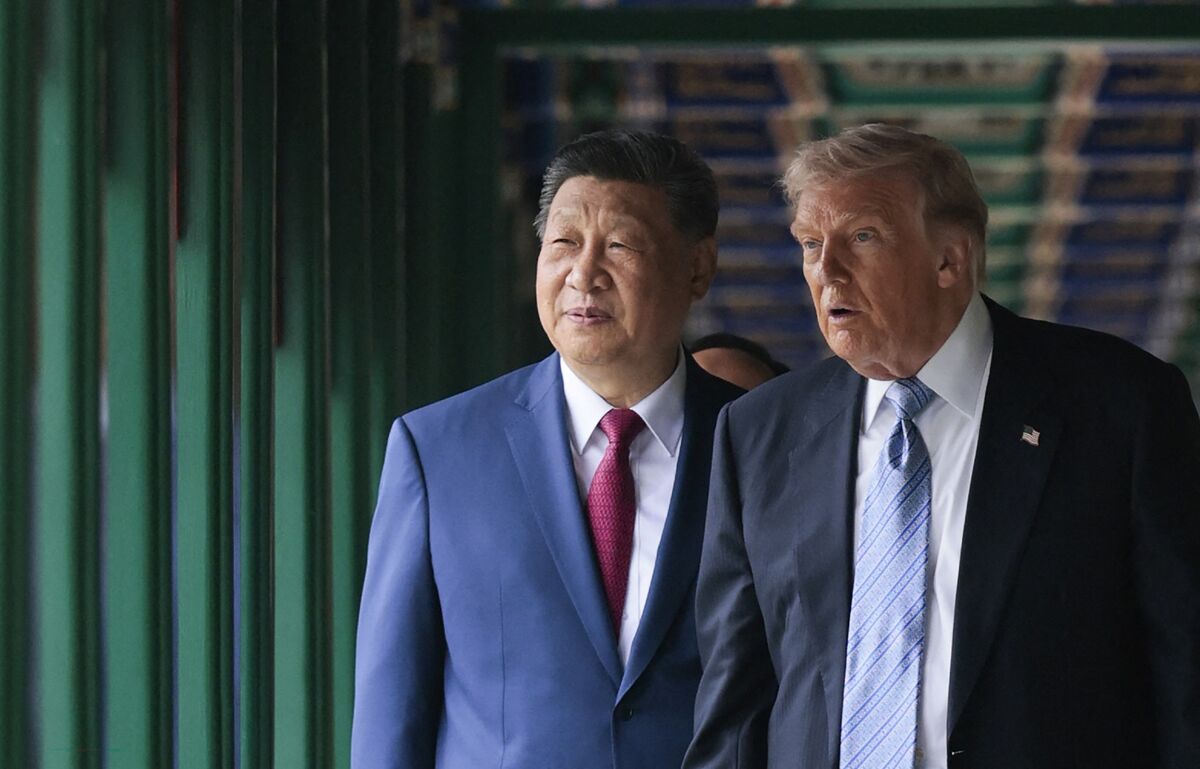

Xi-Trump Summit Fails to Move Markets as Trade Stalemate Persists
Markets Unmoved by High-Profile Meeting as US-China Tensions Remain Unresolved
The much-anticipated meeting between Chinese President Xi Jinping and former U.S. President Donald Trump concluded without major breakthroughs, leaving global markets unfazed. Chinese stocks paused their recent rally, while the yuan held steady—signaling investor skepticism that the summit would alter the long-standing economic standoff between the world’s two largest economies.
The encounter, closely watched by traders and policymakers alike, followed a familiar script: diplomatic pleasantries, vague commitments to cooperation, and no substantive progress on core disputes. With neither side willing to concede ground on tariffs, technology restrictions, or geopolitical rivalries, financial markets shrugged off the event as little more than political theater.
A Meeting of Symbolism Over Substance
Held against the backdrop of escalating U.S.-China tensions—from trade wars to semiconductor bans—the summit was seen as a litmus test for future relations. Yet despite the high stakes, discussions yielded no concrete agreements, reinforcing the perception that both nations remain entrenched in their positions.
Analysts had hoped for even minor concessions, such as a rollback of Trump-era tariffs or Chinese pledges to ease market access for U.S. firms. Instead, the talks ended with boilerplate rhetoric about “mutual respect” and “constructive dialogue,” leaving businesses and investors with no clearer path forward.
“The summit was more about optics than outcomes,” said Lin Wei, a Shanghai-based strategist at Zhonghai Securities. “Markets were braced for disappointment, and that’s exactly what they got.”
Investors Stick to the Status Quo
China’s CSI 300 index, which had climbed in the lead-up to the meeting, dipped slightly as traders digested the lack of progress. The offshore yuan traded flat, reflecting subdued expectations. Meanwhile, U.S. stock futures showed little reaction, underscoring Wall Street’s tempered hopes for a breakthrough.
The muted response suggests investors have grown accustomed to the prolonged stalemate. Since 2018, when Trump first imposed sweeping tariffs on Chinese goods, markets have weathered repeated cycles of optimism and letdown. With President Joe Biden maintaining many of his predecessor’s policies, businesses have adjusted to a new normal of fractured supply chains and export controls.
“Unless there’s a major de-escalation, markets will continue pricing in persistent friction,” noted Rachel Li, an economist at Standard Chartered. “This summit didn’t change the calculus.”
Why Neither Side Can Afford to Back Down
The deadlock stems from fundamental disagreements that neither Beijing nor Washington is willing to compromise on. China views U.S. trade restrictions as an attempt to stifle its rise, while American officials accuse Beijing of unfair subsidies, intellectual property theft, and military aggression in the South China Sea.
For Xi, conceding to U.S. demands could be seen as a domestic weakness ahead of key political gatherings. Conversely, U.S. leaders—regardless of party—face pressure to appear tough on China, particularly with voters increasingly wary of Beijing’s influence.
“The political cost of backing down is simply too high for both sides,” said Michael Harris, a geopolitical risk analyst at Eurasia Group. “That’s why we keep seeing these performative summits with little real action.”
What Comes Next?
With no major policy shifts emerging from the meeting, attention now turns to smaller, technical negotiations—such as discussions over agricultural purchases or limited tariff exemptions. However, few expect a comprehensive trade deal anytime soon.
Long-term investors are increasingly hedging against further disruptions, diversifying supply chains away from China and into Southeast Asia and India. Meanwhile, Chinese firms are doubling down on self-sufficiency in critical sectors like semiconductors and renewable energy.
For now, the world’s most consequential economic relationship remains stuck in a holding pattern—one that neither diplomacy nor markets seem able to break. Until tangible compromises emerge, the stalemate will endure, leaving businesses and economies to navigate an uneasy truce.
