


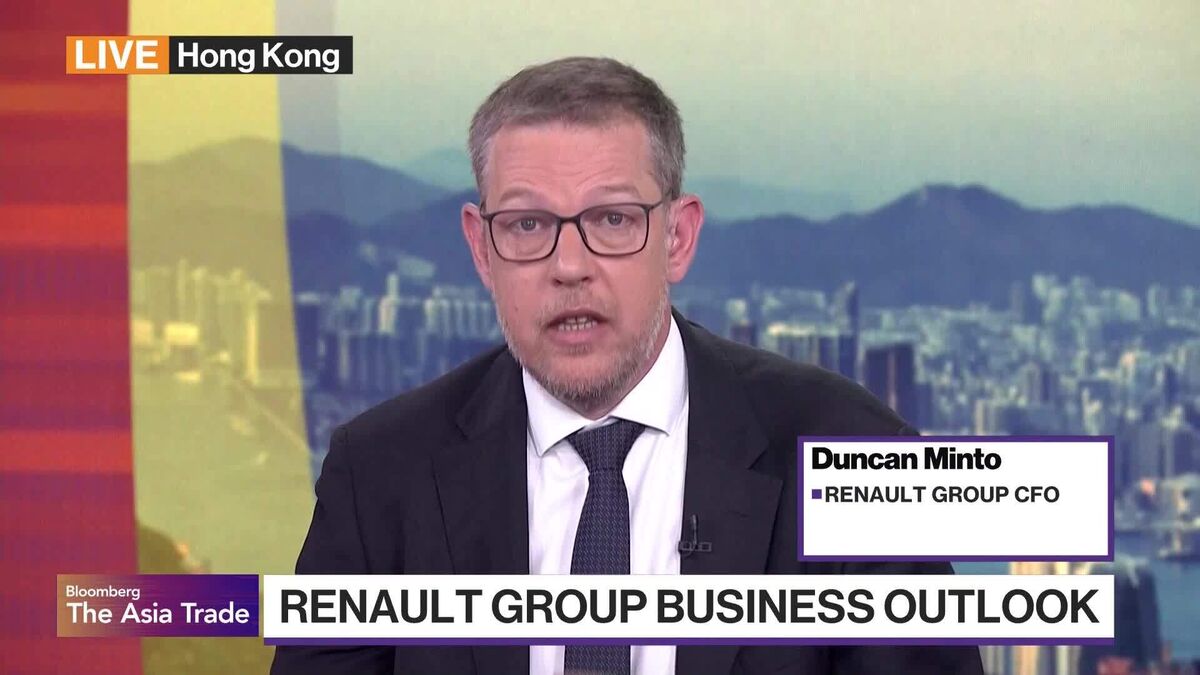

Renault CFO Outlines Bold Electrification Strategy Amid Global Auto Industry Shifts
Hong Kong, [Date] – As the automotive industry accelerates toward an electric future, Renault Group’s Chief Financial Officer, Duncan Minto, has laid out an ambitious roadmap for the French automaker’s transition, emphasizing innovation, strategic partnerships, and financial resilience. Speaking exclusively to Bloomberg: The Asia Trade on the sidelines of the BNP Paribas Global Electric Vehicle (EV) and Mobility Conference in Hong Kong, Minto detailed Renault’s plans to navigate intensifying competition, supply chain challenges, and shifting consumer demands in the fast-evolving EV landscape.
A Pivotal Moment for Renault
Renault, a storied name in European automaking, finds itself at a critical juncture. Once a dominant force in combustion-engine vehicles, the company is now aggressively repositioning itself as a leader in electrification—a move underscored by its recent restructuring and bold financial targets. Minto’s remarks in Hong Kong come at a time when traditional automakers face mounting pressure from Tesla, Chinese EV manufacturers, and regulatory deadlines for phasing out fossil-fuel vehicles.
“The transition to electric mobility is not just an environmental imperative—it’s a business necessity,” Minto told Bloomberg’s Shery Ahn. “Renault is committed to leading this shift while maintaining profitability and delivering value to stakeholders.”
Strategic Priorities: Electrification and Partnerships
Central to Renault’s strategy is its Renaulution plan, a multi-year blueprint unveiled in 2021 to streamline operations, reduce costs, and focus on high-growth segments like EVs and software-defined vehicles. Minto highlighted several key initiatives:
-
Expanding the EV Portfolio – Renault aims to launch 10 new electric models by 2025, including the highly anticipated Renault 5 EV—a modern reinterpretation of its iconic 1970s predecessor. The company is betting on nostalgia combined with cutting-edge technology to attract younger, eco-conscious buyers.
-
Battery and Supply Chain Investments – To reduce reliance on external suppliers, Renault is investing heavily in battery technology through partnerships with startups and established firms. Minto emphasized the importance of securing raw materials, particularly lithium, amid geopolitical tensions and soaring demand.
-
Alliances in Asia – Recognizing China’s dominance in EV production, Renault is deepening collaborations with Asian partners. Minto hinted at potential joint ventures with Chinese battery manufacturers and tech firms to enhance competitiveness in software and autonomous driving.
Financial Resilience in a Volatile Market
Despite macroeconomic headwinds—including inflation, rising interest rates, and semiconductor shortages—Minto expressed confidence in Renault’s financial health. The automaker reported stronger-than-expected earnings in 2023, driven by cost-cutting measures and higher-margin vehicle sales.
“We’ve taken tough decisions to optimize our operations, from reducing fixed costs to exiting unprofitable markets,” Minto said. “Our focus now is on sustainable growth, not just volume.”
Analysts have praised Renault’s disciplined approach but caution that challenges remain. “Renault’s turnaround is impressive, but the EV race is far from won,” said [Industry Expert Name], an auto analyst at [Research Firm]. “They need to execute flawlessly on product launches and scale up production without delays.”
The Broader EV Landscape: Competition and Regulation
Renault’s strategy unfolds against a backdrop of fierce competition. Tesla continues to dominate the premium EV segment, while Chinese brands like BYD and NIO are expanding aggressively into Europe. Meanwhile, legacy rivals such as Volkswagen and Stellantis are pouring billions into electrification.
Regulatory pressures add another layer of complexity. The European Union’s 2035 ban on new combustion-engine cars has forced automakers to accelerate their transition plans. Minto acknowledged the challenges but framed them as opportunities. “Regulation is a catalyst for innovation,” he said. “Renault has the engineering expertise and agility to adapt faster than many expect.”
The Road Ahead
As the Hong Kong conference concluded, Minto’s message was clear: Renault is betting big on electrification, but success will depend on execution, partnerships, and financial prudence. The automaker’s ability to balance innovation with profitability will be closely watched by investors and industry observers alike.
For now, Renault’s leadership remains optimistic. “The auto industry is undergoing its biggest transformation in a century,” Minto said. “We intend to be at the forefront—not just as survivors, but as pioneers.”
With electrification reshaping the global automotive landscape, Renault’s journey will serve as a litmus test for whether traditional automakers can reinvent themselves in the age of electric mobility. The road ahead is uncertain, but one thing is clear: the race is on.
