



Japanese Stock Market Faces Turbulence as Long-Term Interest Rates Approach 3% Threshold
Tokyo, Japan — Japan’s financial markets are grappling with heightened uncertainty as long-term interest rates inch closer to 3%, a level not seen in recent years. This upward trajectory in rates has ignited concerns over the potential impact on corporate earnings, particularly through increased borrowing costs, which could weigh heavily on the nation’s stock market. The benchmark Nikkei 225 index has already shown signs of strain, reflecting investor unease ahead of the Bank of Japan’s (BOJ) upcoming policy decisions and broader global economic shifts.
The Rising Tide of Interest Rates
The focal point of the current market turbulence lies in Japan’s long-term government bond yields, which have been steadily climbing toward the 3% mark. This surge is partly driven by global inflationary pressures and central bank policy adjustments worldwide, including the U.S. Federal Reserve’s aggressive rate hikes. Domestically, the BOJ has maintained its ultra-loose monetary stance, but mounting speculation about a potential policy shift has added fuel to the fire.
Higher interest rates typically translate to increased borrowing costs for businesses, which can erode profit margins and deter investment. For Japan, where corporate debt levels are substantial, this poses a significant risk. Companies across sectors, from manufacturing to technology, rely heavily on loans to fund operations and expansion. As rates rise, servicing this debt becomes more expensive, potentially squeezing earnings and dampening investor sentiment.
A Delicate Balancing Act for the Bank of Japan
The BOJ has long been a global outlier in its commitment to negative interest rates and yield curve control, measures designed to stimulate economic growth and combat deflation. However, the central bank is now facing mounting pressure to adjust its policies in response to both domestic inflationary trends and external economic dynamics.
Japan’s inflation rate, though modest compared to other major economies, has recently surpassed the BOJ’s 2% target. While policymakers view this as a positive sign of economic recovery, it also raises questions about the sustainability of ultra-loose monetary policy. Analysts suggest that any signal of tightening from the BOJ could further escalate bond yields, adding to the market’s volatility.
Market Reactions and Corporate Implications
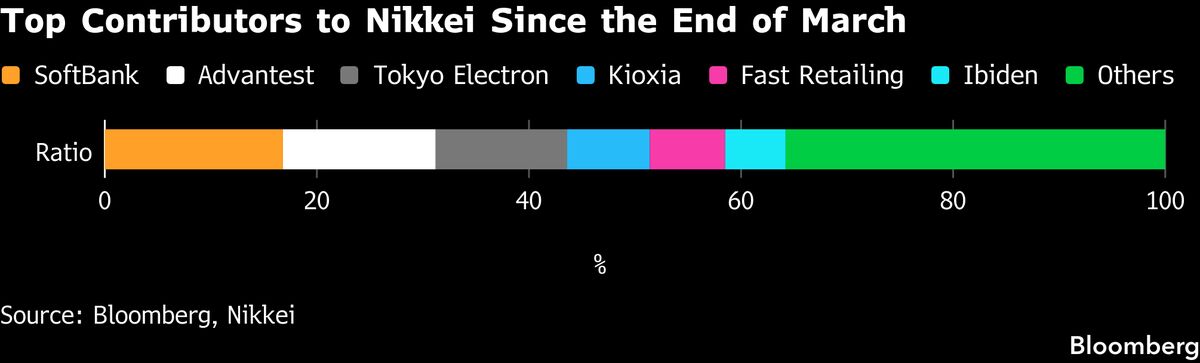
The Nikkei 225, Japan’s premier stock index, has felt the brunt of these developments. After a strong performance earlier in the year, the index has faced headwinds in recent weeks as investors reassess their exposure to Japanese equities. Financial stocks, which often benefit from higher interest rates due to improved lending margins, have shown resilience. However, sectors such as real estate and technology, which are more sensitive to borrowing costs, have witnessed sharper declines.
For corporate Japan, the stakes are high. Many companies are still recovering from the pandemic-induced slowdown, and rising interest rates could hinder their ability to invest in growth initiatives. Small and medium-sized enterprises (SMEs), which constitute a significant portion of Japan’s economy, are particularly vulnerable. With limited access to capital markets, these businesses often rely on bank loans, making them acutely exposed to rate hikes.
Global Context and Japan’s Economic Outlook
Japan’s challenges are not occurring in isolation. Central banks worldwide are grappling with the aftermath of pandemic-era stimulus measures and the persistent threat of inflation. The U.S. Federal Reserve’s hawkish stance has exerted upward pressure on global bond yields, including those in Japan. Meanwhile, China’s slowing economy and geopolitical tensions are adding layers of complexity to Japan’s export-dependent growth model.
Against this backdrop, Japan’s economic outlook remains cautiously optimistic. The country has benefited from a weaker yen, which has boosted export competitiveness and supported corporate earnings. However, the currency’s depreciation also imports inflation, exacerbating cost-of-living pressures for households. Balancing these competing forces will be critical for policymakers in the months ahead.
Investor Sentiment and Future Prospects
Market participants are closely monitoring the BOJ’s next moves, with many anticipating potential adjustments to its yield curve control framework. Any shift away from ultra-loose policy could trigger significant market reactions, particularly in the bond and currency markets. For now, investors are hedging their bets, with some rotating into defensive sectors and others reducing their exposure to Japanese equities altogether.
Despite the near-term challenges, Japan’s long-term fundamentals remain robust. The country boasts a highly skilled workforce, cutting-edge technological innovation, and a strong industrial base. Additionally, ongoing structural reforms and corporate governance improvements have enhanced Japan’s appeal to global investors.
Conclusion: Navigating Uncharted Waters
As Japan’s long-term interest rates approach the psychologically significant 3% threshold, the nation’s financial markets find themselves at a crossroads. Rising rates, while indicative of a shifting economic landscape, also pose risks to corporate profitability and investor confidence. The BOJ’s policy decisions in the coming months will be pivotal in shaping the trajectory of Japan’s economy and its stock market.
For now, caution prevails. Investors, policymakers, and businesses alike must navigate these uncharted waters with prudence, balancing the need for economic stability with the imperative of fostering long-term growth. In a world marked by uncertainty, Japan’s ability to adapt and innovate will ultimately determine its path forward.
