


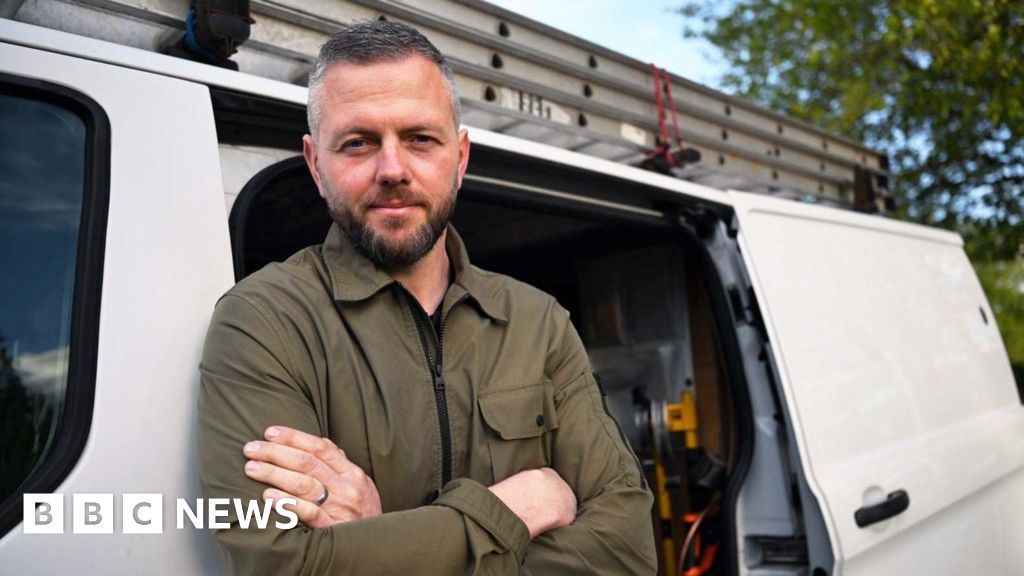

Reform UK Selects Local Plumber Robert Kenyon as Makerfield By-Election Candidate
Wigan, United Kingdom – Reform UK has announced Robert Kenyon, a local plumber and political newcomer, as its candidate for the upcoming Makerfield by-election. The move signals the party’s continued push to position itself as a voice for working-class voters in traditional Labour strongholds.
Kenyon, a lifelong resident of Greater Manchester, brings an unconventional profile to the race, emphasizing his hands-on experience in trade and frustration with what he calls “Westminster’s disconnect from ordinary people.” His selection underscores Reform UK’s strategy of fielding candidates with grassroots appeal in areas historically dominated by the two major parties.
A Candidate Outside the Political Mainstream
Unlike many by-election contenders, Kenyon has no prior political experience. Instead, he has spent over two decades running a small plumbing business in Wigan. In his campaign launch, he framed his lack of political background as an asset, stating, “People are tired of career politicians who’ve never had to worry about paying a gas bill. I’ve spent my life fixing problems—now I want to fix our broken system.”
Reform UK leader Richard Tice praised Kenyon’s selection, calling him “exactly the kind of practical, no-nonsense representative British politics needs.” The party, which evolved from the Brexit Party, has sought to rebrand itself as a broader anti-establishment force, focusing on issues like immigration control, tax reform, and opposition to net-zero policies.
Makerfield: A Bellwether Seat
The by-election in Makerfield, triggered by the resignation of Labour MP Yvonne Fovargue, presents a critical test for both Reform UK and the major parties. The constituency, part of Wigan’s industrial heartland, has voted Labour in every general election since 1992. However, declining turnout and growing dissatisfaction with the two-party system have created openings for smaller parties.
Labour remains the favorite, but Reform UK hopes to capitalize on local frustrations over economic stagnation and public services. Recent polling suggests growing support for alternative parties in post-industrial northern towns, particularly where Brexit loyalties remain strong.
Challenges and Opportunities
Kenyon’s campaign faces immediate hurdles. Reform UK lacks the ground-level infrastructure of Labour or the Conservatives, and its national polling averages around 10%. However, the party has outperformed expectations in recent by-elections, including a strong showing in Rochdale earlier this year.
Local political analysts note that Kenyon’s working-class background could resonate in a seat where many feel left behind by economic shifts. “Makerfield isn’t a natural Reform stronghold, but if anyone can bridge the gap between protest voting and genuine appeal, it’s someone like Kenyon,” said Dr. Helen Pearce, a politics lecturer at the University of Manchester.
The Wider Political Landscape
The by-election arrives amid heightened political volatility. The Conservative Party, trailing Labour by double digits nationally, risks losing further ground to insurgent challengers. Meanwhile, Labour faces pressure to demonstrate it can reclaim its traditional base without alienating progressive urban voters.
Reform UK’s decision to field a locally rooted candidate reflects a broader trend of anti-establishment parties leveraging dissatisfaction with the status quo. Similar strategies have seen success elsewhere in Europe, where outsider figures have disrupted long-standing political norms.
What’s Next?
Campaigning will intensify in the coming weeks, with Kenyon expected to focus on hyper-local issues like high street decline and energy costs. His opponents will likely question Reform UK’s policy coherence, particularly its stance on NHS funding and social welfare.
The outcome could shape the party’s trajectory ahead of the next general election. A strong performance would bolster its claim as a viable alternative to the Conservatives on the right, while a poor showing might reinforce perceptions of it as a protest vehicle with limited reach.
For now, all eyes are on Makerfield—and whether a plumber from Wigan can shake up British politics.
