


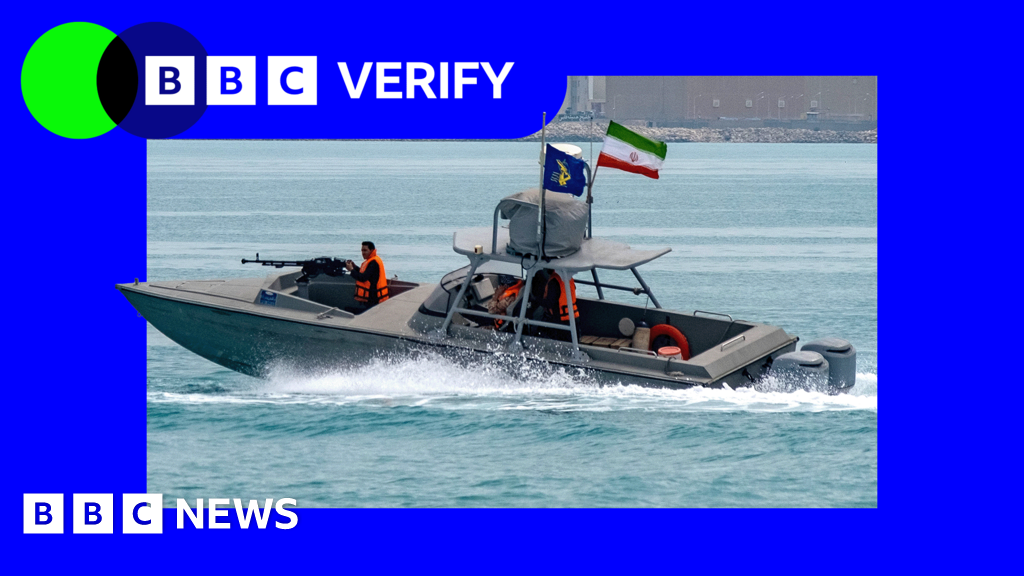

Iran’s Bold Maritime Claim Sparks Tensions in Strategic Strait of Hormuz
In a move that has sent ripples across geopolitical waters, Iran has unveiled a controversial map asserting its “armed forces oversight” over more than 22,000 square kilometers of the Strait of Hormuz—a critical global chokepoint for oil and gas shipments. The announcement, made by Tehran’s military leadership, underscores Iran’s growing assertiveness in a region already fraught with tension. As global powers scrutinize the implications, the world is left wondering: will this declaration escalate into a broader confrontation, or is it a strategic gambit in a high-stakes geopolitical chess game?
A Lifeline for Global Energy Supplies
The Strait of Hormuz, a narrow waterway sandwiched between Iran and Oman, is arguably the most vital maritime artery in the world. Nearly one-third of the world’s seaborne oil passes through it daily, along with significant volumes of liquefied natural gas (LNG). For energy-hungry nations like China, India, and much of Europe, the strait is a lifeline. Any disruption here could send shockwaves through global markets, driving up energy prices and inflaming economic instability.
Iran’s latest claim, which appears to extend its military oversight deep into the strait, comes at a time when the Middle East is already grappling with multiple crises. The ongoing war in Gaza, Houthi attacks on Red Sea shipping, and escalating U.S.-Iran tensions have all contributed to a fragile security environment. Against this backdrop, Tehran’s move is seen as a deliberate assertion of its influence over a waterway it has long considered its backyard.
Historical Context and Iran’s Strategic Calculations
Iran’s relationship with the Strait of Hormuz has been fraught for decades. During the Iran-Iraq War in the 1980s, Tehran sought to disrupt oil exports from Iraq and other Gulf states, leading to the “Tanker War” and heightened international tensions. More recently, Iran has repeatedly threatened to close the strait in response to Western sanctions or military threats, leveraging its geographical position as a bargaining chip.
The release of this map is widely interpreted as a strategic signal to both regional rivals and global powers. By publicly declaring its military oversight, Iran is asserting its sovereignty and deterring perceived encroachments. Experts suggest that Tehran is also sending a message to the United States and its allies, who have increased their naval presence in the region in recent months.
For Iran, the strait is not just a geopolitical asset but also a economic one. The country relies heavily on the waterway for its own oil exports, which have been severely curtailed by U.S. sanctions. By flexing its military muscles, Tehran is likely aiming to reinforce its position in negotiations over sanctions relief and nuclear talks, which have stalled in recent years.
Global Reactions and Potential Implications
The international response to Iran’s announcement has been cautious but wary. The United States, which maintains a significant naval presence in the Gulf, has yet to issue a formal statement, but analysts predict that Washington will view the move as a provocation. Saudi Arabia and the United Arab Emirates, Iran’s regional rivals, are likely to express concern, given their heavy reliance on the strait for oil exports.
For Europe, already grappling with energy insecurity due to the war in Ukraine, the development is particularly troubling. Any disruption in the Strait of Hormuz could further strain energy supplies, reigniting inflationary pressures and economic uncertainty.
Meanwhile, China and India, two of the world’s largest energy consumers, are watching closely. Both nations have deepened their economic ties with Iran in recent years, but they are also heavily dependent on stable energy markets. Beijing, in particular, faces a delicate balancing act: while it seeks to maintain strong relations with Tehran, it cannot afford to alienate Gulf states that are key suppliers of oil and gas.
Why It Matters Globally
The Strait of Hormuz is not just a regional flashpoint; it is a linchpin of the global economy. Any escalation here could have far-reaching consequences, from spiking energy prices to triggering broader conflicts. Iran’s latest move underscores the fragility of global energy security and the interconnectedness of geopolitical tensions.
Moreover, the announcement highlights the growing militarization of strategic waterways, a trend that poses significant risks to international trade and stability. As nations vie for control over critical maritime routes, the potential for miscalculation and conflict increases.
A Precarious Future
As the world digests Iran’s bold maritime claim, the stakes could not be higher. The Strait of Hormuz remains a powder keg, and Tehran’s latest move has added fuel to an already volatile situation. Whether this declaration will lead to de-escalation or further confrontation remains uncertain, but one thing is clear: the world’s most vital waterway is once again at the center of global attention.
In a world grappling with energy insecurity and geopolitical uncertainty, the Strait of Hormuz serves as a stark reminder of the delicate balance that underpins global stability. As nations navigate these turbulent waters, the need for diplomacy and dialogue has never been more urgent. The alternative—a descent into conflict—would be catastrophic for us all.
