


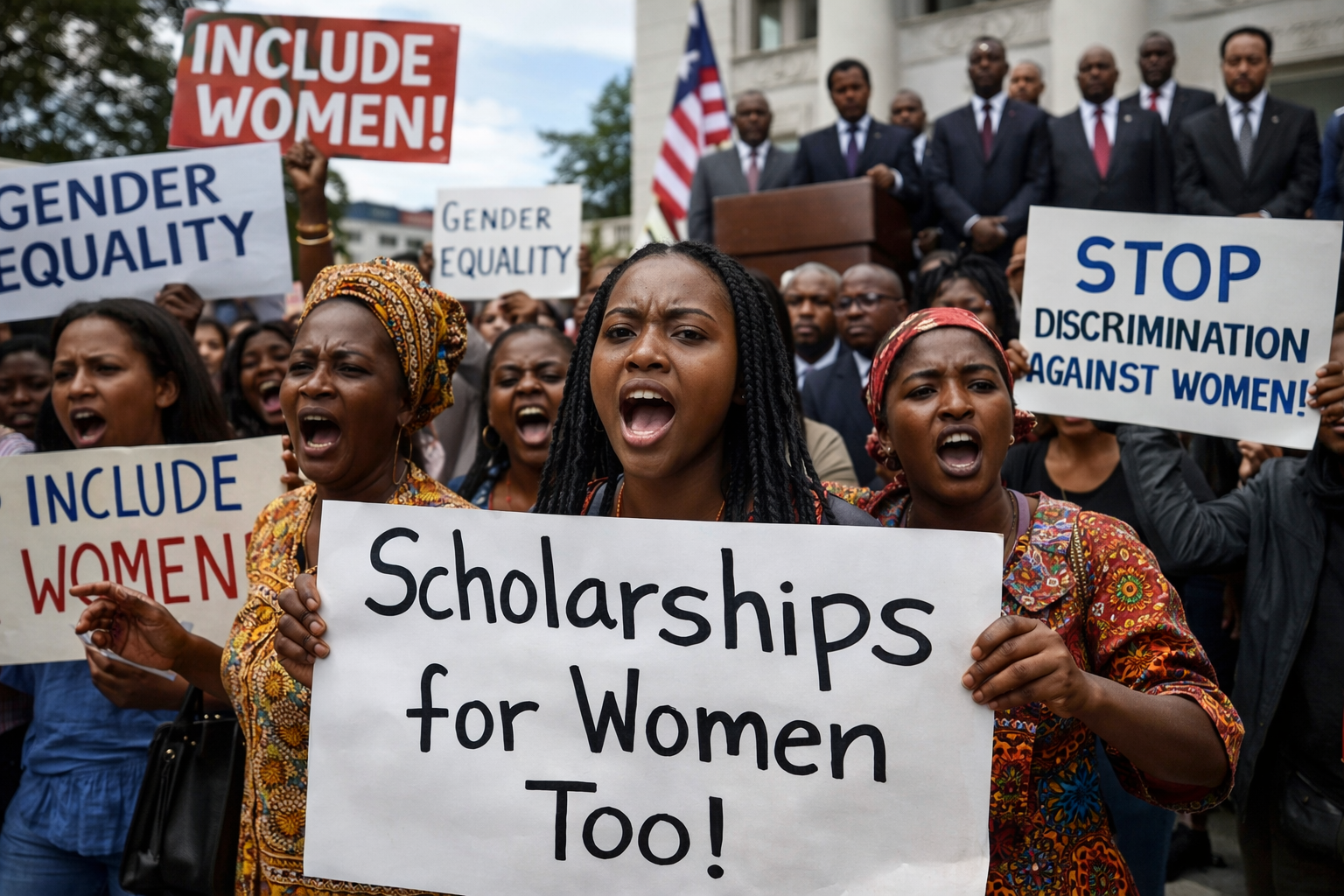

A Liberian lawmaker is currently facing significant backlash for the decision to exclude women from a foreign scholarship program. This controversial action has sparked widespread criticism, with many advocating for the inclusion of women in educational opportunities that are crucial for the nation’s development. Stakeholders argue that promoting gender equality in scholarship programs is essential for empowering women in Liberia. The lawmaker’s stance has ignited a broader discourse on the importance of fostering inclusive policies in education. Controversial Remarks Spark Outrage Over Gender Discrimination in Scholarship Program
Montserrado County, Liberia — A political firestorm has erupted after Dixon W. Seboe, the representative for Electoral District 16, made controversial statements regarding his foreign scholarship program, which he admitted deliberately excludes female constituents. This revelation has raised serious questions about gender equality and the perspectives of political leaders in the region.
During a joint meeting on Wednesday, where Seboe presented his district report for the upcoming 2024-2025 term, he faced criticism when a resident questioned the absence of female beneficiaries from the scholarship program. The lawmaker’s response shocked many attendees. He stated, “When you send people out of the country, they’re far away from home; we live in an evil world and we’ve got to be careful. If I take someone’s daughter and send her to a foreign land, the pain that I will bear will be far greater.”
Seboe’s statements, made at the Borough Multipurpose House, were met with audible discomfort among the attendees, many of whom viewed his comments as discriminatory and archaic. As a prominent member of the opposition Congress for Democratic Change (CDC), his remarks have been interpreted by critics as a reflection of outdated beliefs that undermine women’s rights in education.
Residents, including youth leaders, quickly condemned Seboe’s justification. One individual pointed out, “So, are the other government officials aware of this ‘greater pain’ when they send female students abroad? Is this consideration only unique to our lawmaker?” Youth leader Patrick Walker echoed similar sentiments, denouncing Seboe’s rationale as troubling and discriminatory. He emphasized that everyone deserves equal opportunities regardless of gender, stating that “there should be no room for discrimination.”
The lawmaker allegedly expressed concerns that female students might return home pregnant after studying abroad, a perspective some residents found particularly unsettling. Walker noted, “That’s poor thinking at his level,” highlighting how such views can hinder progress for young women seeking education.
In response to the growing backlash, Robert W. Anderson III, Seboe’s Chief of Staff, defended the controversial policy through a WhatsApp message, framing it as a precautionary measure. “The Chief was trying to predict avoidance of problems mainly (pregnancy) or mixing up girls and boys together,” Anderson explained. He further mentioned logistical considerations, suggesting that future inclusion of female students might depend on housing arrangements that ensure separation from male students.
The funding of the scholarship program has also come under scrutiny, with some residents alleging it is supported by the Seventh-day Adventist (SDA) Church. Anderson dismissed these claims, asserting that Seboe personally finances the initiative through the Seboe Empowerment Foundation. He stressed, “He’s not just paying their tuitions; he’s sending monthly support for their upkeep and covering their housing expenses.”
Amid the controversy, the issue has cast a broader spotlight on gender equality, leadership decision-making, and the constitutional guarantees of equal opportunity. Supporters of Seboe argue that his actions were driven by caution, while detractors assert that his reasoning reinforces harmful stereotypes and deprives young women of invaluable educational opportunities.
With pressure mounting from various groups in the community, the critical question remains whether Seboe is willing to reconsider his policies or continue defending a stance that has ignited significant debate over gender dynamics in educational access.
As the discussion unfolds, it underscores a vital conversation about the roles and responsibilities of leaders in fostering equitable opportunities for all constituents, particularly women, who have historically faced barriers to education.
— Reported by Nexio News
