



Japan Faces Diplomatic Dilemma Over Middle East Deployment Amid US Pressure
By [Your Name]
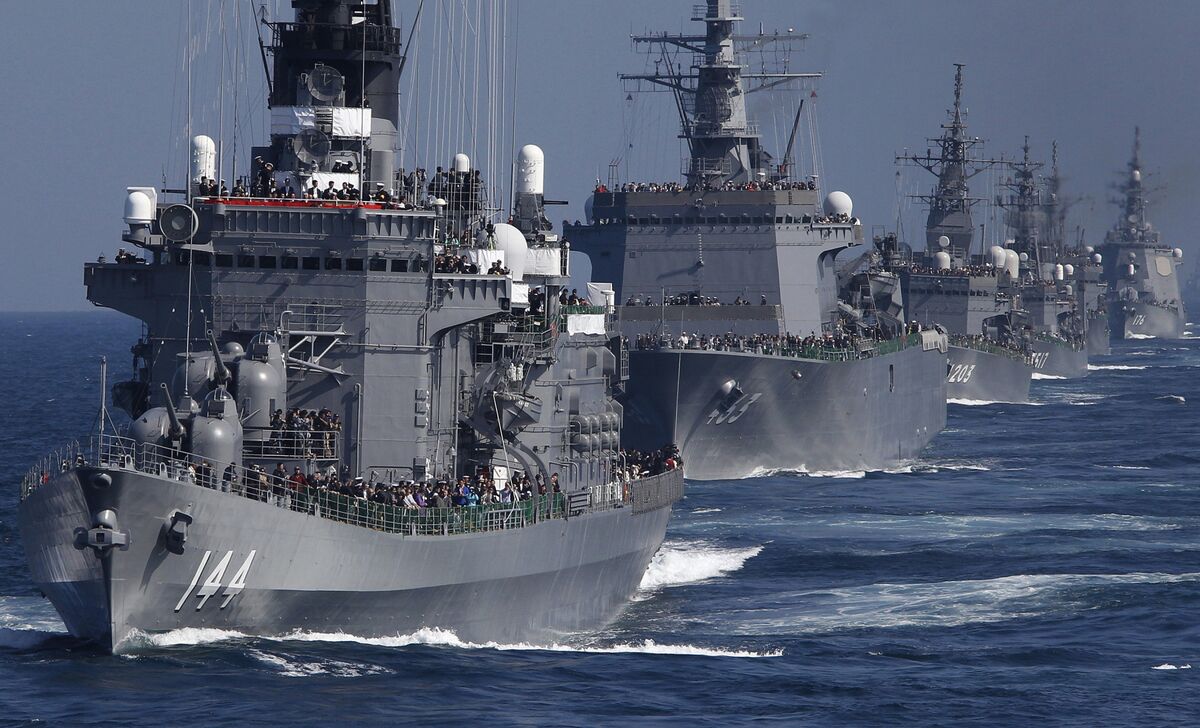
TOKYO—In a delicate balancing act between its pacifist constitution and its strategic alliance with the United States, Japan is grappling with whether to deploy military vessels to the Middle East to help safeguard one of the world’s most critical shipping lanes. The debate comes after U.S. President Donald Trump publicly urged Tokyo to join Washington’s efforts to keep the Strait of Hormuz “open and safe” amid escalating tensions in the region. Senior Japanese officials, however, have signaled that such a decision faces “high hurdles,” underscoring the complexities of Japan’s postwar security posture and its fraught relationship with its own military capabilities.
The Strait of Hormuz, a narrow passage between the Persian Gulf and the Gulf of Oman, is a lifeline for global energy markets, with nearly a fifth of the world’s oil supply transiting through it daily. Recent months have seen a dramatic spike in tensions, with attacks on tankers, the downing of an American drone, and the seizure of vessels by Iranian forces. The United States has responded by bolstering its military presence in the region and calling for an international coalition to ensure maritime security. Japan, a key U.S. ally and a major importer of Middle Eastern oil, is now squarely in the spotlight as Washington seeks broader participation in its efforts.
Japan’s Constitutional Constraints
For Japan, the prospect of deploying its Self-Defense Forces (SDF) to the Middle East is fraught with political and constitutional challenges. Since the end of World War II, Japan’s pacifist constitution, drafted under U.S. occupation, has strictly limited its military activities to self-defense. While successive governments have reinterpreted these constraints to allow for limited overseas deployments, any mission perceived as aligning Japan with U.S. military objectives risks igniting domestic opposition and straining relations in the region.
“The idea of escorting ships in the Strait of Hormuz is not something Japan can decide lightly,” said a senior government official, speaking on condition of anonymity. “There are high hurdles, both legal and political, that need to be carefully navigated.”
Japan’s reluctance is further compounded by its delicate diplomatic position. As one of the world’s largest importers of liquefied natural gas and oil, Japan relies heavily on Middle Eastern energy supplies, making stability in the region a critical national interest. At the same time, Tokyo has maintained cordial relations with Tehran, even as the United States has pursued a policy of “maximum pressure” against Iran, imposing harsh economic sanctions and threatening military action.
Trump’s Call for Coalition
The pressure on Japan intensified earlier this month when President Trump, speaking to reporters at the White House, expressed his hope that Tokyo would join Washington in its efforts to secure the Strait of Hormuz. “We haven’t really asked [Japan] yet, but I think they’re going to be a part of it,” Trump said.
The U.S. administration has been actively seeking international partners to form a maritime coalition aimed at deterring Iranian aggression and protecting commercial shipping. While Britain has already committed to the initiative, other key allies, including France and Germany, have been hesitant, citing concerns over exacerbating tensions in the region.
Japan, for its part, has sought to tread carefully, emphasizing the importance of dialogue and diplomacy over military escalation. “We believe that tensions in the region should be eased through diplomatic efforts, and Japan will continue to work closely with the international community to achieve this,” Chief Cabinet Secretary Yoshihide Suga told reporters recently.
Historical Precedents and Public Opinion
Japan’s postwar history offers some insight into its cautious approach. In the 1990s, Tokyo faced criticism for its reluctance to contribute troops to U.N.-led peacekeeping missions during the Gulf War, despite relying heavily on Middle Eastern oil. The episode, often referred to as “checkbook diplomacy,” prompted Japan to revise its security policies, enabling limited participation in international peacekeeping efforts.
More recently, Japan has expanded its military role in response to regional threats, most notably from North Korea and China. In 2015, controversial security legislation passed by the government of Prime Minister Shinzo Abe allowed the SDF to engage in collective self-defense, meaning Japan could come to the aid of an ally under attack. However, these changes remain deeply contentious, with opposition parties and significant segments of the public wary of any steps they perceive as undermining Japan’s pacifist ethos.
Public opinion on a potential Middle East deployment is likely to be divided. While many Japanese citizens recognize the importance of safeguarding energy supplies, others fear entanglement in U.S.-led military operations that could compromise Japan’s neutrality and escalate regional conflicts.
Regional Dynamics and Risks
The Strait of Hormuz is not only a vital artery for global trade but also a geopolitical flashpoint. The recent spike in tensions stems largely from the U.S. decision to withdraw from the 2015 Iran nuclear deal and reinstate sanctions on Tehran. Iran, in response, has ramped up its aggressive posturing, threatening to block the strait and disrupting shipping traffic.
For Japan, any involvement in U.S.-led operations risks alienating Iran, a key supplier of oil and a potential partner in regional diplomacy. At the same time, failure to support Washington could strain the U.S.-Japan alliance, which has been a cornerstone of Japan’s security strategy since the postwar period.
“Japan finds itself in a difficult position,” said Shihoko Goto, a senior Asia analyst at the Wilson Center in Washington. “It needs to balance its alliance with the United States against its broader regional interests and its own constitutional constraints.”
Possible Pathways Forward
Analysts suggest that Japan could seek a middle ground by contributing to maritime security efforts in a non-combat role, such as intelligence-gathering or logistical support. Another option would be to frame any deployment as part of a U.N.-led or multilateral initiative, rather than a U.S.-centric operation.
“Japan is unlikely to deploy warships to escort commercial vessels,” said Yoichi Shimada, a professor of international relations at Fukui Prefectural University. “But it could play a supporting role in broader efforts to ensure the safe passage of ships.”
The Road Ahead
As Tokyo weighs its options, the stakes could not be higher. A misstep could jeopardize Japan’s energy security, inflame domestic political tensions, or alienate key partners in the Middle East and beyond. At the same time, the U.S. alliance remains central to Japan’s strategic posture, and Washington’s calls for support will be difficult to ignore entirely.
The coming weeks will test Japan’s ability to navigate these competing pressures while staying true to its pacifist principles. As one of the world’s leading democracies and a major economic power, Japan’s decisions will reverberate far beyond its shores.
For now, the question remains: Can Japan find a way to contribute to regional stability without compromising its values or risking its vital interests? The answer may well define its role in an increasingly uncertain world.
