


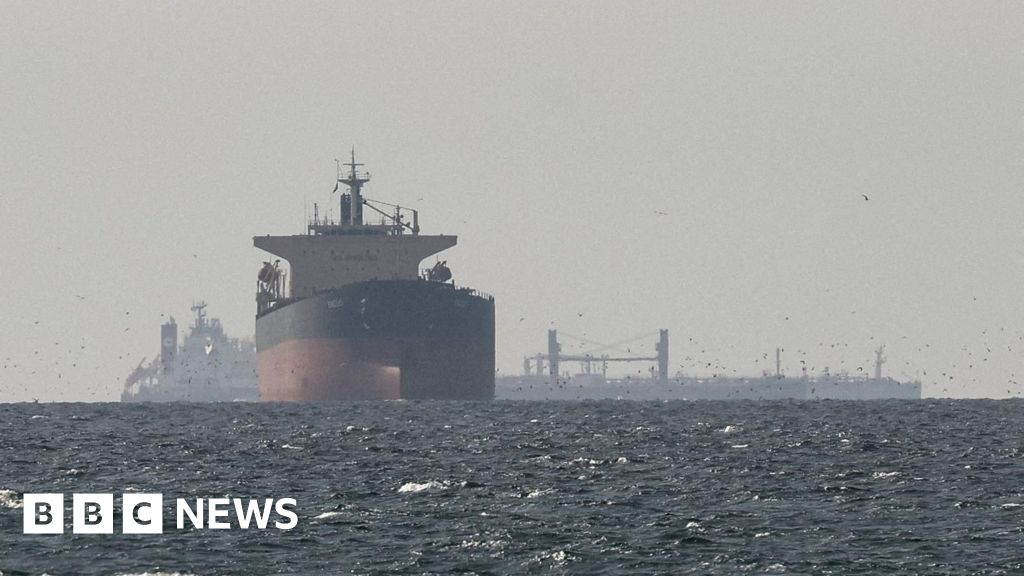

US Calls for International Coalition to Secure Key Oil Shipping Route
WASHINGTON — President Joe Biden has urged China, France, Japan, and South Korea to join a multinational effort to safeguard a critical oil shipping route, emphasizing the need for global cooperation in ensuring the stability of energy supplies. The appeal comes amid rising tensions in the region, where disruptions to maritime trade could have far-reaching consequences for the global economy.
The Strait of Hormuz, a narrow waterway between the Persian Gulf and the Gulf of Oman, is the world’s most important oil transit chokepoint. Nearly one-fifth of global oil consumption passes through this route, making it a lifeline for energy-dependent nations. However, the strait has been a focal point of geopolitical tensions, with recent incidents threatening the safety of ships and raising concerns about potential supply disruptions.
President Biden highlighted the importance of collective action during a press briefing at the White House. “The security of this route is not just a regional issue—it’s a global imperative,” he said. “We cannot allow instability in this region to jeopardize energy supplies that impact billions of lives worldwide.”
Why the Strait of Hormuz Matters
The Strait of Hormuz is a linchpin of the global energy market. Every day, approximately 17 million barrels of oil—equivalent to 20% of global demand—pass through this narrow corridor. Major oil exporters such as Saudi Arabia, Iraq, and the United Arab Emirates rely heavily on the strait to ship their resources to international markets. Any disruption could lead to skyrocketing oil prices, inflation, and economic turmoil.
Recent months have seen an uptick in tensions in the region, with reported incidents involving ship seizures and attacks on oil tankers. These actions have been attributed to regional actors seeking to exert pressure in ongoing geopolitical disputes. Analysts warn that without a coordinated international response, the situation could escalate further, posing a direct threat to global energy security.
US Aims to Build a Broad Coalition
The Biden administration’s call for a multinational naval presence underscores its commitment to addressing the issue through diplomacy rather than unilateral action. By inviting China, France, Japan, and South Korea to contribute ships and resources, the White House hopes to demonstrate a united front capable of deterring potential threats.
China, the world’s largest importer of oil, has a vested interest in maintaining the stability of the Strait of Hormuz. Similarly, Japan and South Korea are heavily dependent on energy imports, making them natural partners in safeguarding the route. France, with its longstanding military presence in the Middle East, could also play a pivotal role in the coalition.
Experts suggest that this initiative reflects a broader strategy by the Biden administration to foster international alliances, particularly in areas where US interests intersect with those of other major powers. “This is not just about protecting oil shipments,” said Dr. Emily Carter, a geopolitical analyst. “It’s about reinforcing global norms of maritime security and demonstrating that major powers can work together on shared challenges.”
Challenges and Skepticism
While the US proposal has been met with cautious optimism in some quarters, it faces significant hurdles. China, in particular, has been wary of aligning itself too closely with US-led military initiatives, given the ongoing strategic competition between the two nations. Beijing may be reluctant to commit resources but could participate in a limited capacity to protect its own energy interests.
France and Japan have historically supported multilateral efforts in the region, but their involvement will likely depend on the specifics of the coalition’s mandate. South Korea, meanwhile, must balance its alliance with the US against its diplomatic ties with regional players.
Additionally, the initiative risks exacerbating tensions with Iran, which borders the Strait of Hormuz and has repeatedly asserted its control over the waterway. Teheran has viewed previous Western naval deployments as provocative, raising concerns about potential escalations.
What Comes Next?
The success of the US plan hinges on the willingness of other nations to commit resources and coordinate their efforts. If China, France, Japan, and South Korea agree to participate, it could mark a significant step toward de-escalating tensions in the region. However, logistical challenges and political sensitivities will need to be carefully navigated.
The initiative also highlights the broader implications of energy security in an increasingly interconnected world. As global energy markets grow more volatile, the need for collaborative solutions becomes ever more urgent.
For now, the ball is in the court of the invited nations. President Biden has set the stage for a potentially historic collaboration, but the outcome will depend on diplomacy, trust-building, and the ability to align diverse interests around a common goal.
As the world watches, the stakes could hardly be higher. The stability of the Strait of Hormuz is not just a regional concern—it is a cornerstone of the global economy. How the international community responds to this challenge will shape the future of energy security and geopolitical cooperation for years to come.
