



Chile’s Arauco Bets Big on Pulp Industry Recovery as World’s Largest Mill Nears Completion
In the lush, forested landscapes of southern Chile, a bold bet on the global pulp industry is quietly transforming into a potential triumph. Chilean forestry giant Celulosa Arauco y Constitución SA (Arauco) is on the verge of completing what is set to be the world’s largest pulp mill, a $2.5 billion project that began during a downturn in the pulp market and is now poised to capitalize on a resurgent demand for wood-based products. While skeptics once questioned the timing of the investment, Arauco’s leadership now confidently predicts the mega-mill will not only bolster the company’s position as a global industry leader but also deliver significant economic returns as market conditions improve.
The project, known as the Arauco II Mill, is located in the Biobío Region, approximately 500 kilometers south of Santiago. With an annual production capacity of 2.1 million metric tons of pulp, the facility will surpass all existing mills worldwide in scale and efficiency. Its construction began in 2021, coinciding with a period of oversupply in the global pulp market and declining prices. Despite these challenges, Arauco’s leadership remained steadfast in their vision, betting on long-term trends in global demand for sustainable materials.
A Strategic Gamble Amid Market Uncertainty
The decision to build the Arauco II Mill was not without risk. When the project was announced, the global pulp industry was grappling with declining prices driven by oversupply and reduced demand from key markets, including China. The COVID-19 pandemic had disrupted supply chains and dampened economic activity, further complicating the outlook.
However, Arauco’s Chief Financial Officer, Pablo Mehech, defended the move as a forward-looking strategy. “We saw an opportunity to position ourselves ahead of the curve,” Mehech explained in an exclusive interview. “The pulp market is cyclical, and we knew that demand would eventually rebound. By investing in state-of-the-art technology and sustainability, we aimed to create a facility that would be competitive in any market environment.”
The mill’s construction has also been a significant undertaking for Chile’s economy, creating thousands of jobs and injecting billions of dollars into the local supply chain. Once operational, the facility is expected to employ around 1,200 people directly and support thousands more indirect jobs in the region.
Sustainability at the Core
One of the defining features of the Arauco II Mill is its focus on sustainability, a critical consideration in today’s environmentally conscious global market. The mill is designed to be one of the most energy-efficient and environmentally friendly facilities of its kind, incorporating advanced technologies to minimize its carbon footprint and reduce water consumption.
Arauco has also emphasized its commitment to sustainable forestry practices, sourcing wood from responsibly managed plantations that adhere to international certification standards. This approach aligns with growing consumer and corporate demand for eco-friendly products, particularly in industries such as packaging, textiles, and specialty papers.
The mill’s operations will also contribute to Chile’s efforts to reduce its reliance on fossil fuels. By utilizing biomass waste from the pulping process to generate renewable energy, the facility will produce more electricity than it consumes, with excess power supplied to the national grid.
A Rebounding Global Pulp Market
Arauco’s bet on the pulp market appears increasingly well-timed as industry conditions begin to improve. Global demand for pulp has rebounded sharply in recent months, driven by a resurgence in economic activity and growing interest in sustainable materials. The packaging sector, in particular, has seen a surge in demand as e-commerce continues to expand, while the shift away from single-use plastics has fueled interest in paper-based alternatives.
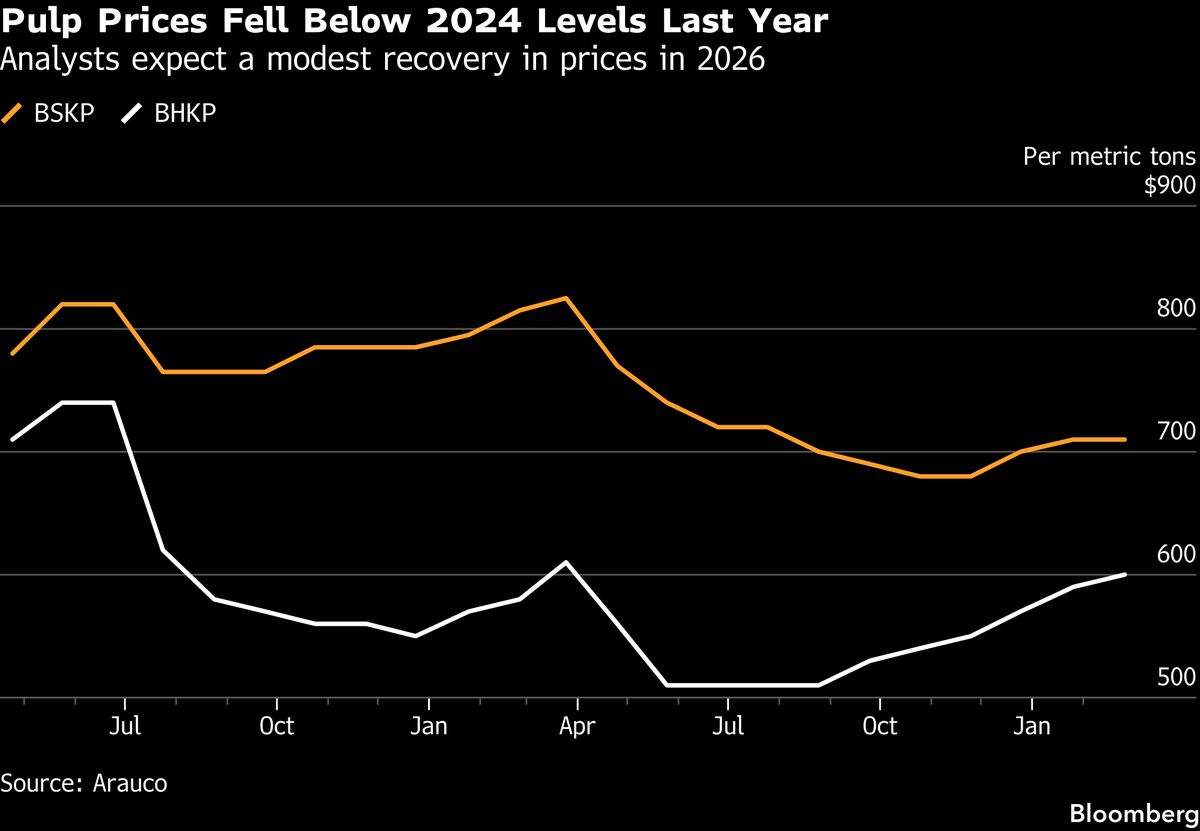
According to industry analysts, pulp prices have risen significantly since hitting lows in 2021, with further gains expected as supply chain disruptions ease and demand outstrips production capacity. This recovery has bolstered confidence in Arauco’s investment, with experts predicting the Arauco II Mill could generate substantial returns once fully operational.
“Arauco’s timing could prove to be impeccable,” said Maria Fernandez, a senior analyst at Wood Mackenzie. “The mill is coming online at a time when demand is strong and prices are favorable. Its scale and efficiency will give it a competitive edge in the global market.”
Challenges on the Horizon
Despite the optimistic outlook, challenges remain. The global pulp industry remains highly competitive, with major producers in Brazil, the United States, and Scandinavia vying for market share. Additionally, fluctuating energy prices and geopolitical uncertainties could impact production costs and market dynamics.
Moreover, Arauco’s expansion has not been without controversy. Environmental groups have raised concerns about the potential impact of the mill on local ecosystems and indigenous communities. While Arauco has pledged to adhere to strict environmental standards and engage with stakeholders, critics argue that more needs to be done to ensure sustainable development.
“Large-scale industrial projects like this always carry risks,” said Carlos Rodriguez, an environmental advocate based in Chile. “It’s crucial that Arauco continues to prioritize transparency and accountability to minimize its environmental footprint and address community concerns.”
A Catalyst for Chile’s Green Economy
For Chile, the Arauco II Mill represents more than just a major industrial project; it is a symbol of the country’s ambition to become a leader in sustainable development and green technology. As one of the largest private-sector investments in Chile’s history, the mill underscores the potential of the forestry sector to drive economic growth while contributing to environmental goals.
The Chilean government has welcomed the project as a key component of its strategy to diversify the economy and reduce dependence on traditional industries such as mining. “Projects like Arauco II demonstrate the transformative power of sustainable investment,” said Chile’s Minister of Economy, Nicolas Grau. “They create jobs, foster innovation, and position Chile as a global hub for green industry.”
Conclusion: A Bold Vision Meets Critical Timing
As Arauco prepares to bring the world’s largest pulp mill online, the company’s strategic gamble is beginning to pay off. With global demand for pulp on the rise and sustainability at the forefront of consumer and corporate priorities, the Arauco II Mill is well-positioned to capitalize on emerging market trends.
Yet, as with any ambitious endeavor, challenges and uncertainties remain. Arauco’s success will hinge not only on market conditions but also on its ability to address environmental and social concerns, demonstrating that economic growth and sustainability can go hand in hand.
For now, the project stands as a testament to the power of long-term vision and calculated risk-taking—a reminder that even in uncertain times, bold investments can yield transformative results. Whether this gamble fully pays off for Arauco and Chile, however, will depend on how the company navigates the complexities of a rapidly evolving global landscape.
