



Global Markets on Edge as Analysts Warn of Lingering Complacency Amid Ongoing Uncertainty
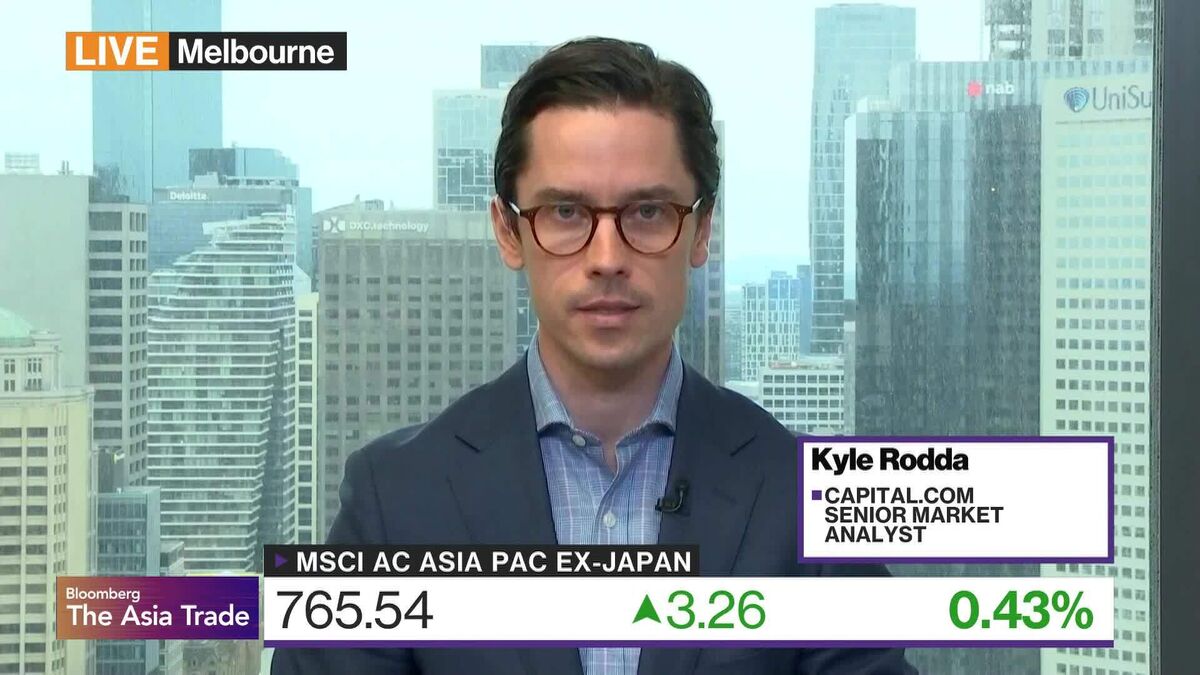
As global financial markets navigate a complex web of geopolitical tensions, inflationary pressures, and shifting monetary policies, analysts are raising alarm bells over what they describe as a dangerous sense of complacency among investors. Kyle Rodda, senior market analyst at Capital.com, highlighted this concern in a recent Bloomberg Television interview, suggesting that the prevailing optimism for swift resolutions to current economic challenges might be misplaced. His comments underscore a growing unease among experts who fear that markets are underestimating the risks ahead.
A Fragile Calm in Turbulent Times
Rodda’s remarks come at a critical juncture for global markets, which have been grappling with a series of interconnected crises. From escalating geopolitical conflicts to persistent inflation and the lingering aftershocks of the COVID-19 pandemic, the economic landscape remains fraught with uncertainty. Despite these headwinds, equity markets have shown resilience in recent months, buoyed by hopes of central banks easing monetary policy and a general belief that worst-case scenarios can be avoided. However, Rodda warns that this optimism may be premature.
“Right now, there seems to be, still, a degree of complacency that things will be resolved swiftly enough,” Rodda told Bloomberg. “The situation looks a little bit bearish to my eyes.” His assessment echoes broader concerns that investors may be underestimating the potential for prolonged economic disruption.
Geopolitical Risks and Economic Headwinds
One of the most significant factors contributing to market uncertainty is the volatile geopolitical environment. Tensions in the Middle East, ongoing conflict in Ukraine, and rising trade disputes between major economies have created a backdrop of instability that could easily derail global growth. These conflicts have already disrupted supply chains, driven up energy prices, and stoked inflationary pressures—issues that central banks have struggled to contain.
Adding to the complexity is the divergence in monetary policy among major economies. While the U.S. Federal Reserve has signaled a cautious approach to interest rate cuts, the European Central Bank and the Bank of England face their own unique challenges. Emerging markets, meanwhile, remain vulnerable to capital outflows and currency volatility as investors flock to safer assets.
The Inflation Conundrum
Inflation remains a persistent concern, despite recent signs of moderation in some regions. While headline inflation rates have eased in the U.S. and Europe, core inflation—which excludes volatile food and energy prices—remains stubbornly high. This has forced central banks to maintain a hawkish stance, even as economic growth shows signs of slowing.
Rodda’s bearish outlook reflects worries that inflation may prove more entrenched than anticipated, complicating efforts to engineer a soft landing for the global economy. “The market is pricing in a scenario where inflation reverts to target relatively quickly, and central banks can shift to a more accommodative stance,” he noted. “But there’s a real risk that this doesn’t happen as smoothly as everyone hopes.”
Complacency and Market Psychology
The term “complacency” has become a recurring theme among analysts assessing the current market environment. Despite the litany of risks, equity markets have remained relatively buoyant, fueled by strong corporate earnings and a belief that central banks will eventually pivot to rate cuts. However, this optimism may be masking deeper vulnerabilities.
Rodda’s warning is particularly pertinent given the historical tendency of markets to underestimate tail risks—low-probability, high-impact events that can trigger dramatic selloffs. The 2008 financial crisis and the COVID-19 market crash are stark reminders of how quickly sentiment can shift when risks are ignored.
Historical Parallels and Lessons Learned
Drawing parallels to past crises, analysts point out that periods of relative calm often precede significant market upheavals. The dot-com bubble of the late 1990s and the housing market collapse of 2007-2008 were both preceded by extended periods of investor optimism, only to end in spectacular crashes. While the current situation differs in many respects, the underlying lesson remains the same: markets can remain irrational longer than investors can remain solvent.
Rodda’s cautionary tone suggests that investors should prepare for a potential reality check. “The market is pricing in a lot of good news,” he observed. “If that good news doesn’t materialize, there’s a real risk of a sharp correction.”
The Role of Central Banks
Central banks have played a pivotal role in shaping market expectations, and their actions will continue to be a key driver of market sentiment. The Federal Reserve, in particular, has faced intense scrutiny as investors parse every word from policymakers for clues about future rate moves.
While Chair Jerome Powell has emphasized the need for patience, markets have largely interpreted recent statements as dovish, fueling hopes of rate cuts in the near term. However, any deviation from this expected path could spark significant volatility. Rodda’s comments highlight the precarious balance central banks must strike between curbing inflation and supporting growth—a task that has become increasingly challenging in the current environment.
Looking Ahead: A Fragile Balance
As global markets navigate these uncertain waters, the key question is whether the current sense of optimism is warranted or merely a reflection of wishful thinking. While some argue that markets have already priced in most risks, others caution that the road ahead is far from smooth.
For investors, the challenge lies in balancing the potential for upside gains with the need for risk management. Diversification, careful asset allocation, and a focus on quality investments may prove essential in navigating the volatility that lies ahead.
“The market’s resilience is impressive, but it’s also a bit unnerving,” Rodda concluded. “I think we’re in for a bumpy ride.”
As the global economy grapples with converging challenges, Rodda’s warning serves as a timely reminder that in markets, as in life, complacency can be a costly mistake. Whether the current optimism will hold—or give way to a more sobering reality—remains to be seen.
