


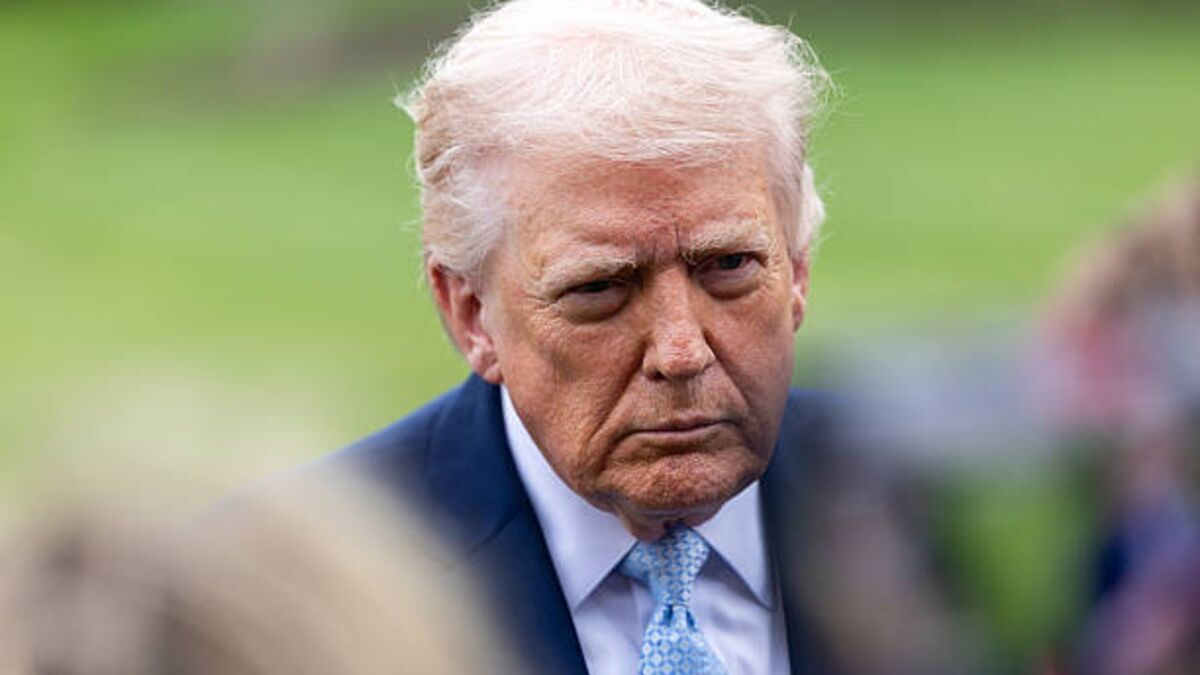

Donald Trump Rejects Ceasefire Amid Escalating Tensions with Iran, Vows Full Control of Strait of Hormuz
In a bold declaration from the White House, former U.S. President Donald Trump issued a stark refusal to pursue a ceasefire with Iran, insisting that the United States would maintain its aggressive posture in the region. Speaking to reporters on Tuesday, Trump emphasized that the U.S. was in a position of overwhelming strength and would not seek to ease hostilities while claiming to be “literally obliterating the other side.” His remarks came amid heightened tensions in the Persian Gulf, particularly around the strategic Strait of Hormuz, a critical global oil chokepoint that Trump vowed to fully reopen and secure.
Trump’s comments underscore the enduring volatility in U.S.-Iran relations, a geopolitical flashpoint that has dominated Middle East politics for decades. The Strait of Hormuz, through which approximately one-fifth of the world’s oil supply passes, has long been a focal point of contention. Trump’s declaration signals a continuation of his administration’s confrontational approach toward Tehran, even as global observers call for de-escalation to avoid a broader regional conflict.
Background: A History of Escalation
The relationship between the United States and Iran has been fraught with tension since the 1979 Islamic Revolution, which saw the overthrow of the U.S.-backed Shah and the rise of the Islamic Republic under Ayatollah Khomeini. Decades of mutual hostility have been marked by sanctions, proxy wars, and periodic military confrontations.
Trump’s presidency marked a particularly turbulent chapter in this relationship. In 2018, he withdrew the U.S. from the Joint Comprehensive Plan of Action (JCPOA), commonly known as the Iran nuclear deal, which had been negotiated by the Obama administration. The Trump administration then imposed a series of harsh economic sanctions on Iran, crippling its economy and further straining diplomatic ties.
The situation escalated dramatically in January 2020, when the U.S. carried out a drone strike that killed Iranian General Qasem Soleimani, the head of the Islamic Revolutionary Guard Corps’ Quds Force, in Baghdad. Iran retaliated with missile strikes on U.S. military bases in Iraq, bringing the two nations to the brink of war. While full-scale conflict was averted, the incident left deep scars and set the tone for ongoing hostilities.
Trump’s Latest Remarks: A Defiant Stance
In his recent address, Trump doubled down on his administration’s hardline stance, dismissing calls for a ceasefire as a sign of weakness. “I don’t want to do a ceasefire. You know, you don’t do a ceasefire when you’re literally obliterating the other side,” he said. “We’re not looking to do that.”
Trump’s language reflects his longstanding belief in projecting strength and leveraging maximum pressure against adversaries. His comments suggest that the U.S. is achieving significant military success against Iran, although independent verification of such claims is scarce.
Crucially, Trump also pledged to ensure the full reopening of the Strait of Hormuz, a vital waterway that Iran has repeatedly threatened to close in response to U.S. sanctions and military actions. “We will secure the Strait,” Trump declared, emphasizing the importance of maintaining unimpeded access to global oil supplies.
The Strait of Hormuz: A Global Flashpoint
The Strait of Hormuz is a narrow passage between the Persian Gulf and the Gulf of Oman, bordered by Iran to the north and the United Arab Emirates and Oman to the south. Its strategic importance cannot be overstated; it serves as the primary route for oil exports from major producers like Saudi Arabia, Iraq, and Kuwait. Any disruption to shipping through the strait could send global energy markets into turmoil, with far-reaching economic consequences.
Iran has long leveraged its geographic position to assert influence over the strait. In recent years, Tehran has periodically threatened to block the waterway or seize foreign vessels in retaliation for U.S. sanctions. These threats have prompted the U.S. and its allies to increase their naval presence in the region, further raising the risk of accidental clashes.
Trump’s vow to reopen and secure the strait suggests a proactive military posture, though details of the plan remain unclear. Analysts warn that any unilateral action by the U.S. could provoke a strong response from Iran, potentially escalating into a broader conflict.
Global Reactions and Implications
Trump’s remarks have drawn mixed reactions from the international community. Allies in the Gulf region, particularly Saudi Arabia and the UAE, have welcomed the U.S.’s commitment to securing the Strait of Hormuz, viewing it as a bulwark against Iranian aggression.
However, European powers and other global stakeholders have expressed concern over the potential for further escalation. Many had hoped for a diplomatic breakthrough, particularly after President Joe Biden took office in 2021 with promises to revive the Iran nuclear deal. While negotiations have proceeded unevenly, they represent a stark contrast to Trump’s confrontational approach.
Experts caution that Trump’s rhetoric could complicate efforts to de-escalate tensions. “A refusal to entertain a ceasefire, even rhetorically, sends a troubling signal,” said Suzanne Maloney, director of the Brookings Institution’s Foreign Policy Program. “It undermines the prospect of dialogue and risks perpetuating a cycle of violence.”
Domestic Context: Trump’s Political Influence
Trump’s comments also come at a time of heightened domestic political tension in the United States. As he considers a potential return to the White House in the 2024 election, his foreign policy positions are likely to play a central role in his campaign. By emphasizing a hardline stance on Iran, Trump seeks to bolster his image as a decisive leader willing to confront America’s adversaries head-on.
However, critics argue that his approach has often exacerbated conflicts rather than resolving them. “Trump’s ‘maximum pressure’ strategy has not yielded the outcomes he promised,” said Jon Alterman, senior vice president at the Center for Strategic and International Studies. “Instead of bringing Iran to the negotiating table, it has deepened mistrust and bolstered hardliners in Tehran.”
Looking Ahead: A Precarious Balance
As the situation in the Persian Gulf remains tense, the international community faces a delicate balancing act. While securing the Strait of Hormuz is critical to global energy stability, any military escalation risks destabilizing the broader region.
Trump’s refusal to consider a ceasefire underscores the challenges of navigating this complex geopolitical landscape. Whether his approach will lead to lasting security or further conflict remains an open question, but one thing is clear: the stakes are higher than ever in the U.S.-Iran relationship.
As the world watches, the path forward will require not just military might, but also diplomatic finesse—a combination that has often proven elusive in this enduring rivalry.
