



US Signals Possible Troop Drawdown in Middle East Amid Conflicting Messages from Trump Administration
In a move that has sparked both optimism and confusion, the United States appears to be weighing a significant reduction in its military presence in the Middle East, even as thousands of troops continue to deploy to the region. President Donald Trump’s recent statement that the U.S. is “considering winding down” its long-standing involvement in Middle Eastern conflicts has raised questions about the administration’s strategy and its implications for global security. The announcement comes at a time of heightened tensions in the region, with ongoing conflicts in Syria, Iraq, and Yemen, as well as escalating hostility between the U.S. and Iran.
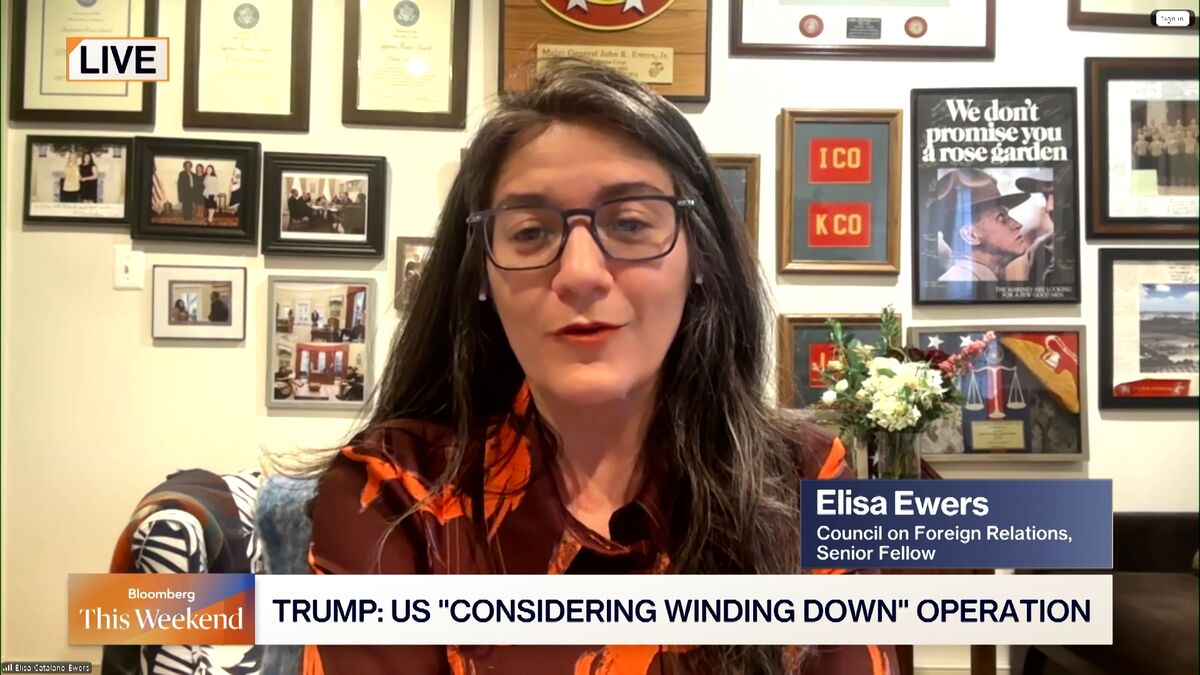
The conflicting signals from Washington have prompted experts and analysts to question the administration’s long-term vision. Elisa Ewers, a Senior Fellow at the Council on Foreign Relations, and Steve Yates, a Senior Research Fellow at the Heritage Foundation, recently discussed the complexities of this situation in a conversation with Bloomberg’s David Gura and Christina Ruffini. Their insights shed light on the broader geopolitical ramifications of a potential U.S. drawdown and the challenges of maintaining stability in a region that has long been a focal point of American foreign policy.
A History of U.S. Involvement in the Middle East
The United States’ military engagement in the Middle East dates back decades, with significant troop deployments becoming a hallmark of U.S. foreign policy following the Gulf War in the early 1990s. The 2003 invasion of Iraq, initiated under President George W. Bush, marked a turning point, leading to a prolonged U.S. presence in the region. The rise of ISIS in 2014 further cemented America’s role, as U.S. forces supported local allies in combating the terrorist group.
Throughout this period, successive U.S. administrations have grappled with the challenge of balancing military intervention with the goal of fostering regional stability. President Trump, who campaigned on a promise to end “endless wars,” has repeatedly expressed his desire to reduce America’s military footprint abroad. However, his administration’s actions have often contradicted this rhetoric, with increased drone strikes, the assassination of Iranian General Qasem Soleimani in January 2020, and the recent deployment of additional troops to the Middle East.
Trump’s Wavering Stance
President Trump’s latest remarks about winding down U.S. involvement in the Middle East have left many observers puzzled. While he has consistently voiced his opposition to prolonged military engagements, his administration has taken a hardline approach toward Iran and other adversaries in the region. This inconsistency has fueled speculation about the president’s true intentions and the factors driving his decisions.
“The president’s messaging has been contradictory, to say the least,” said Elisa Ewers during her Bloomberg interview. “On one hand, he talks about ending wars and bringing troops home. On the other, he continues to escalate tensions with Iran and other actors in the region.” Ewers noted that this duality reflects deeper divisions within the administration, with some advisors advocating for a more aggressive posture and others pushing for disengagement.
Steve Yates echoed this sentiment, emphasizing the risks of a hasty withdrawal. “While the idea of reducing our military presence may be appealing, we need to consider the potential consequences,” he said. “A sudden drawdown could create a power vacuum, allowing extremist groups or hostile states like Iran to fill the void.” Yates also pointed to the strategic importance of the Middle East, particularly its role in global energy markets, as a reason for the U.S. to maintain a cautious approach.
The Geopolitical Implications of a Drawdown
The potential withdrawal of U.S. troops from the Middle East would have far-reaching consequences, both for the region and for global security. Analysts warn that a reduced American presence could embolden Iran, which has already expanded its influence in Iraq, Syria, and Yemen through proxy militias and political alliances. It could also undermine the efforts of U.S. allies, such as Israel and Saudi Arabia, who rely on American support to counterbalance Iranian aggression.
At the same time, a drawdown could create opportunities for diplomatic engagement and conflict resolution. With fewer U.S. troops on the ground, regional powers may be more inclined to negotiate solutions to long-standing disputes. However, this would require a coordinated international effort, with the United Nations, European Union, and other stakeholders playing a more active role.
“The key is to ensure that any reduction in the U.S. military presence is part of a broader strategy,” Ewers said. “We need to work with our allies and partners to maintain stability and address the root causes of conflict.”
A Global Audience Watches Closely
The uncertainty surrounding U.S. policy in the Middle East has drawn attention from global leaders and policymakers. Allies such as the United Kingdom, France, and Germany have expressed concern about the potential consequences of a U.S. drawdown, particularly in the context of ongoing efforts to combat terrorism and promote regional stability.
Meanwhile, adversaries like Russia and China are closely monitoring developments, with both nations seeking to expand their influence in the Middle East. Russia, in particular, has positioned itself as a key player in the Syrian conflict, leveraging its military presence to strengthen ties with regional governments.
As the U.S. weighs its options, the stakes could not be higher. The Middle East remains a volatile and strategically vital region, and any shift in American policy will have profound implications for international security and economic stability.
Conclusion: A Delicate Balancing Act
The debate over whether to wind down U.S. military involvement in the Middle East underscores the complex challenges facing American foreign policy. While the desire to end prolonged wars and reduce the burden on U.S. troops is understandable, the potential risks of a hasty withdrawal must also be carefully considered.
As Steve Yates noted, “The Middle East is a region where every action has a reaction. We need to be mindful of the unintended consequences of our decisions.” For now, the world watches and waits, hoping that the Trump administration will strike the right balance between disengagement and strategic responsibility.
The future of U.S. involvement in the Middle East remains uncertain, but one thing is clear: any decision will shape the geopolitical landscape for years to come.
