


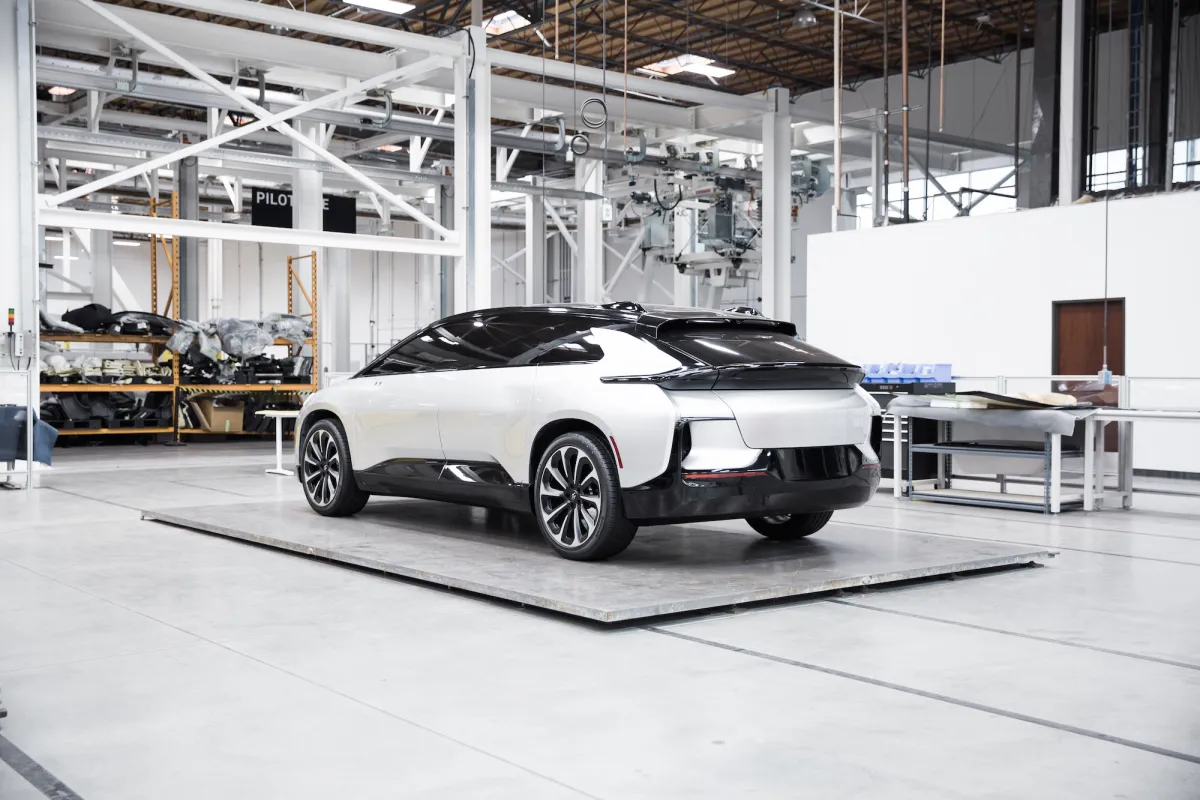

SEC Closes Four-Year Investigation into Faraday Future Without Enforcement Action
In a surprising turn of events, the U.S. Securities and Exchange Commission (SEC) has concluded its nearly four-year investigation into electric vehicle (EV) startup Faraday Future without pursuing enforcement action, despite agency staff recommending penalties last year. The dismissal marks a rare outcome for the financial regulator, which has historically pursued enforcement in the majority of cases where Wells Notices—formal warnings of potential legal action—are issued.
The closure of the probe, confirmed by sources familiar with the matter, allows Faraday Future to refocus its efforts on its business strategy. However, the decision raises questions about the SEC’s enforcement priorities amid a significant drop in cases against publicly traded companies. This development also underscores the fraught journey of Faraday Future, once hailed as a potential “Tesla killer,” as it navigates ongoing financial and operational challenges.
Background: A Tumultuous Path to Public Markets
Founded in 2014 by Chinese entrepreneur Jia Yueting, Faraday Future emerged during a wave of EV startups aiming to capitalize on the growing demand for electric vehicles. Jia, who was previously at the helm of Chinese tech conglomerate LeEco, positioned Faraday Future as a disruptor in the automotive industry. The company garnered attention with its ambitious vision, attracting talent from Tesla, Apple, and other tech giants.
However, Faraday Future’s trajectory has been marred by financial instability and internal turmoil. After a flashy debut at the 2016 Consumer Electronics Show, where it showcased a futuristic concept car, the company struggled to deliver on its promises. By 2017, Faraday Future was nearly insolvent, leading to layoffs and Jia’s relocation to California amid mounting debt in China.
The company was briefly revived by a $2 billion investment from Chinese real estate giant Evergrande in 2018, but the partnership dissolved within months, leaving Faraday Future in dire straits once again. Amid these challenges, Jia filed for personal bankruptcy in 2019 to settle billions of dollars in debt tied to LeEco.
Faraday Future’s fortunes appeared to improve when it went public in 2021 through a merger with a Special Purpose Acquisition Company (SPAC), raising approximately $1 billion. However, its public debut was overshadowed by allegations of misrepresentation, particularly regarding Jia’s involvement in day-to-day operations. A board-initiated investigation revealed that the company had relied on loans from Jia-connected employees to stay afloat in the years leading up to its IPO.
The SEC Investigation: Allegations of Fraud and Misrepresentation
The SEC launched its investigation into Faraday Future in March 2022, focusing on whether the company made “false and misleading statements” during its SPAC merger and whether it fabricated early sales of its flagship FF91 electric SUV in 2023. The latter claim was supported by whistleblower complaints from at least three former employees.
Regulatory filings show that the SEC issued multiple subpoenas and deposed several former executives and employees in 2024 and 2025. In July 2025, Faraday Future disclosed that it had received Wells Notices from the SEC, indicating that agency staff had recommended enforcement action against the company and several executives, including Jia.
The Wells Notices specifically cited concerns about “false or misleading statements” made during the SPAC merger process, including disclosures about Jia’s role and related-party transactions. Despite the severity of the allegations, the SEC ultimately decided not to pursue enforcement, leaving many observers puzzled.
A Rare Outcome: SEC Enforcement Trends
The SEC’s decision to close the Faraday Future investigation without action is unusual. A 2020 study by the Wharton School found that approximately 85% of companies receiving Wells Notices face enforcement actions. This case stands in stark contrast to other EV startups that went public via SPAC mergers in recent years, most of which reached settlements with the SEC.
The closure also comes amid a broader decline in SEC enforcement actions. According to recent data, the agency initiated just four cases against publicly traded companies in its 2025 fiscal year, raising concerns about its ability to regulate rapidly evolving industries like electric vehicles and clean energy.
Faraday Future’s Current Struggles and Future Prospects
Despite escaping SEC penalties, Faraday Future continues to face significant challenges. The company’s stock price recently fell below the $1 threshold required to remain listed on the Nasdaq, prompting a warning from the exchange. Faraday Future has 180 days to regain compliance, but its ability to do so remains uncertain given its financial and operational difficulties.
The company’s pivot to new ventures—including importing affordable EVs from China, rebranding Chinese robots, and investing in cryptocurrency—has yet to yield meaningful results. Meanwhile, allegations of fraudulent sales practices and internal instability persist, casting a shadow over its long-term viability.
In a statement, Jia Yueting expressed relief at the conclusion of the SEC investigation, stating, “We can now put all our energy into strategy execution. Over the past five years, we had to spend a great deal of time, effort, and money on cooperating with the investigation.”
A Complex Legacy
Faraday Future’s story is emblematic of the challenges faced by ambitious startups in the competitive EV sector. While the company has avoided regulatory penalties, its future remains uncertain as it grapples with operational, financial, and reputational hurdles.
The SEC’s decision to close the investigation without action raises broader questions about regulatory oversight and accountability in an industry that has seen rapid growth and equally swift failures. As Faraday Future looks to rebuild, its journey serves as a cautionary tale for startups navigating the high-stakes world of public markets and cutting-edge technology.
For now, the company’s fate hangs in the balance, with shareholders, regulators, and industry observers watching closely to see if it can overcome its past and deliver on its promises.
