



Middle East Conflict and Inflation Fears Impact Eurozone Economic Outlook, ECB Warns
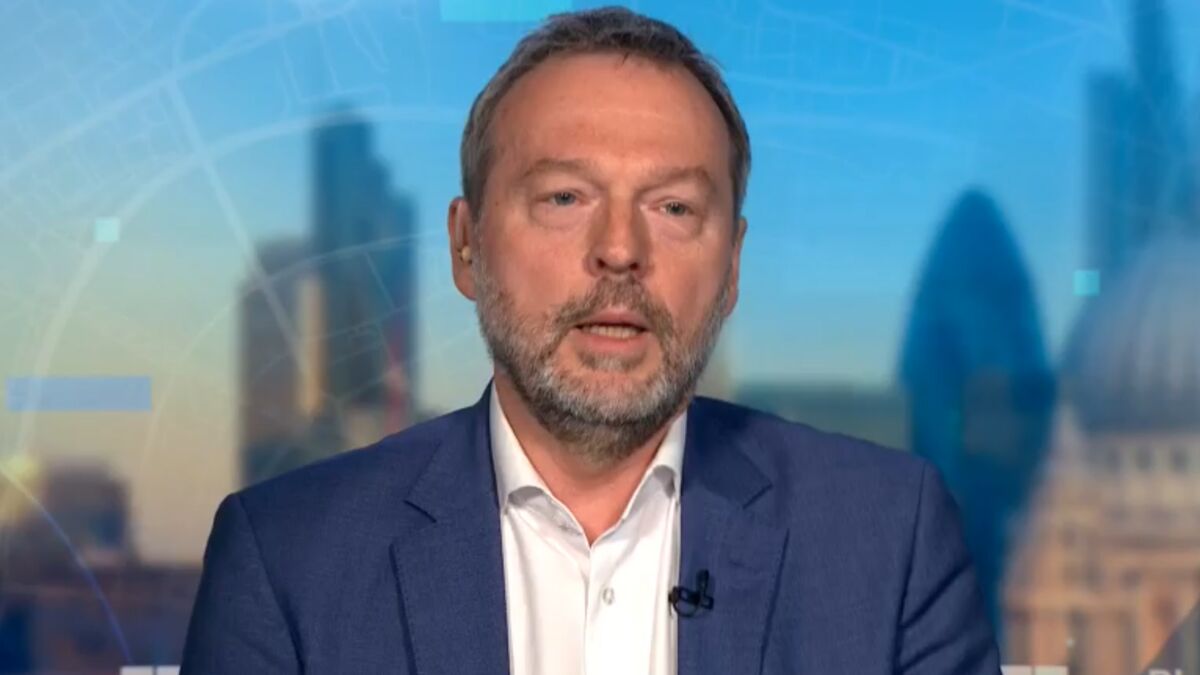
In an increasingly volatile global economic landscape, the European Central Bank (ECB) has raised concerns about the potential downstream effects of the Middle East conflict on inflation and monetary policy decisions in the eurozone. Pierre Wunsch, a prominent Governing Council member and Governor of the National Bank of Belgium, emphasized that sustained shocks from the region could compel the ECB to take decisive action on interest rates, particularly if inflationary pressures persist into early 2024. His comments, made in an exclusive interview with Bloomberg, underscore the delicate balancing act faced by central banks as geopolitical tensions intersect with economic stability.
Wunsch’s remarks come amid escalating violence in the Middle East, where ongoing conflict has already disrupted global energy markets and raised fears of broader economic repercussions. Oil prices, a critical determinant of inflation, have surged in recent weeks as concerns over supply bottlenecks intensify. The eurozone, heavily reliant on imported energy, is particularly vulnerable to these fluctuations. With inflation already hovering above the ECB’s 2% target, policymakers are acutely aware of the risks posed by further external shocks.
“If by April we have solid evidence that the shock will be lasting, and will lead to a significant hike in inflation that is likely to have some degree of persistence, then we might have to do something,” Wunsch told Bloomberg. This cautious yet pointed statement reflects the ECB’s readiness to adjust its monetary policy stance in response to evolving circumstances, even as it maintains its current pause on interest rate hikes.
The Broader Context: Inflation and Geopolitical Risks
The eurozone’s inflation trajectory has been a central focus for policymakers since the COVID-19 pandemic disrupted global supply chains and triggered unprecedented price surges. While inflationary pressures have eased somewhat in recent months, core inflation—which excludes volatile energy and food prices—remains stubbornly high. The ECB’s response has been measured, with a series of rate hikes implemented over the past year to curb rising costs. However, the September 2023 decision to pause further adjustments signaled a tentative shift toward stability.
Yet, the Middle East conflict threatens to upend this fragile equilibrium. Historical precedent suggests that geopolitical instability in oil-rich regions often leads to prolonged economic uncertainty. For instance, the 1973 oil crisis, triggered by an Arab-Israeli war, resulted in stagflation—a combination of stagnant growth and rising prices—across Western economies. While the global economy has since become more diversified, the eurozone’s dependence on energy imports leaves it exposed to similar risks.
Wunsch acknowledged these vulnerabilities, noting that the ECB must remain vigilant. “We are closely monitoring developments in the Middle East and their potential impact on energy prices and inflation,” he said. “Our decisions will be guided by data, but we cannot ignore the broader geopolitical context.”
Economic Implications for the Eurozone
The immediate economic fallout from the Middle East conflict has been felt primarily in commodity markets. Brent crude, the international benchmark for oil prices, has climbed steadily since hostilities began, raising concerns about higher transportation and manufacturing costs. For the eurozone, where energy inflation has been a persistent challenge, this presents a significant headache.
Moreover, the conflict could exacerbate existing weaknesses in the European economy. Growth in the eurozone has been sluggish, with Germany, its largest economy, teetering on the brink of recession. Higher energy prices could further dampen consumer spending and business investment, compounding the region’s economic woes. “We are already seeing signs of softening demand,” Wunsch observed. “If energy prices continue to rise, it could have a material impact on growth.”
The ECB’s dual mandate—to maintain price stability while supporting economic growth—places it in a difficult position. Raising interest rates to combat inflation risks stifling recovery, while maintaining the status quo could allow inflationary pressures to build. Wunsch’s comments suggest that the ECB is prepared to prioritize inflation control if necessary, even at the expense of short-term growth.
Global Ramifications and Central Bank Coordination
The ECB’s dilemma is mirrored by central banks worldwide. The U.S. Federal Reserve, Bank of England, and other major institutions are grappling with similar challenges as geopolitical risks complicate inflation management. Coordination among these bodies is crucial to prevent destabilizing currency fluctuations and ensure global financial stability.
Wunsch emphasized the importance of international cooperation, particularly in addressing shared vulnerabilities. “Central banks must remain in close dialogue, especially during periods of heightened uncertainty,” he said. “Our goal is to achieve a soft landing for the global economy, but that requires collective effort.”
Looking Ahead: Policy Decisions on the Horizon
The ECB’s next policy meeting in December is expected to provide further clarity on its stance. While Wunsch did not preempt any specific decisions, his comments suggest that policymakers are preparing for a range of scenarios. The timing of any rate adjustments will depend on incoming data, particularly inflation figures and energy market trends.
Market analysts are divided on the likelihood of further rate hikes. Some argue that the ECB’s cautious approach reflects a desire to avoid over-tightening, while others warn that delaying action could undermine its credibility. “The ECB is walking a tightrope,” said one economist, speaking on condition of anonymity. “The stakes are high, and the margin for error is slim.”
For now, the ECB’s priority is to maintain flexibility. Wunsch’s emphasis on evidence-based decision-making underscores the bank’s commitment to adapting its strategy as circumstances evolve. “We are not ruling out any options,” he said. “Our focus is on ensuring price stability in the medium term.”
Conclusion: A Delicate Balancing Act
As the eurozone navigates an increasingly complex economic environment, the ECB’s response to the Middle East conflict will be closely watched. Pierre Wunsch’s remarks highlight the challenges of balancing inflation control with economic growth, particularly in the face of geopolitical uncertainties. While the path forward remains uncertain, one thing is clear: central banks must remain agile in a world where the only constant is change. The eurozone’s economic resilience will depend, in large part, on the ECB’s ability to strike this delicate balance.
