



From Hobby Project to Global Sensation: How Gavriel Cohen’s NanoClaw Revolutionized AI Security
In the fast-paced world of artificial intelligence, where innovation often comes at the cost of security, one developer’s weekend coding binge has sparked a global movement. Gavriel Cohen, the creator of NanoClaw, has transformed a personal passion project into a widely celebrated open-source platform, earning the attention of industry leaders, developers, and major corporations—all in just six weeks.
What began as a response to the glaring security vulnerabilities of OpenClaw, a popular AI agent-building tool, has now evolved into NanoCo, a startup poised to redefine secure AI development. Cohen’s journey from hobbyist to entrepreneur underscores the growing demand for lightweight, secure alternatives in an increasingly complex AI landscape.
The Genesis of NanoClaw
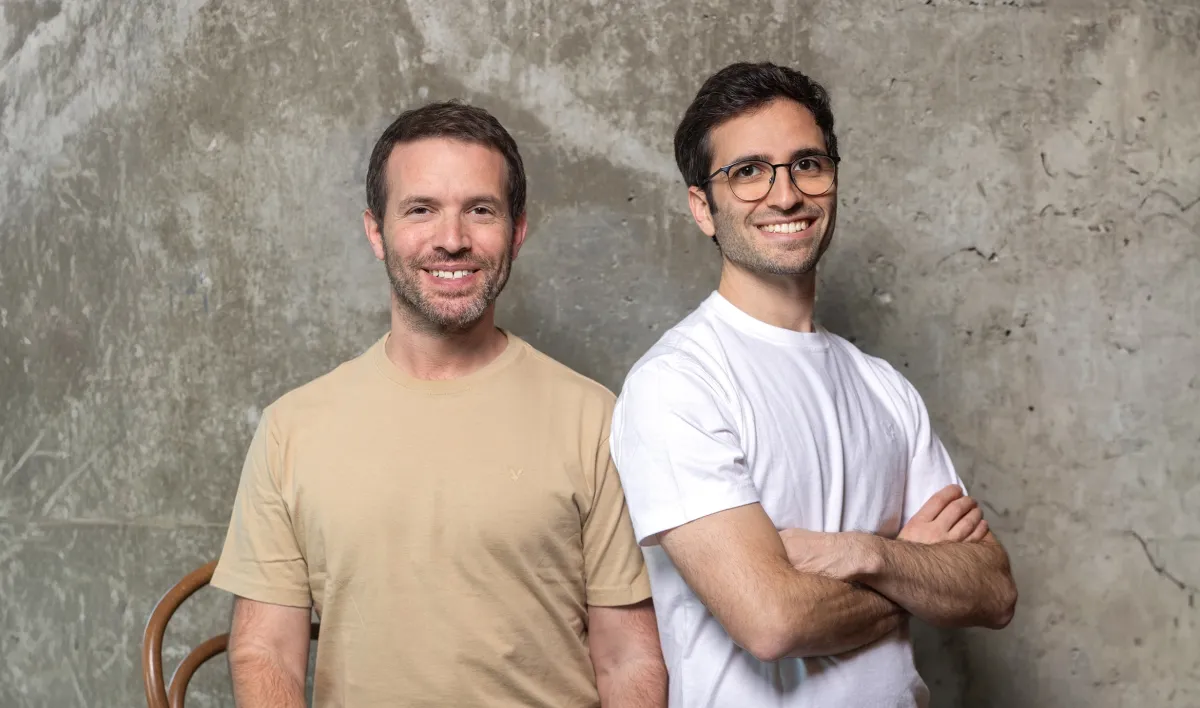
Cohen’s story began when he and his brother, Lazer Cohen, launched an AI-powered marketing startup earlier this year. The company, which leveraged AI agents to automate tasks like market research and content creation, quickly gained traction and was on track to hit $1 million in annual recurring revenue.
However, Cohen encountered a critical roadblock. While the AI agents he built using Claude Code were proficient at executing specific tasks, they lacked seamless integration with tools like WhatsApp, which the team relied on for communication and task management. Seeking a solution, Cohen turned to OpenClaw, a widely acclaimed AI agent tool developed by Peter Steinberger, now an OpenAI employee.
Initially, OpenClaw seemed like the perfect fix. “There was this big ‘aha’ moment,” Cohen recalled. “This is the piece that connects all of these separate workflows I’ve been building.” But his enthusiasm quickly turned to alarm. While troubleshooting a performance issue, Cohen discovered that OpenClaw had downloaded and stored all his WhatsApp messages—including personal conversations—in plain, unencrypted text on his computer.
This wasn’t an isolated incident. OpenClaw has been widely criticized as a “security nightmare” due to its expansive access to machine permissions and data. The tool’s massive codebase, sprawling across an estimated 800,000 lines—including obscure dependencies like a PDF-editing project Cohen himself had written months prior—made it nearly impossible for users to validate its security.
“I realized there was no way for me to ensure OpenClaw wasn’t doing something malicious,” Cohen told TechCrunch. Driven by this concern, he set out to build a more secure alternative. In just 48 hours, working from his couch in sweatpants, Cohen developed NanoClaw—a lightweight, open-source AI agent tool written in just 500 lines of code.
Going Viral: From Hacker News to Docker Partnership
Cohen unveiled NanoClaw on Hacker News, where it quickly garnered attention. The post went viral, earning thousands of views and sparking discussions among developers. But the real breakthrough came three weeks later when Andrej Karpathy, a renowned AI researcher and former Tesla AI lead, tweeted about NanoClaw.
“At 4 a.m., my phone started ringing non-stop,” Cohen recalled. A friend had alerted him to Karpathy’s tweet, urging him to join the conversation. Cohen did just that, engaging in a public discussion with Karpathy that catapulted NanoClaw into the spotlight.
The attention snowballed rapidly. NanoClaw amassed 22,000 stars on GitHub, 4,600 forks, and contributions from over 50 developers. YouTube reviews, tweets, and news stories followed, cementing NanoClaw’s status as a serious contender in the AI agent space.
The momentum culminated in a partnership with Docker, the company behind the container technology that powers NanoClaw. Last Friday, Cohen announced that Docker Sandboxes would be integrated into NanoClaw, providing users with an even more secure and scalable solution.
A Developer-Driven Movement
What sets NanoClaw apart is its simplicity and transparency. Built on Apple’s container technology, it creates isolated environments that prevent software from accessing unauthorized data—a stark contrast to OpenClaw’s sprawling, intrusive architecture.
Oleg Šelajev, a Docker developer who reached out to Cohen, played a pivotal role in bridging the gap between NanoClaw and Docker Sandboxes. “This is no longer my own personal agent that I’m running on my Mac Mini,” Cohen said. “This now has a community around it. Thousands of people are using it. It was a no-brainer to move over to Docker’s standard.”
The Road Ahead for NanoCo
With NanoClaw’s meteoric rise, Cohen and his brother Lazer have shifted their focus entirely to building NanoCo, the company behind the project. While NanoClaw remains free and open-source—an ethos the Cohens vow to uphold—they are exploring commercial opportunities to sustain the initiative.
Their current plan involves offering a fully supported commercial product, complete with forward-deployed engineers who will assist companies in building and managing secure AI agents. “We’re cautious about announcing our commercial plans because we’re still formulating them,” Cohen admitted. “But venture capital firms are already reaching out.”
The Cohens are living on a friends-and-family fundraising round while they navigate this new chapter. Despite the challenges, they remain optimistic about NanoCo’s potential to carve out a niche in the increasingly crowded AI security space.
A Lesson in Innovation and Community
Gavriel Cohen’s journey exemplifies the power of innovation driven by necessity. By addressing the security gaps in existing AI tools, NanoClaw has tapped into a growing demand for transparent, developer-friendly solutions.
As NanoCo continues to evolve, its success will hinge on balancing commercial ambitions with its open-source ethos—a delicate dance that Cohen is determined to master.
In a world where AI’s promise is often overshadowed by its risks, NanoClaw stands as a testament to what’s possible when developers prioritize security, simplicity, and community. Whether NanoCo can sustain its momentum remains to be seen, but one thing is certain: Gavriel Cohen has already left an indelible mark on the AI landscape.
