


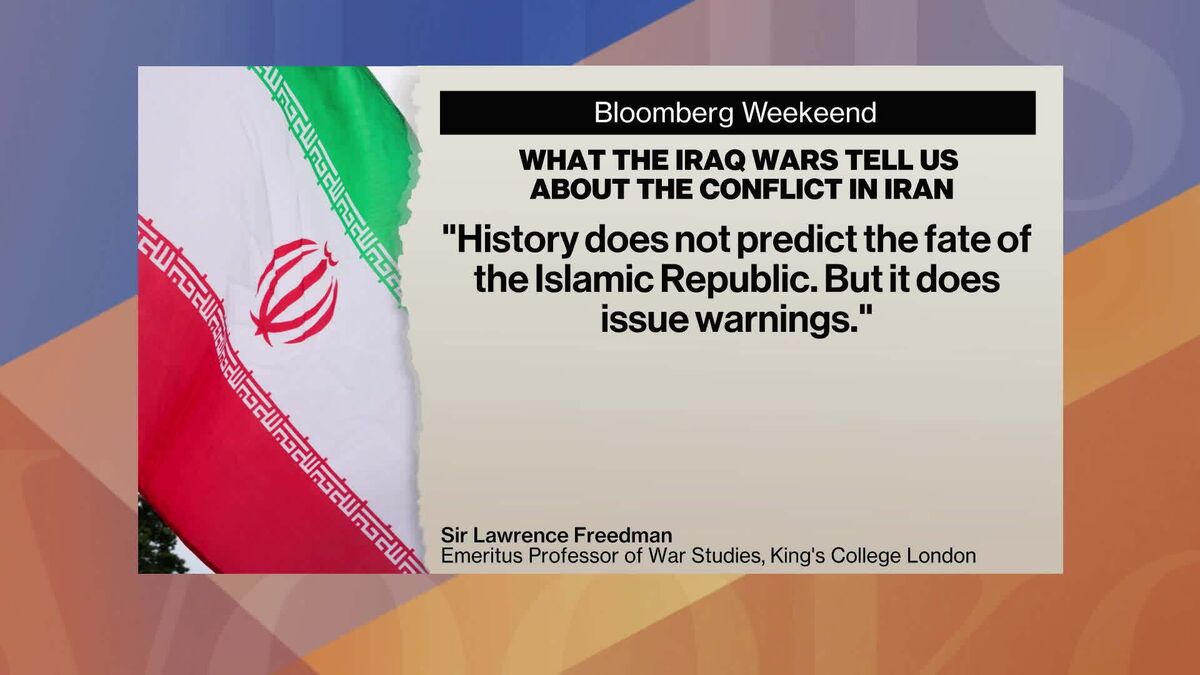

The Unpredictable Consequences of US Military Strikes: A Cautionary Tale
In the shadow of escalating global tensions, Sir Lawrence Freedman, emeritus professor of war studies at King’s College London, has issued a stark warning: military intervention often sets unforeseen forces into motion, leaving behind a trail of unintended consequences. Speaking on Bloomberg This Weekend, Freedman emphasized the inherent unpredictability of warfare, particularly in the context of recent US military actions. His remarks come at a time when geopolitical conflicts are becoming increasingly complex, raising urgent questions about the long-term repercussions of military decisions. Freedman’s insights shed light on the delicate balance between strategic intent and the chaos that often follows.
The United States has a long history of military intervention, from the wars in Afghanistan and Iraq to more recent airstrikes in Syria and drone operations across the Middle East. Each engagement has been justified by government leaders as necessary for national security or humanitarian purposes. Yet, as Freedman points out, the outcomes of these actions have rarely aligned with initial objectives. “You set things in motion but you can’t control how they end up,” he cautioned, echoing a sentiment shared by many military historians and strategists.
The Ripple Effect of Military Decisions
The consequences of military strikes often extend far beyond their immediate targets. Freedman’s warning underscores a recurring theme in modern warfare: the unintended ripple effects of military actions. For example, the US invasion of Iraq in 2003 was intended to dismantle Saddam Hussein’s regime and eliminate weapons of mass destruction. Instead, it plunged the country into years of sectarian violence, destabilized the broader Middle East, and paved the way for the rise of extremist groups like ISIS.
Similarly, US-led airstrikes in Syria, aimed at countering the Assad regime and combating terrorism, have had mixed results. While they have degraded the capabilities of certain militant groups, they have also contributed to civilian casualties and exacerbated regional tensions. Freedman’s analysis suggests that such interventions often create power vacuums, allowing new threats to emerge.
“The problem with military action is that it rarely ends with a neat resolution,” Freedman explained. “It’s not a game of chess where you can predict every move. Once you commit to a strike, you’re dealing with a dynamic, evolving situation.”
Historical Lessons and Modern Parallels
History is replete with examples of military interventions that backfired. The Vietnam War, for instance, began as an effort to curb the spread of communism but ended in a costly and deeply divisive conflict for the United States. More recently, NATO’s intervention in Libya in 2011, which contributed to the fall of Muammar Gaddafi, left the country in chaos, with rival factions vying for control and human trafficking networks flourishing.
Freedman draws parallels between these historical events and contemporary conflicts, highlighting the recurring theme of unintended consequences. “What we see time and again is that military action can disrupt existing systems, but it doesn’t necessarily lead to a better outcome,” he said.
The professor’s comments are particularly relevant as the United States continues to grapple with its role in global conflicts. While some policymakers argue for a more restrained approach, others advocate for assertive military action to address immediate threats. The debate is complicated by the rise of new technologies, such as drones and cyber weapons, which offer precision but also raise ethical and strategic dilemmas.
The Role of Strategy and Diplomacy
Freedman’s warning is not a call for pacifism but rather a plea for caution and clarity in military decision-making. He emphasizes the importance of understanding the broader context of conflicts and anticipating potential consequences. “It’s not enough to have a clear objective,” he said. “You need to think about what happens after the bombs stop falling.”
This perspective aligns with the views of many military strategists who advocate for a more holistic approach to security. Diplomacy, economic aid, and multilateral cooperation are often more effective in addressing the root causes of conflict than military force alone. However, as Freedman acknowledges, these tools are not always sufficient to deal with immediate threats.
“There are situations where military action is unavoidable,” he said. “But it should be seen as a last resort, not a first option. And even then, we need to be prepared for the possibility that things won’t go as planned.”
Navigating an Uncertain Future
As the world becomes increasingly interconnected, the stakes of military intervention are higher than ever. Conflicts in one region can have far-reaching implications, from mass migrations to economic instability. The rise of non-state actors, such as terrorist organizations and cybercriminals, adds another layer of complexity to the geopolitical landscape.
Freedman’s insights serve as a timely reminder of the need for prudence in addressing these challenges. While military action may seem like a swift solution, its long-term consequences are often difficult to predict and even harder to control. As policymakers weigh their options, they must consider not only the immediate objectives but also the potential fallout.
“The world is more unpredictable than ever,” Freedman concluded. “That’s why we need to approach military action with humility and a clear understanding of its limits.”
In a world where the line between cause and effect is often blurred, Freedman’s warning resonates as a cautionary tale. Military strikes may set events in motion, but their ultimate outcome remains uncertain—a reminder of the complexities and risks inherent in global conflict.
