


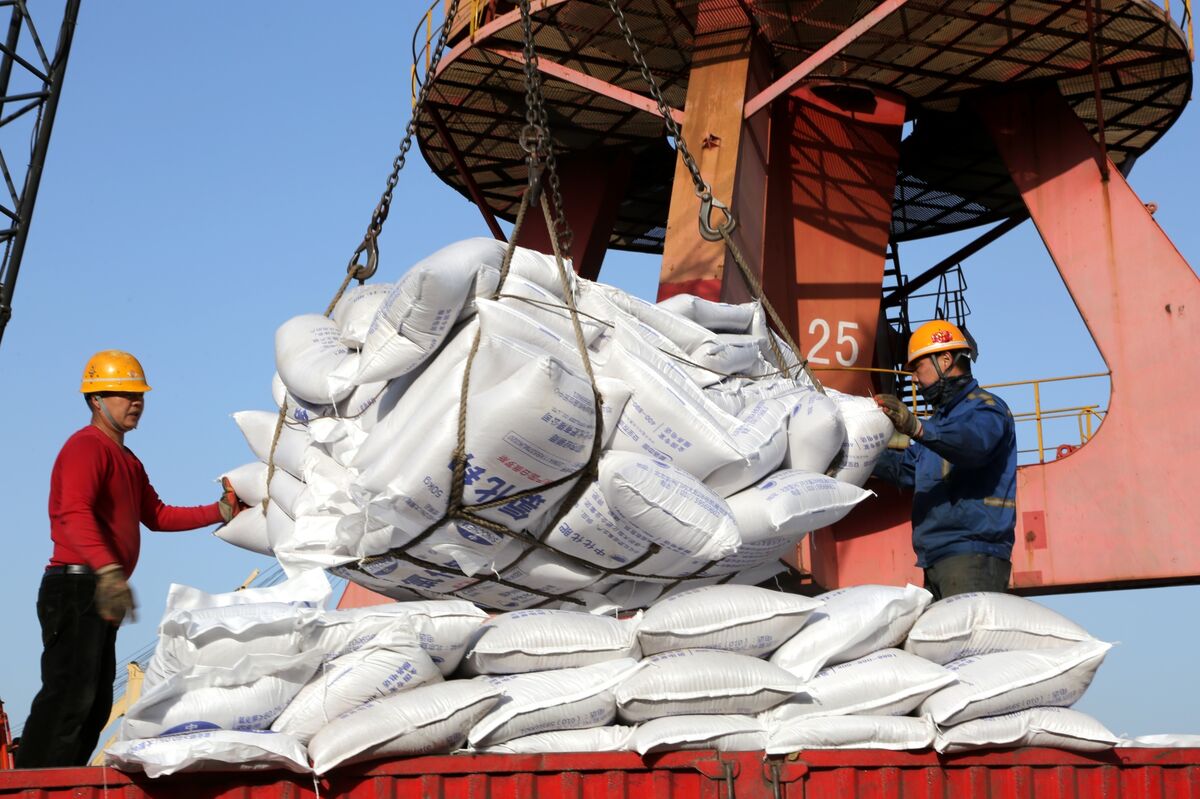

Philippines Seeks Fertilizer Security Amid Global Uncertainty, Engages China and Russia in Supply Talks
Manila, Philippines — As the global fertilizer market grapples with soaring prices and supply chain disruptions fueled by the ongoing conflict in the Middle East, the Philippines is taking proactive steps to secure its agricultural lifelines. In a bid to safeguard its food production, the Southeast Asian nation is in advanced discussions with major fertilizer producers, including China and Russia, to ensure stable supplies amid growing fears that exporters may default on contractual obligations due to geopolitical instability and economic pressures.
The move underscores the Philippines’ vulnerability to global market shocks and highlights the far-reaching consequences of the Israel-Hamas conflict, which has sent ripples across commodity markets worldwide. Fertilizer, a critical input for agriculture, has seen its prices skyrocket in recent months, threatening food security in a country where farming employs nearly a quarter of the workforce and contributes significantly to the economy.
The Global Fertilizer Crisis and Its Impact
The Philippines’ concerns are part of a broader global challenge. Fertilizer prices have surged since the onset of the Russia-Ukraine war in 2022, as sanctions on Russia, a major producer of potash and other key nutrients, disrupted global supply chains. The conflict in the Middle East has exacerbated the situation, driving up energy costs and further inflating fertilizer production expenses.
Fertilizers are heavily energy-dependent, with natural gas being a key component in the production of nitrogen-based fertilizers. The Middle East turmoil has pushed gas prices higher, forcing producers to pass on costs to consumers. For emerging economies like the Philippines, where agriculture is a cornerstone of livelihoods, this has created a perfect storm of rising costs and shrinking supplies.
According to the World Bank, global fertilizer prices remain elevated, hovering at nearly double their pre-pandemic levels. This has left developing countries scrambling to secure affordable supplies, with some fearing that exporters may prioritize more lucrative markets or fail to meet contractual obligations altogether.
The Philippines’ Strategic Response
Against this backdrop, the Philippines has embarked on a diplomatic and commercial offensive to mitigate the risks to its agricultural sector. Government officials have confirmed ongoing negotiations with key suppliers in China and Russia, two of the world’s largest fertilizer exporters, to lock in long-term agreements and ensure uninterrupted deliveries.
“We cannot afford to leave our farmers exposed to these global shocks,” said a senior official from the Philippine Department of Agriculture, who spoke on condition of anonymity. “Our goal is to secure stable supplies at reasonable prices, even if it means exploring non-traditional partnerships.”
China, the world’s largest producer and consumer of fertilizers, has emerged as a critical partner in these discussions. The Philippines is seeking to leverage its growing economic ties with Beijing to negotiate favorable terms, including price caps and guaranteed delivery schedules. Similarly, Russia, despite Western sanctions, remains a key supplier of potash and urea, and Manila is exploring alternative payment mechanisms to circumvent financial restrictions.
Domestic Implications and Public Concerns
The government’s efforts come at a crucial time for the Philippines, where agriculture accounts for nearly 10% of GDP and employs millions of smallholder farmers. Fertilizer shortages or price spikes could severely impact crop yields, exacerbating food inflation and threatening the country’s already fragile food security.
Farmers’ groups have voiced concerns over the rising cost of inputs, warning that many smallholders are struggling to stay afloat. “We’re already grappling with unpredictable weather and low selling prices. If fertilizer becomes unaffordable, many of us will be forced to abandon our fields,” said Juan Dela Cruz, a rice farmer from Central Luzon.
The government has responded by rolling out subsidies and financial assistance programs to cushion the blow. However, these measures are seen as stopgap solutions, with experts urging a more comprehensive strategy to address the root causes of the crisis.
Geopolitical and Economic Considerations
The Philippines’ negotiations with China and Russia also carry significant geopolitical undertones. As Manila seeks to diversify its supply chains, it must navigate a complex web of international alliances and economic dependencies.
China’s involvement, in particular, is noteworthy given the two countries’ historical tensions over territorial disputes in the South China Sea. However, the recent thaw in bilateral relations, coupled with Manila’s pragmatic approach to economic diplomacy, has opened new avenues for collaboration.
Russia’s role in the talks is equally delicate. While the Philippines has avoided direct criticism of Moscow’s actions in Ukraine, it must tread carefully to avoid alienating Western allies who have imposed stringent sanctions on Russia. The use of alternative currencies or barter arrangements has been floated as a potential solution, though experts warn of the risks associated with such unconventional trade mechanisms.
Looking Ahead: Challenges and Opportunities
As the Philippines moves forward with its plans, the challenges are manifold. Global fertilizer markets remain volatile, and the Middle East conflict shows no signs of abating. Moreover, the country’s reliance on imports underscores the need for long-term solutions, such as investments in domestic fertilizer production and sustainable agricultural practices.
“There’s no quick fix to this crisis,” said Dr. Maria Santos, an agricultural economist at the University of the Philippines. “The government must strike a balance between securing immediate supplies and building resilience for the future. This includes promoting organic farming, supporting local fertilizer manufacturers, and exploring innovative technologies.”
For now, the Philippines’ efforts to engage major producers like China and Russia represent a critical step in addressing the immediate threats to its agricultural sector. However, the success of these negotiations will depend on a combination of diplomatic finesse, economic pragmatism, and a commitment to long-term sustainability.
As the world grapples with the interconnected challenges of food security, energy prices, and geopolitical instability, the Philippines’ struggle to secure fertilizer supplies serves as a stark reminder of the fragility of global supply chains—and the urgent need for collaborative solutions. The road ahead is fraught with uncertainty, but for a nation reliant on its farmers, there is little choice but to persevere.
