


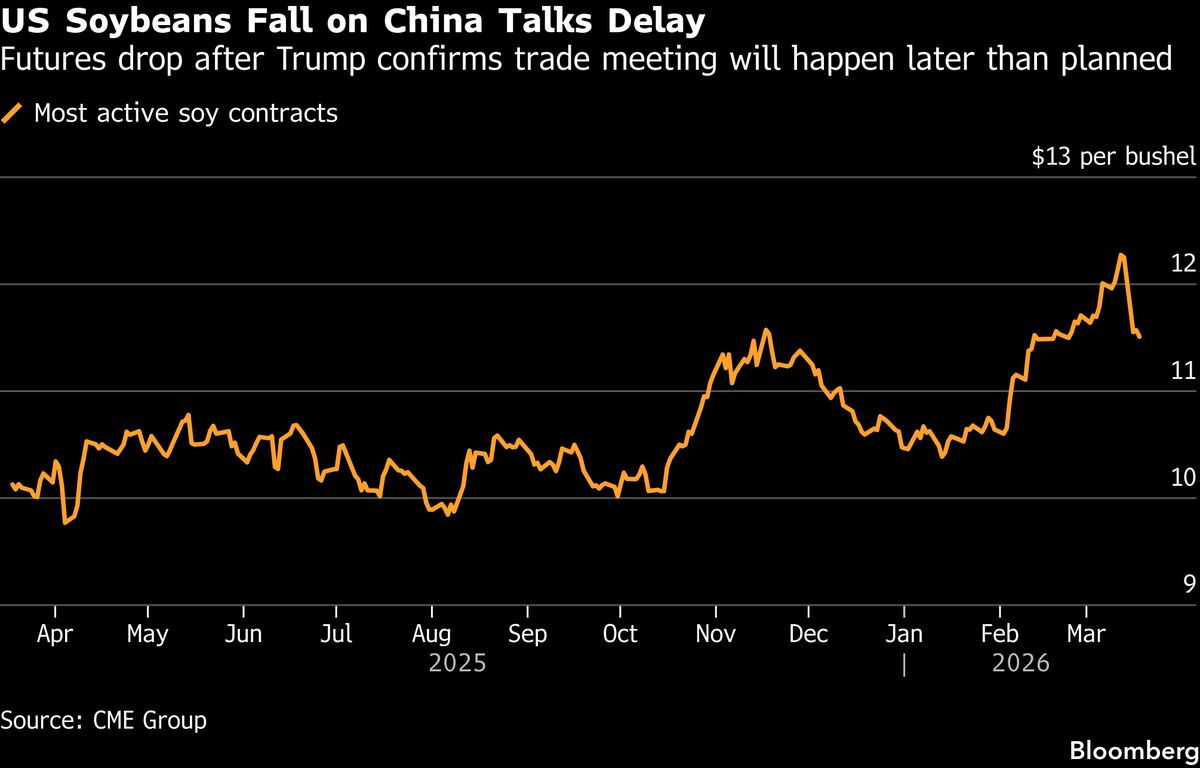

Soy Futures Plummet Amid Trade Tensions and Oil Price Dip as Trump Postpones China Visit
In a tumultuous start to the week for global markets, U.S. soy futures experienced a sharp decline following President Donald Trump’s announcement that he would postpone a crucial trip to China for trade negotiations. The decision, which underscores persistent tensions between the world’s two largest economies, sent ripples through agricultural markets already grappling with the fallout from a prolonged trade war. Meanwhile, a simultaneous downturn in crude oil prices further exacerbated investor anxieties, painting a picture of uncertainty as economic policymakers wrestle with unresolved trade disputes.
Trade Talks Delay Spurs Market Volatility
President Trump’s decision to delay his planned visit to China, initially slated for later this month, was confirmed on Monday, reigniting fears that the protracted trade conflict between Washington and Beijing may continue unabated. The postponement marks another setback in efforts to broker a comprehensive trade deal, which has been stalled since late last year despite multiple rounds of high-level negotiations.
The agricultural sector, particularly soybeans, has borne the brunt of the tit-for-tat tariffs imposed by both nations. China, once the largest buyer of U.S. soybeans, has drastically reduced its imports in favor of alternative suppliers such as Brazil, leaving American farmers in a precarious position. The announcement of the delayed trip triggered a sell-off in soy futures, with prices dropping to their lowest levels in weeks. Analysts warn that continued uncertainty could further erode confidence in agricultural markets, which are already struggling with oversupply and dwindling export opportunities.
Oil Prices Add to Market Pressures
Adding to the complexity of the economic landscape, crude oil prices also witnessed a notable decline, compounding the pressures on global markets. The dip in oil prices was attributed to concerns over weakening global demand and the potential oversupply in the energy market, amid muted progress in resolving the U.S.-China trade dispute. As oil prices fell, energy stocks took a hit, dragging down broader indices and amplifying the sense of unease among investors.
The interplay between agricultural commodities and energy markets is particularly significant in the U.S., where soybeans are a key feedstock for biodiesel production. A decline in crude oil prices often translates into reduced demand for biofuels, further impacting soybean prices. This dynamic underscores the interconnectedness of global markets and the far-reaching consequences of trade policy decisions.
Background: A Trade War with Global Repercussions
The U.S.-China trade war, which began in earnest in 2018, has evolved into one of the most consequential economic conflicts of the modern era. Stemming from longstanding grievances over trade imbalances, intellectual property theft, and market access, the dispute has escalated into a series of punitive tariffs affecting billions of dollars worth of goods.
Agriculture has emerged as a focal point in this battle, with China strategically targeting American farmers—a key demographic in Trump’s political base—by curtailing imports of soybeans, pork, and other commodities. In response, the U.S. administration has rolled out billions of dollars in subsidies to mitigate the financial impact on farmers. However, these measures have provided only temporary relief, as the sector continues to grapple with the long-term consequences of severed trade ties.
Broader Implications for Global Trade
The postponement of Trump’s China trip raises questions about the trajectory of trade negotiations and the broader implications for global economic stability. While both sides have signaled a willingness to engage in dialogue, substantive progress has remained elusive. The lack of a clear resolution has fueled concerns about the potential for a protracted economic slowdown, with ripple effects felt across industries and regions worldwide.
Economists warn that continued uncertainty could dampen business investment, disrupt supply chains, and undermine consumer confidence, all of which are critical drivers of economic growth. For markets, the stakes are high, as investors seek clarity on whether the world’s two largest economies can navigate their differences and forge a sustainable path forward.
Reactions from Industry and Experts
Industry leaders and trade experts have expressed a mix of frustration and cautious optimism in response to the latest developments. “This delay is disappointing but not entirely surprising,” said John Smith, a senior analyst at Global Trade Insights. “Both sides are grappling with complex domestic pressures, and finding common ground will require significant compromise.”
Farmers, meanwhile, have voiced growing concerns about the long-term viability of their livelihoods. “Every delay in resolving this trade war makes it harder for us to plan for the future,” said Sarah Thompson, a soybean farmer from Iowa. “We’re caught in the middle of a political tug-of-war, and it’s taking a toll on our communities.”
Looking Ahead
As the U.S. and China navigate the intricacies of their trade relationship, the path forward remains fraught with challenges. Analysts highlight the need for both sides to prioritize economic stability over geopolitical posturing, emphasizing the importance of constructive dialogue in crafting a mutually beneficial agreement.
For now, markets remain on edge, with investors closely monitoring developments for signs of progress—or further deterioration. The coming weeks will be critical in determining whether the U.S. and China can bridge their differences or if the trade war will continue to cast a shadow over the global economy.
In a world increasingly shaped by economic interdependence, the stakes could not be higher. As policymakers weigh their next moves, the fate of millions of farmers, businesses, and consumers hangs in the balance. The ultimate resolution—or lack thereof—will undoubtedly shape the contours of global trade for years to come.
