



Amy Acton Faces Uphill Battle in Ohio Governor Race Amid Pandemic Controversies
COLUMBUS, Ohio — Dr. Amy Acton, the Democratic candidate for Ohio governor, is gearing up for a tough general election campaign this November. Despite running unopposed in her party’s primary, Acton confronts significant hurdles as she aims to become the first Democrat in two decades to win the governorship in a state increasingly dominated by Republicans. Her likely opponent, Republican Vivek Ramaswamy, brings national recognition and a deep personal fortune fueling his campaign.
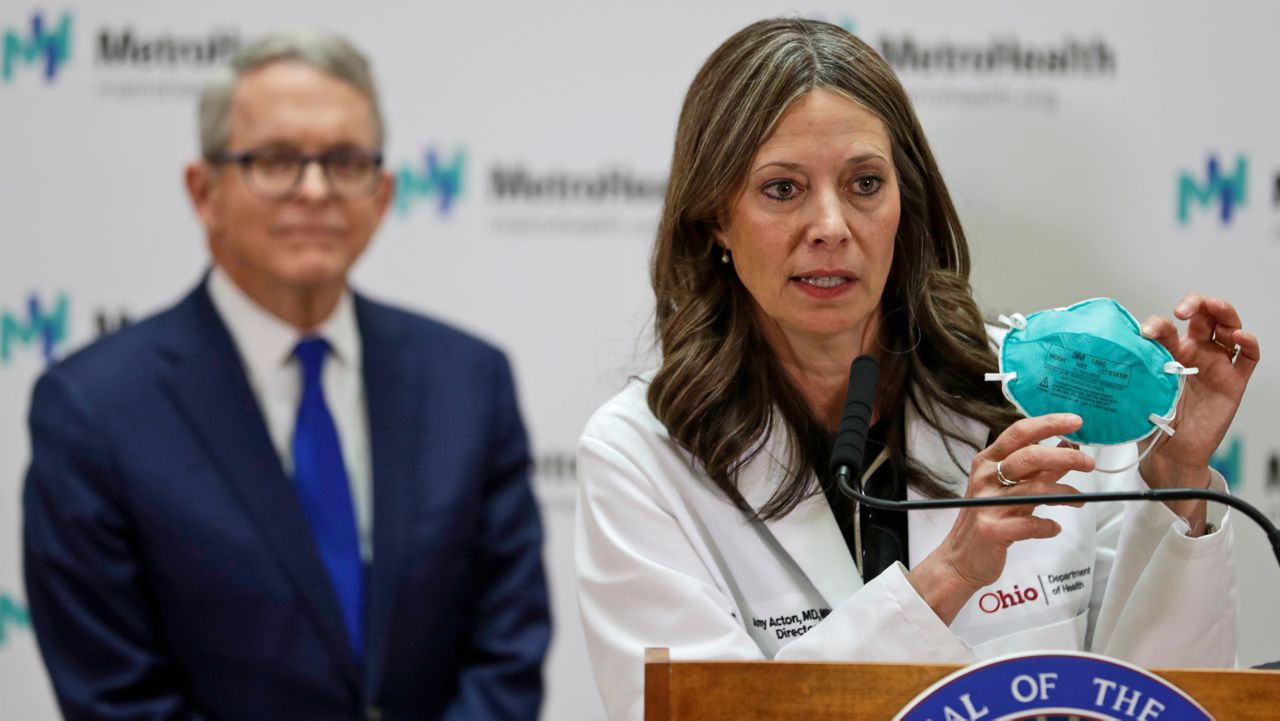
Acton, a physician and former Ohio public health director, became a household name during the early days of the COVID-19 pandemic. Her role in implementing sweeping measures to combat the virus—including school closures, business shutdowns, and the suspension of the 2020 primary election—has resurfaced as a central issue in the race. While some Ohioans praised her decisive actions, critics, particularly within the Republican Party, have accused her of overreach.
Ramaswamy has seized on this criticism, branding Acton as a symbol of “COVID ideology” and leveraging lingering resentment over the pandemic-era restrictions. At campaign rallies, his supporters echo this sentiment, framing the election as a choice between “liberty” and “lockdowns.”
A Divisive Legacy
Acton’s tenure as Ohio’s health director during the pandemic remains a double-edged sword. For many Democrats and public health advocates, she was a hero who prioritized safety over politics, earning her a devoted following complete with fan clubs, bobblehead dolls, and even calls for a state holiday in her honor.
Yet, for others, her decisions epitomize government overreach. Republican advertisements and speeches frequently highlight the 2020 primary election suspension, which Acton ordered at the urging of then-Governor Mike DeWine, a Republican. DeWine has since defended Acton, stating that the decision was his alone.
At campaign events, Acton has treaded carefully, often avoiding direct references to COVID-19 while emphasizing her commitment to public health. “I had the honor and privilege of serving in a very tough moment,” she told supporters in southwest Ohio earlier this year. “Together, we flattened the curve and saved lives.”
Ohio’s per capita death rate during the pandemic’s first year ranked 22nd nationally, according to the U.S. Centers for Disease Control and Prevention.
Ramaswamy’s Pandemic Ties
While Ramaswamy has positioned himself as a critic of Acton’s pandemic policies, his own record during the crisis has come under scrutiny. As CEO of Roivant Sciences, a biotechnology company he founded, Ramaswamy advised Ohio Lieutenant Governor Jon Husted on COVID-19 response efforts. A subsidiary of Roivant, Genevant Sciences, also played a role in vaccine-related patent disputes, culminating in a $2.2 billion settlement with Moderna in 2026.
Ramaswamy has since distanced himself from his pandemic-era activities, stepping down from Roivant’s board and removing references to his advisory role from public profiles. His campaign has emphasized his opposition to government mandates, despite his previous support for vaccines and mask-wearing.
“As a decision-maker, you have to weigh the costs and benefits of your actions,” Ramaswamy said in a recent interview. “You can’t be unmoored from the data.”
A Polarizing Race
The Ohio governor’s race has emerged as a microcosm of the nation’s ongoing reckoning with the pandemic’s legacy. Acton’s candidacy highlights the deep divisions over the role of government in public health and the lingering mistrust of institutions that emerged during the crisis.
At Democratic events, Acton is celebrated as a symbol of resilience and leadership. But at Republican gatherings, her name often elicits boos, underscoring the polarized atmosphere surrounding her campaign.
As the election approaches, both candidates are navigating their pandemic histories while appealing to voters eager for solutions to current challenges. With Ohio’s governorship at stake, the race promises to be a closely watched battle over the state’s future—and its past.
— Reported by Nexio News
