


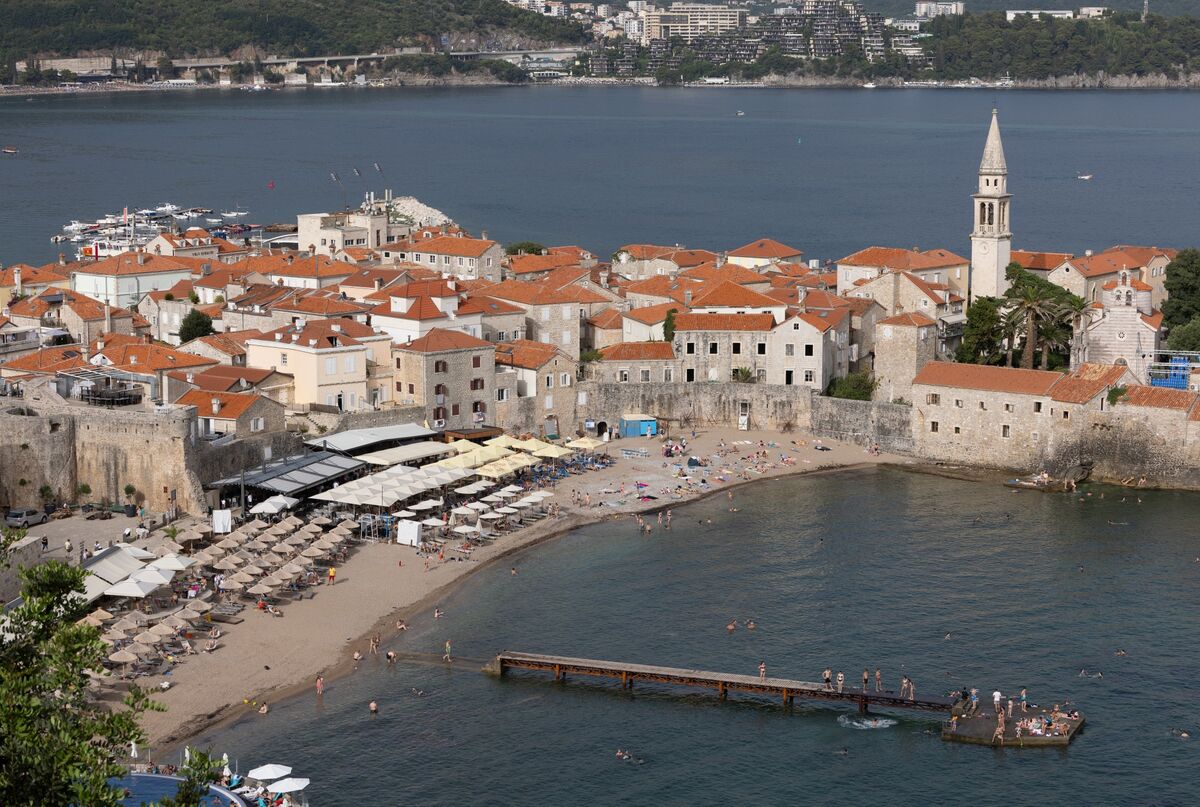

Montenegro’s Euro Dilemma: EU Seeks Solution for Unilateral Currency Adoption
By [Your Name]
Date: [Insert Date]
A Currency Conundrum in the Balkans
The picturesque Adriatic nation of Montenegro, long aspiring to join the European Union, faces a unique financial hurdle: its unilateral adoption of the euro. Unlike other EU candidates, Montenegro never formally negotiated the right to use the euro but adopted it as its de facto currency in 2002. Now, as accession talks progress, Brussels is grappling with how to resolve this legal and economic anomaly—one that could set a precedent for future enlargements.
Finance Minister Novica Vuković confirmed that discussions are underway between Podgorica and EU officials to find a mutually acceptable solution. The outcome could shape not only Montenegro’s path to membership but also influence how the bloc manages monetary policy with future applicants.
The Unusual Case of Montenegro’s Euro Adoption
Montenegro’s relationship with the euro is unconventional. After abandoning the Yugoslav dinar in 1999, it first adopted the Deutsche Mark before transitioning to the euro in 2002—despite not being part of the Eurozone or even the EU. At the time, the move provided much-needed monetary stability following years of economic turbulence. However, it also meant Montenegro forfeited control over its monetary policy, relying entirely on the European Central Bank (ECB) without any representation in its decision-making.
For years, the EU turned a blind eye, treating Montenegro’s euro usage as a pragmatic arrangement. But as the country advances in its EU accession bid—having opened all negotiation chapters—the issue can no longer be ignored. The bloc’s rules stipulate that adopting the euro requires formal approval and adherence to strict convergence criteria, including budget deficit limits and inflation control. Montenegro, by bypassing these steps, presents a legal quandary.
Why the EU Cares: Precedent and Policy
The EU’s hesitation isn’t merely bureaucratic. Allowing Montenegro to retain the euro without following standard protocols could encourage other candidate countries, such as Serbia or Bosnia, to take similar shortcuts. This risks undermining the Eurozone’s governance framework, which relies on rigorous economic coordination.
At the same time, forcing Montenegro to reintroduce its own currency—a costly and destabilizing process—is politically unpalatable. The country’s economy is deeply euroized, with over 60% of bank deposits and most contracts denominated in euros. Reversing this would trigger financial uncertainty, deter investment, and slow Montenegro’s EU integration.
EU officials are thus exploring middle-ground solutions. One possibility is a phased approach where Montenegro formally commits to meeting Eurozone criteria post-accession. Another is a special status allowing continued euro use while negotiating eventual full membership in the monetary union.
Montenegro’s Balancing Act
For Montenegro, the stakes are high. The country has staked its economic future on EU membership, viewing it as a catalyst for growth, foreign investment, and regional stability. Yet abandoning the euro—even temporarily—could spark public backlash. Citizens and businesses alike fear the instability of a currency switch, particularly after the euro proved resilient during past crises.
Finance Minister Vuković has sought to reassure stakeholders, stating that Podgorica is working closely with Brussels to find a “pragmatic and legally sound solution.” He emphasized Montenegro’s commitment to aligning with EU financial regulations, even as it seeks flexibility on the euro issue.
Broader Implications for EU Enlargement
Montenegro’s dilemma highlights a broader challenge for the EU: how to accommodate diverse economies while maintaining institutional integrity. The Western Balkans, a region still recovering from the wars of the 1990s, presents unique cases where informal arrangements once tolerated must now be formalized.
Experts warn that rigid enforcement of Eurozone rules could slow enlargement, pushing candidate countries toward alternative alliances with China or Russia. Conversely, too much flexibility might weaken the EU’s economic governance. Striking the right balance will be crucial as the bloc considers further expansion, including Ukraine and Moldova.
What Comes Next?
Technical discussions between Montenegro and the EU are expected to intensify in the coming months, with the European Commission likely to issue guidance by early 2025. Any agreement will require approval from member states, some of which—particularly fiscally conservative nations like Germany—may resist exceptions to Eurozone rules.
For now, Montenegro remains in limbo: economically tied to the euro, politically committed to the EU, but caught between the bloc’s ideals and its realities. As one EU diplomat privately noted, “This isn’t just about Montenegro—it’s about how Europe manages its own contradictions.”
The outcome will reveal much about the EU’s capacity to adapt—and whether its doors remain open to nations willing to embrace its future, even if they arrived there by an unconventional path.
