



Nicolas Sauvage’s Bold Vision: Predicting the Future of Tech Investments
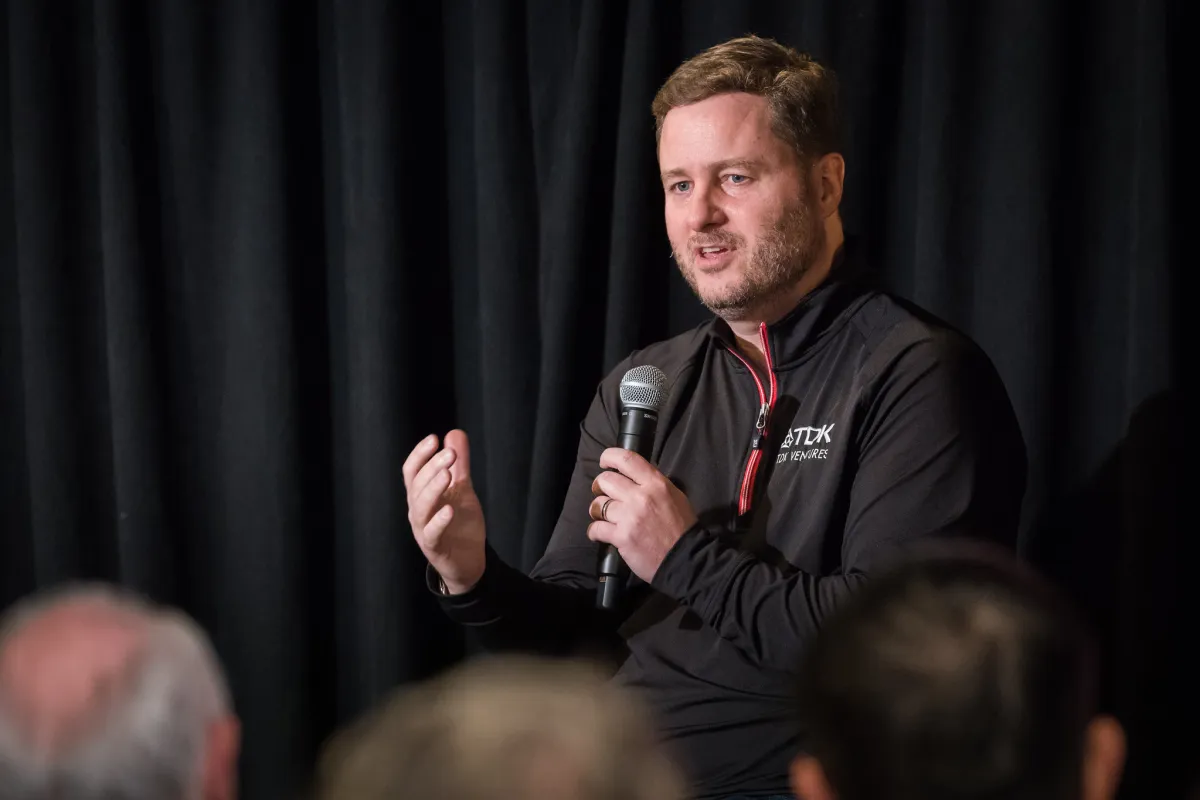
In the fast-paced world of venture capital, predicting the next big thing is a challenge that often feels like trying to catch lightning in a bottle. Yet, Nicolas Sauvage, managing partner of TDK Ventures, believes he has cracked the code. Speaking at last week’s StrictlyVC event in San Francisco, Sauvage unveiled a compelling theory: it takes four years for the most impactful technological bets to become obvious. This philosophy has guided his investment strategy since founding TDK Ventures, the corporate venture arm of Japanese electronics giant TDK Corporation, in 2019. Today, the firm manages $500 million across four funds, with AI chip startup Groq—now valued at $6.9 billion—standing as its crown jewel.
Sauvage’s approach is not just about spotting trends; it’s about anticipating the bottlenecks that will shape industries years before they become mainstream. As the tech world grapples with the explosive rise of generative AI and its infrastructure demands, Sauvage’s foresight offers a roadmap for where the next wave of innovation might emerge.
The Groq Gamble: A Case Study in Visionary Investment
Groq, founded by Jonathan Ross, one of the engineers behind Google’s Tensor Processing Units (TPUs), is perhaps the most prominent example of Sauvage’s investment philosophy in action. In 2020, well before the generative AI boom, Sauvage invested in Groq, drawn to its focus on inference—the computational process that occurs every time an AI model responds to a query. Ross had designed Groq’s chip by starting with the compiler, stripping the architecture to its bare essentials until, as Sauvage describes, “you can’t remove one part and have it still work.”
At the time, Groq’s niche focus might have seemed risky. But Sauvage saw a unique asymmetry: unlike consumer hardware, which faces natural demand ceilings, inference workloads compound endlessly as new applications and models emerge. Today, Groq’s chips are at the forefront of the AI infrastructure boom, powering systems that perform complex AI tasks faster and more efficiently than ever before.
Sauvage’s success with Groq underscores a broader lesson: identifying future bottlenecks requires a deep understanding of technological evolution and an ability to see beyond immediate trends. “The best bets take four years to become obvious,” Sauvage remarked during his StrictlyVC presentation. “The trick is to spot them before everyone else does.”
Building TDK Ventures: An Unlikely Success Story
The story of TDK Ventures itself is a testament to Sauvage’s persistence and vision. As a French executive based in Silicon Valley, Sauvage had no obvious leverage to pitch the idea of a corporate venture arm to TDK’s Tokyo headquarters. “I’m not Japanese. I don’t speak Japanese; I don’t live in Tokyo,” he quipped during his talk. Yet, after delivering two Stanford lectures—one advocating for corporate venture capital (CVC) and another cataloging its pitfalls—Sauvage managed to persuade TDK’s leadership to greenlight the venture.
Since its inception, TDK Ventures has built a diverse portfolio that reads like a who’s who of emerging tech trends. From solid-state grid transformers to sodium-ion batteries for data centers, Sauvage’s investments focus on technologies that address critical bottlenecks in energy, materials, and computing. The firm’s mandate is clear: identify the next big thing that could redefine TDK’s future—or potentially disrupt it.
What’s Next? The Future of Physical AI and Compute
Looking ahead, Sauvage is doubling down on two key areas: physical AI and the evolution of the compute stack. In the realm of robotics, he’s particularly interested in machines designed for highly specific tasks, rather than general-purpose robots. For example, Agility Robotics, a portfolio company, focuses on the seemingly mundane but critical task of moving goods in warehouses—a challenge exacerbated by workforce shortages. Similarly, ANYbotics builds rugged robots capable of operating in hazardous environments where humans cannot venture. “The through-line is clarity of purpose,” Sauvage explained. “These robots don’t try to do everything; they do one hard thing reliably.”
On the computing front, Sauvage believes CPUs are poised for a renaissance. While GPUs dominate AI training and inference chips like Groq’s excel at handling model responses, CPUs’ flexibility makes them ideal for orchestrating complex AI workflows. “When an AI agent delegates a task, checks on its progress, and loops back across dozens of steps, something has to manage the whole choreography,” Sauvage noted. “That something increasingly looks like a CPU.”
The China Factor: Rapid Prototyping and Manufacturing Innovation
Another area Sauvage is closely watching is China’s manufacturing innovation, which he describes as “vibe manufacturing.” Drawing parallels to the rapid iteration seen in software development, Chinese manufacturers are leveraging AI to compress the design-build-test cycle for physical products. This approach, detailed in a recent report from venture firm Eclipse, could give China a significant competitive edge in hardware production.
For Sauvage, this represents both an opportunity and a challenge. “The countries and companies that figure out how to iterate on atoms as fast as others iterate on code will have a manufacturing advantage,” he said. Addressing the bottleneck of dexterity—achieving physical fluency in AI systems—is a key focus for TDK Ventures as it positions itself for the next wave of innovation.
Conclusion: A Masterclass in Long-Term Thinking
Nicolas Sauvage’s approach to venture capital is a masterclass in long-term thinking. By focusing on future bottlenecks and backing founders tackling those challenges, he has built a portfolio that not only anticipates trends but also drives them. Whether it’s AI infrastructure, robotics, or manufacturing innovation, Sauvage’s investments reflect a deep understanding of technological evolution and a willingness to take calculated risks.
As the tech landscape continues to evolve, Sauvage’s philosophy offers a valuable lesson for investors and entrepreneurs alike: the most transformative bets often take years to materialize, but spotting them early requires vision, discipline, and a relentless focus on the future. In a world obsessed with short-term gains, Sauvage’s success is a reminder that true innovation is a marathon, not a sprint.
