


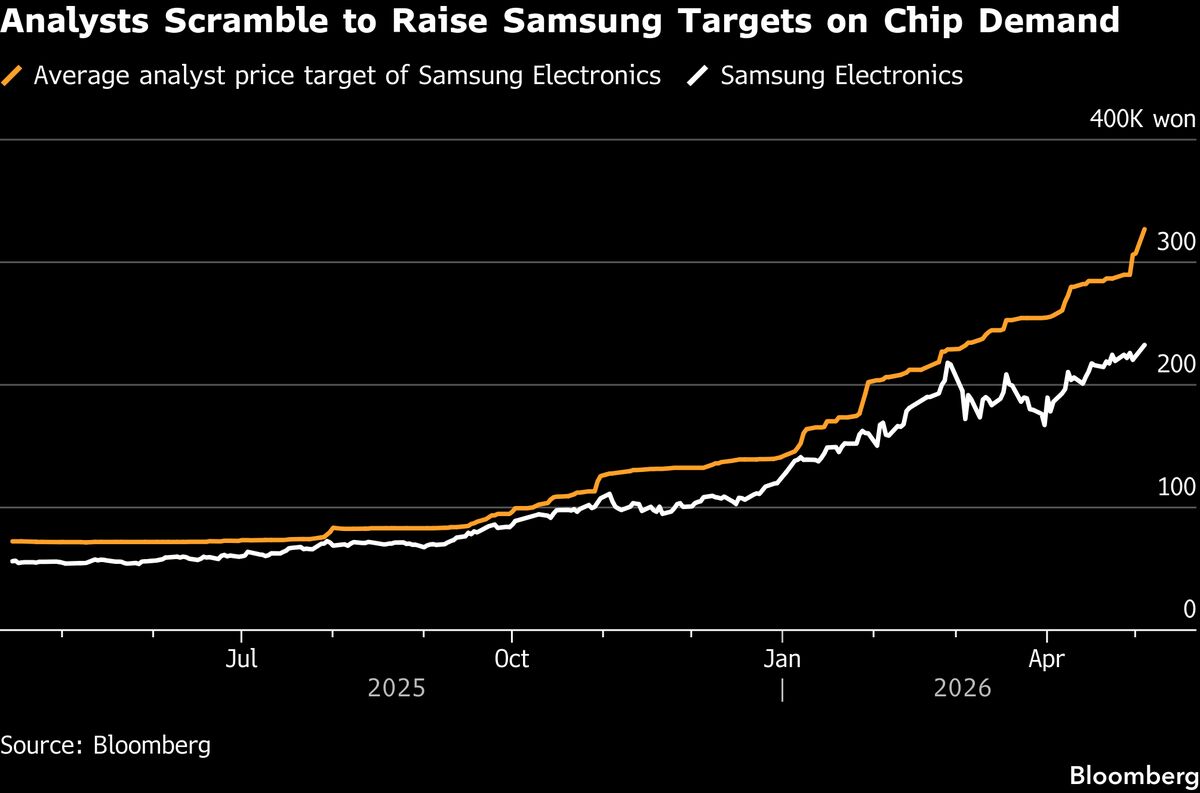

Samsung Electronics Surpasses $1 Trillion Valuation Amid AI Chip Boom
Historic Milestone as Tech Giant Rides Wave of Surging Semiconductor Demand
Seoul, South Korea – Samsung Electronics Co. has achieved a staggering $1 trillion market valuation, becoming one of the few companies globally to reach this elite milestone. The South Korean tech behemoth’s stock has skyrocketed over the past year, more than quadrupling in value as demand for advanced memory chips—particularly those powering artificial intelligence (AI) applications—continues to surge.
The landmark valuation cements Samsung’s position as a dominant force in the semiconductor industry, outpacing rivals and capitalizing on the AI-driven tech boom. Analysts attribute the company’s meteoric rise to its cutting-edge memory chips, which are essential for data centers, cloud computing, and next-generation AI models like those developed by OpenAI, Google, and Microsoft.
The AI Chip Revolution Fueling Samsung’s Growth
Samsung’s ascent to a $1 trillion valuation underscores the critical role of memory chips in today’s digital economy. As AI applications become more sophisticated, the need for high-performance DRAM (dynamic random-access memory) and NAND flash storage has exploded. Samsung, the world’s largest memory chipmaker, has been at the forefront of this revolution, supplying components for everything from smartphones to supercomputers.
Industry experts note that the AI boom has created an unprecedented demand for high-bandwidth memory (HBM), a specialized type of DRAM optimized for AI workloads. Samsung’s latest HBM3E chips, designed to accelerate machine learning and large language models (LLMs), have been a key driver of its financial success.
“Samsung’s ability to innovate in high-performance memory has given it a decisive edge,” said Park Sung-soon, an analyst at Seoul-based Cape Investment & Securities. “With AI data centers expanding rapidly, their advanced chip technology is now indispensable.”
Strategic Moves and Competitive Edge
Beyond memory chips, Samsung has aggressively diversified its semiconductor portfolio, investing heavily in foundry services to challenge Taiwan’s TSMC in manufacturing advanced logic chips. The company recently secured contracts to produce AI accelerators for major tech firms, further boosting investor confidence.
Additionally, Samsung’s vertical integration—controlling everything from chip design to production—has shielded it from supply chain disruptions that have plagued competitors. This self-sufficiency has proven invaluable amid geopolitical tensions and global chip shortages.
Challenges and Risks Ahead
Despite its historic valuation, Samsung faces significant challenges. The semiconductor industry is notoriously cyclical, and a potential oversupply of memory chips could dampen future profits. Geopolitical tensions, particularly between the U.S. and China, also pose risks, as export restrictions could impact Samsung’s access to critical markets.
Moreover, competition is intensifying. SK Hynix, Samsung’s closest rival, has also seen soaring demand for its AI memory chips, while TSMC remains the undisputed leader in advanced chip manufacturing. Maintaining its edge will require continued innovation and massive capital expenditures.
Broader Implications for the Tech Industry
Samsung’s $1 trillion milestone reflects the broader shift in the global economy, where semiconductor firms are now among the most valuable companies. The AI boom has reshaped market dynamics, with chipmakers eclipsing traditional tech giants in growth potential.
For South Korea, Samsung’s success is a point of national pride and economic stability. The company accounts for a significant portion of the country’s exports, and its performance directly impacts the broader economy.
What’s Next for Samsung?
Looking ahead, Samsung is expected to double down on AI-related technologies, including next-generation memory solutions and advanced chip packaging. The company has also signaled ambitions in AI processors, potentially competing with NVIDIA in the lucrative AI hardware market.
Investors will be watching closely to see if Samsung can sustain its momentum. While the $1 trillion mark is a historic achievement, the real test will be navigating the volatile semiconductor landscape while staying ahead of rivals.
Conclusion: A New Era for Semiconductor Dominance
Samsung’s rise to a $1 trillion valuation marks a pivotal moment in the tech industry, highlighting the critical role of semiconductors in the AI era. As demand for high-performance chips continues to grow, the company’s ability to innovate and adapt will determine whether it remains at the pinnacle of global tech—or faces new challenges in an ever-evolving market.
For now, Samsung stands as a titan of the digital age, proving that in the world of technology, the future belongs to those who power it.
