


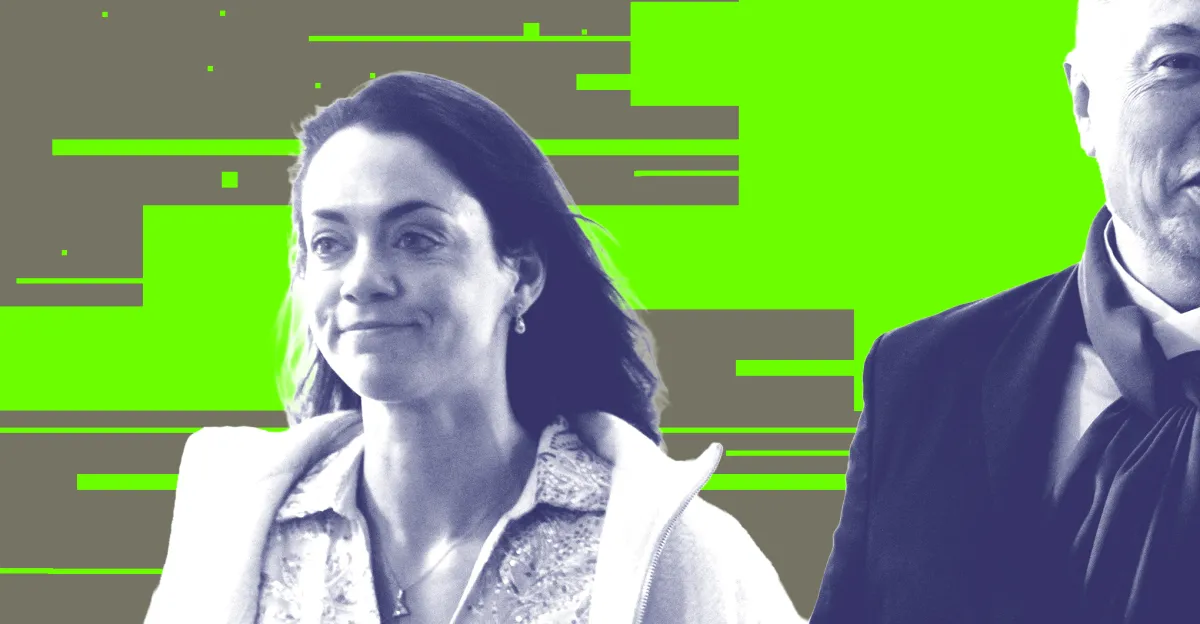

Shivon Zilis Testimony Unveils Stark Allegiances in Musk v. Altman OpenAI Trial
The courtroom drama surrounding the legal battle between Elon Musk and OpenAI took a dramatic turn this week as Shivon Zilis, a longtime confidante of Musk and mother to four of his children, took the stand. Her testimony, delivered in a hushed and deliberate tone, laid bare the intricate web of alliances, secrets, and power struggles at the heart of one of Silicon Valley’s most high-profile disputes. While Zilis appeared composed under cross-examination, her words and actions painted a picture of unwavering loyalty to Musk, raising questions about her impartiality and the extent of Musk’s influence over OpenAI during its formative years.
The trial, which centers on allegations of breach of contract and fiduciary duty, has captivated the tech world. Musk, who co-founded OpenAI in 2015 as a nonprofit dedicated to advancing artificial intelligence (AI) for the benefit of humanity, claims the organization has strayed from its mission by partnering with Microsoft and prioritizing profit over public good. Zilis, who served on OpenAI’s board from 2017 to 2018, emerged as a pivotal figure in the case, her testimony offering a rare glimpse into the inner workings of the organization and Musk’s behind-the-scenes maneuvering.
A Complex Relationship Comes to Light
Zilis’ relationship with Musk, both personal and professional, has been a subject of intense scrutiny. In her testimony, she confirmed that she and Musk met through OpenAI in 2017 and had what she described as a “one-off” romantic encounter before transitioning into a friendship and professional partnership. She described her role as Musk’s advisor, focusing on “finding bottlenecks and solving them” across his AI ventures, including Tesla, Neuralink, and OpenAI. Her workload, she testified, often stretched to 80 to 100 hours a week—an intensity she described as “just bananas.”
Perhaps the most startling revelation was Zilis’ admission that she and Musk are parents to twins born in 2021, as well as two other children. The paternity of her children, she testified, was a closely guarded secret—so much so that her own father was unaware of Musk’s role until it was revealed in court documents reported by Business Insider. OpenAI’s board, too, was kept in the dark until the news broke, raising questions about transparency and potential conflicts of interest.
Greg Brockman, OpenAI’s president and a longtime friend of Zilis since 2013, testified that he learned of her children’s paternity through media reports. When he confronted her, she assured him that her relationship with Musk was platonic and that her children were conceived through in vitro fertilization (IVF). This explanation, Brockman said, was sufficient for him to allow her to remain on the board—a decision that now appears fraught with naivety.
Notes That Changed the Course of the Trial
The crux of Zilis’ testimony revolved around a series of detailed notes she took during pivotal meetings in 2017 and 2018, when OpenAI’s founders debated whether to establish a for-profit arm of the organization. These notes, described as the trial’s most critical evidence, purportedly document discussions among Musk, Sam Altman, Brockman, and Ilya Sutskever, OpenAI’s co-founders, about the direction and control of the nonprofit.
In one email, Zilis outlined an option to “switch to for-profit in the next couple of weeks (woah fast!).” Another note highlighted Altman, Brockman, and Sutskever’s insistence on an “ironclad agreement” preventing Musk or any single individual from gaining absolute control over artificial general intelligence (AGI) developed by OpenAI. “They say they will not move forward without a guarantee to switch away from him having control,” Zilis wrote to Musk’s money manager, Jared Birchall. “You and I can argue that’s stupid all we want, but they are holding firm on it.”
Zilis’ notes also revealed Musk’s efforts to exert influence over OpenAI indirectly. At one point, she suggested that Musk’s associates, including herself, Birchall, and Sam Teller, should take seats on OpenAI’s board to ensure Musk retained control. In another email, she proposed incorporating OpenAI as a public benefit corporation subsidiary of Tesla or poaching top OpenAI talent, including Andrej Karpathy, to bolster Tesla’s AI efforts.
Allegations of Information Funneling
One of the trial’s most contentious moments came when OpenAI’s attorneys presented a text message in which Zilis asked Musk whether she should remain “close and friendly” to OpenAI to continue funneling him information. Zilis attempted to contextualize the message, describing the period as a “weird half-breakup” between Musk and OpenAI. However, OpenAI’s legal team pointed out that she had no recollection of this exchange during her deposition, leading attorney Sarah Eddy to quip, “Your long-lost memories have been recovered.”
Other evidence suggested Zilis was aware of Musk’s plans to launch a competitive AI venture long before they were publicly disclosed. In texts to a friend, whose name was humorously saved as “Shahini Rubicon Fluffer,” Zilis wrote, “Have to resign OpenAI board btw. E’s effort has become well-known.” She added, “When the father of your babies starts a competitive effort and will recruit out of OpenAI, there is nothing to be done.”
A Damning Conclusion
Throughout her testimony, Zilis maintained a calm and composed demeanor, often responding to questions with measured precision. Yet, her unwavering allegiance to Musk cast doubt on her impartiality, particularly given her decision to withhold information from OpenAI’s board about Musk’s growing ambitions. Her notes and communications painted a picture of a deeply intertwined personal and professional relationship, one that prioritized Musk’s interests above those of OpenAI.
As the trial continues, Zilis’ testimony has left a lasting impression on observers. Her role as a bridge between Musk and OpenAI, coupled with her intimate knowledge of both parties, has made her a central figure in the unfolding drama. While her motivations remain complex and multifaceted, one thing is clear: her primary allegiance lies with Elon Musk, a fact that could have profound implications for the outcome of this landmark case.
The Musk v. Altman trial underscores the blurred lines between personal relationships and professional responsibilities in the high-stakes world of tech leadership. As the courtroom saga unfolds, it serves as a stark reminder of the challenges inherent in governing groundbreaking technologies like AI—and the human frailties that can shape their trajectory.
