


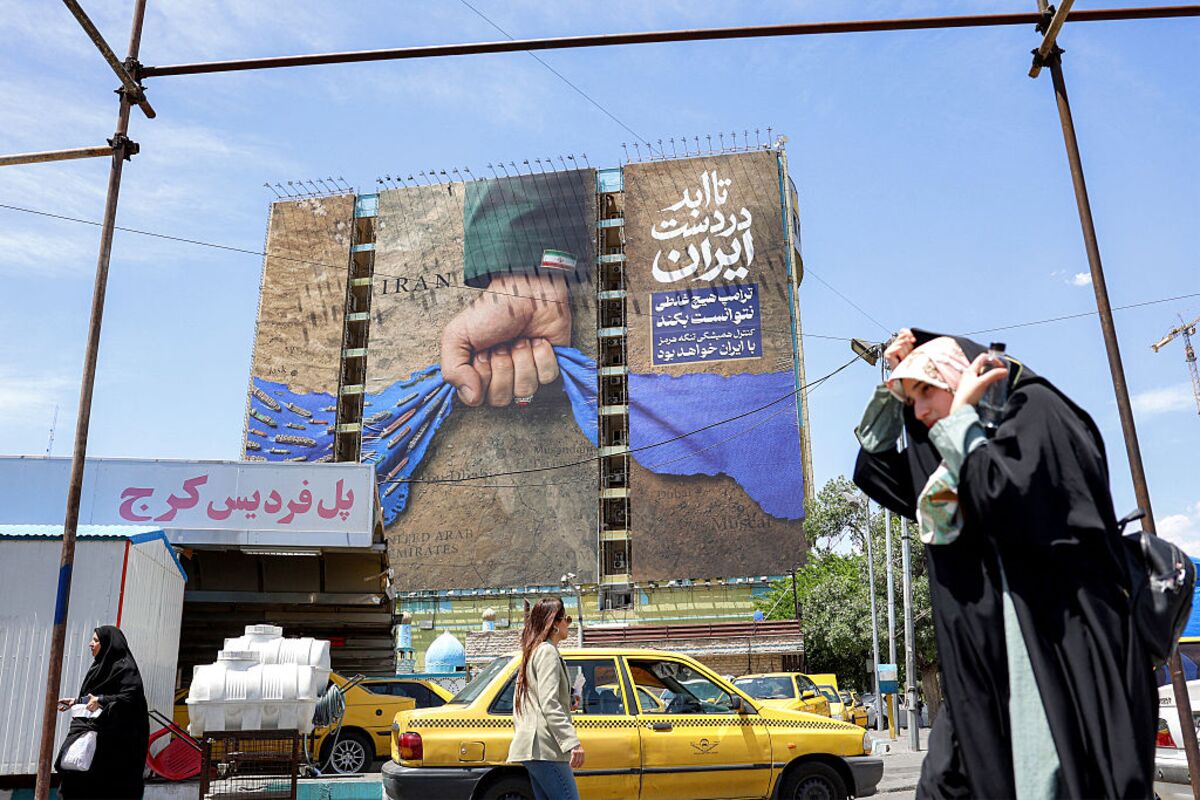

US Awaits Iran’s Response to Proposal Aimed at Reopening Strait of Hormuz Amid Regional Tensions
The United States is poised for a critical diplomatic maneuver as it awaits Iran’s formal response to a proposal aimed at reopening the strategically vital Strait of Hormuz, a move that could de-escalate a protracted conflict that has claimed thousands of lives and sent global energy prices soaring. The proposal, delivered through backchannel negotiations, seeks to restore stability to one of the world’s most important maritime chokepoints, which has been a flashpoint for military skirmishes and geopolitical tensions in recent years. With Iran’s response anticipated in the coming weeks, the international community watches closely, aware that the outcome could reshape regional dynamics and influence global energy markets.
The Strait of Hormuz: A Global Lifeline Under Threat
The Strait of Hormuz, nestled between Iran and Oman, serves as a gateway for nearly one-fifth of the world’s oil supply, making it a linchpin of global energy security. Approximately 21 million barrels of oil pass through the strait daily, connecting the oil-rich Persian Gulf with markets across Asia, Europe, and the Americas. Any disruption to this narrow waterway has immediate and far-reaching consequences, as evidenced by the recent surge in oil prices that has strained economies worldwide.
The current crisis stems from escalating tensions between Iran and its Gulf neighbors, exacerbated by a broader geopolitical rivalry involving the United States. Iran has been accused of targeting commercial shipping lanes and deploying its naval forces to assert dominance over the strait, while the U.S. and its allies have conducted military patrols to ensure free navigation. This standoff has created a volatile environment, with sporadic clashes raising fears of a full-blown conflict.
The US Proposal: A Path to De-escalation
The Biden administration’s proposal, details of which remain confidential, reportedly outlines a framework for reopening the Strait of Hormuz and reducing military posturing in the region. Sources familiar with the negotiations suggest the plan includes confidence-building measures, such as mutual reductions in naval deployments and guarantees of safe passage for commercial vessels. Additionally, the proposal is said to address broader regional security concerns, including Iran’s nuclear program and its support for proxy groups in conflicts across the Middle East.
Analysts laud the initiative as a pragmatic attempt to break the cycle of escalation, but caution that its success hinges on Iran’s willingness to engage constructively. “The U.S. proposal is a significant step toward de-escalation, but Iran’s response will determine whether this is a genuine opportunity for peace or merely a temporary pause in hostilities,” said Dr. Sarah Clark, a Middle East expert at the International Institute for Strategic Studies.
Iran’s Calculus: Domestic and Geopolitical Factors
Iran’s decision-making process is influenced by a complex interplay of domestic and geopolitical factors. Domestically, the Iranian government faces mounting economic pressure, driven by international sanctions and a struggling currency. Reopening the Strait of Hormuz could alleviate some of these pressures by stabilizing oil exports, which remain a critical source of revenue for the country.
On the geopolitical front, Iran’s leadership is wary of appearing conciliatory toward the United States, particularly in light of its hardline stance against Western influence in the region. Recent negotiations over Iran’s nuclear program have been fraught with mistrust, and any agreement involving the Strait of Hormuz would need to address Tehran’s broader security concerns.
“Iran’s response will likely reflect a balancing act between its economic imperatives and its ideological commitment to resisting U.S. hegemony,” said Ali Vaez, Iran Project Director at the International Crisis Group. “The key question is whether Tehran sees this proposal as an opportunity to achieve its objectives through diplomacy rather than confrontation.”
Global Implications: Energy Markets and Beyond
The outcome of these negotiations carries profound implications for global energy markets, already reeling from the combined effects of the COVID-19 pandemic, Russia’s invasion of Ukraine, and climate-driven disruptions. A resolution to the Strait of Hormuz crisis could provide much-needed relief, lowering oil prices and reducing inflationary pressures on economies worldwide.
Conversely, a failure to reach an agreement could further destabilize the region, with ripple effects for global security and trade. “The Strait of Hormuz is not just a regional issue; it’s a global concern,” noted energy analyst John Smith. “Any prolonged closure or disruption would have catastrophic consequences for the global economy.”
A Delicate Diplomatic Dance
As the United States awaits Iran’s response, the diplomatic stakes could not be higher. Success would mark a rare moment of cooperation in a region often defined by conflict, while failure could deepen divisions and escalate tensions. The international community, including key stakeholders such as the European Union, China, and Gulf Cooperation Council members, has a vested interest in supporting efforts to broker a peaceful resolution.
However, diplomatic breakthroughs are notoriously difficult to achieve in the Middle East, where decades of mistrust and competing interests often undermine even well-intentioned initiatives. The Biden administration’s ability to navigate this complex landscape will be tested in the weeks ahead, as it seeks to balance pressure with pragmatism.
A Closing Thought
The proposal to reopen the Strait of Hormuz represents a pivotal moment in the ongoing struggle for stability in the Middle East. While the path to peace remains fraught with challenges, the alternative—continued conflict and uncertainty—is far more daunting. As the world watches and waits, the hope is that diplomacy will prevail, offering a glimmer of hope in a region long beset by turmoil. Only time will tell whether this opportunity to bridge divides will be seized or squandered.
