


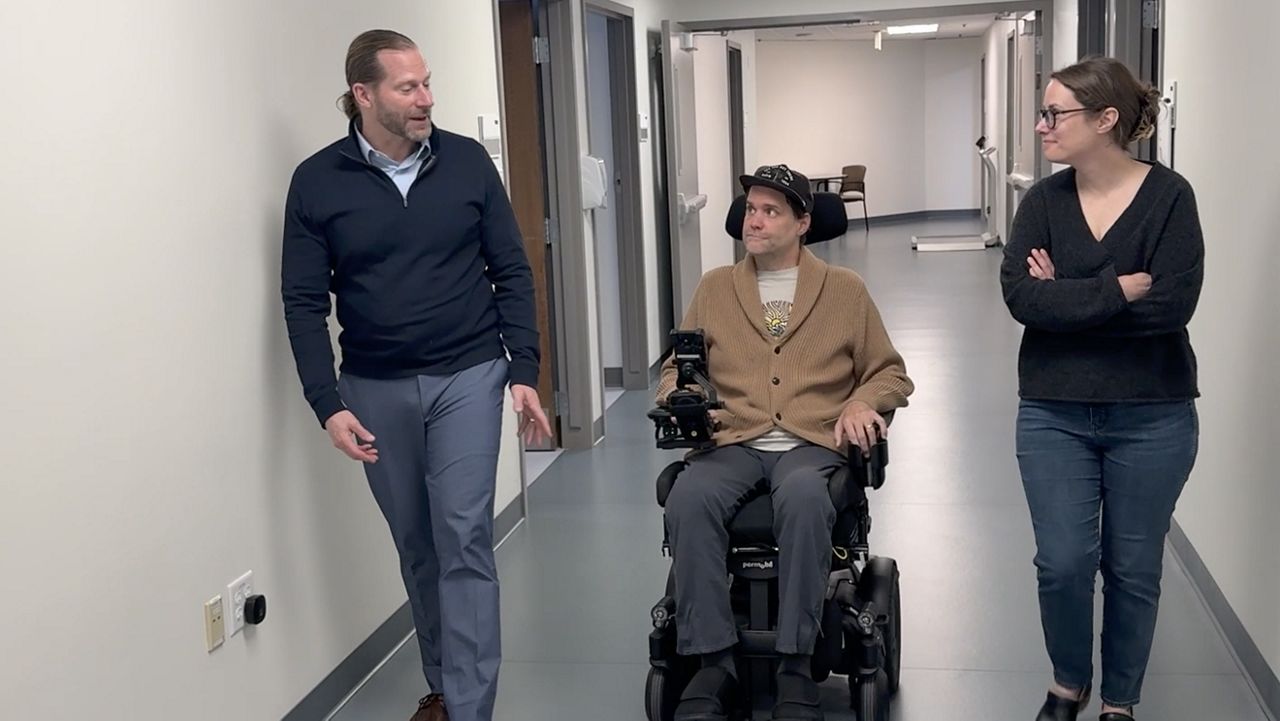

Cincinnati Man’s Hiking Trip Leads to Life-Altering ALS Diagnosis
CINCINNATI — For Jim Cunningham, hiking was more than just a hobby—it was a way of life. But during an August 2024 trek, something felt off. What started as a routine outing with his wife soon turned into the beginning of a life-changing journey.
“I noticed myself slipping and tripping a few times, which wasn’t normal for me,” Cunningham recalled. “My left foot became very weak.”
At first, Cunningham dismissed the discomfort as a temporary issue. However, after a year of persistent pain and frequent visits to his doctor, his condition showed no signs of improvement. In September 2025, Cunningham received a diagnosis that would redefine his life: amyotrophic lateral sclerosis, commonly known as ALS or Lou Gehrig’s disease.
ALS is a progressive neurodegenerative disease that affects nerve cells in the brain and spinal cord, leading to muscle weakness and paralysis. According to the Centers for Disease Control and Prevention (CDC), approximately 5,000 people in the U.S. are diagnosed with ALS each year. Sadly, the National Library of Medicine reports that the average life expectancy after diagnosis is just three-and-a-half years.
For Cunningham, a 48-year-old who once led an active lifestyle filled with outdoor adventures, the diagnosis was a devastating blow. “It was a big lifestyle change,” he said. “My wife and I used to go on hikes all the time. Now, I can’t even walk.”
Despite the grim prognosis, Cunningham has chosen to face his diagnosis with resilience and optimism. Dr. Robert Neal, a neurologist at the University of Cincinnati, has been impressed by Cunningham’s ability to process the diagnosis without bitterness or anger.
“Emotionally, he’s handled it better than most,” Neal said. “He’s kept his sense of humor and continues to smile, even though the future is uncertain.”
Cunningham’s wife, Rebecca Sylvester, called the initial diagnosis the “toughest pill to swallow.” However, she remains focused on making the most of their time together. “My first reaction was to shut down, but then I shifted into ‘go mode,’” Sylvester explained. “We’re figuring out how to make the time we have left as meaningful and easy as possible.”
Sylvester emphasized the importance of cherishing every moment. “Don’t give up on your person,” she urged. “Don’t forget that you still have this time together. Spend it wisely.”
Though Cunningham can no longer hike, he finds solace in the memories of his outdoor adventures. “Sometimes, I’ll look out the window at the woods and think, ‘If I could only walk, I’d be down there,’” he said. “But I’m grateful for the time I had and the experiences I was able to enjoy.”
Cunningham’s story highlights the importance of early diagnosis and the emotional toll ALS takes on patients and their families. While there is currently no cure, timely intervention can help reduce financial burdens and emotional stress for those affected by the disease.
As Cunningham and Sylvester navigate this challenging chapter, their message is clear: cherish every moment, lean on loved ones, and never lose hope.
— Reported by Nexio News
