



US Manufacturing Job Losses Spark Calls for Strategic Response to China’s Trade Practices
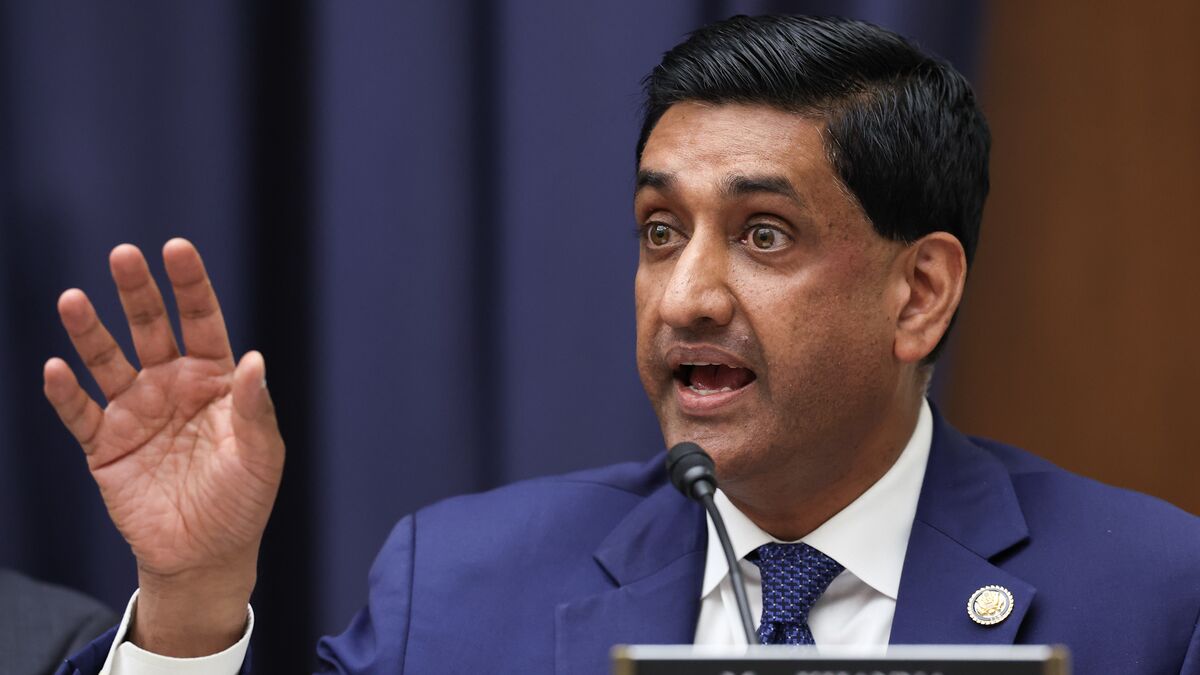
In the wake of staggering job losses across America’s manufacturing sector, Representative Ro Khanna (D-CA) has called for a decisive and strategic overhaul of US trade policy toward China. Over the past decade, an estimated 80,000 manufacturing jobs have vanished, a trend Khanna attributes to China’s “unfair trade practices.” In a recent interview, the California congressman emphasized the urgent need to protect American industries, bolster domestic supply chains, and address critical vulnerabilities in sectors ranging from agriculture to energy. His remarks come at a time of heightened economic tensions between the US and China, underscoring the broader geopolitical struggle for technological and industrial supremacy.
China’s expansionist trade policies have long been a point of contention for US lawmakers and business leaders. Critics argue that Beijing’s subsidization of domestic industries, manipulation of currency values, and dumping of cheap goods into global markets have systematically undercut American manufacturers. Khanna, a prominent voice on economic policy, warned that America’s reliance on Chinese imports—particularly in key sectors like pharmaceuticals, technology, and agriculture—has created a precarious situation. “We’ve allowed our industrial base to erode to a dangerous degree,” he stated. “It’s time to rethink our trade strategy and ensure we’re not just reactive, but proactive.”
The Impact on American Ports and Supply Chains
One of the most visible consequences of this imbalance is the strain on American ports, which have struggled to keep pace with surging demand for imported goods. At the height of the COVID-19 pandemic, ports like Los Angeles and Long Beach became logistical nightmares, with ships stranded offshore for weeks and container shortages exacerbating delays. While the pandemic was an unprecedented crisis, Khanna argued that the vulnerabilities exposed during this period were deeply rooted in flawed trade policies.
“Our ports are clogged because we’ve outsourced so much of our manufacturing to China,” he explained. “When disruptions occur, whether due to a pandemic or geopolitical tensions, we’re left scrambling to meet our own needs.” This reliance on Chinese imports, he added, has not only undermined domestic production but also weakened America’s ability to respond to global crises.
Agricultural Vulnerabilities and the Fertilizer Crisis
Beyond manufacturing, Khanna highlighted the precarious state of America’s agricultural sector, which has been hit hard by soaring fertilizer costs. Fertilizer prices have skyrocketed in recent years, driven in part by China’s dominance in the global fertilizer market. As the world’s largest exporter of phosphate and nitrogen-based fertilizers, China has leveraged its position to influence prices and disrupt supply chains.
For American farmers, this has translated into higher operational costs and thinner profit margins. Khanna stressed that addressing this issue requires not only diversifying sources of fertilizer but also investing in domestic production. “We can’t allow China to control something as fundamental as fertilizer,” he said. “It’s a matter of national security.”
Energy Security and the Strait of Hormuz
Another critical issue raised by Khanna is energy security, particularly in the context of geopolitical flashpoints like the Strait of Hormuz. This narrow waterway, which connects the Persian Gulf to the Gulf of Oman, is a vital artery for global oil shipments. Any disruption to traffic through the strait—whether due to military conflict or political tensions—could send shockwaves through the global economy.
Khanna pointed out that America’s reliance on imported oil makes it particularly vulnerable to such disruptions. While the US has significantly increased its domestic oil production in recent years, it remains a net importer of crude oil. Khanna argued that reopening the Strait of Hormuz—should it ever be closed by geopolitical actors—must be a top priority for US policymakers. “We need to ensure that our energy supply chains are resilient and that we’re not overly dependent on volatile regions,” he said.
A Broader Geopolitical Struggle
Khanna’s comments come against the backdrop of escalating tensions between the US and China, which have extended beyond trade to encompass technology, military strategy, and global influence. The Biden administration has sought to counter China’s rise through initiatives like the CHIPS and Science Act, which aims to boost domestic semiconductor production, and the Indo-Pacific Economic Framework, designed to strengthen economic ties with regional allies.
Despite these efforts, critics argue that the US has yet to adopt a cohesive strategy to counter China’s growing influence. Khanna’s call for a tougher approach reflects a broader consensus among policymakers that America must reassess its economic priorities and reduce its dependence on China.
Balancing Competition and Cooperation
While Khanna advocates for a more assertive stance, he also acknowledges the complexities of the US-China relationship. “We need to be firm, but not reckless,” he cautioned. “There are areas where we can and should cooperate, such as climate change and global health. But when it comes to trade and security, we have to prioritize our own interests.”
This nuanced approach underscores the delicate balancing act facing US policymakers as they navigate an increasingly multipolar world. On one hand, America must protect its economic and strategic interests; on the other, it must avoid actions that could escalate tensions or destabilize global markets.
The Path Forward
As the debate over US-China trade policy continues, Khanna’s proposals offer a roadmap for addressing some of the most pressing challenges facing the American economy. From revitalizing manufacturing to safeguarding agricultural and energy supply chains, his vision underscores the need for proactive, long-term solutions.
“This isn’t just about jobs,” he concluded. “It’s about preserving our economic sovereignty and ensuring that America remains a global leader in innovation and industry.”
Whether his calls for action will translate into concrete policy changes remains to be seen, but one thing is clear: the stakes for America’s economic future have never been higher. As the US charts its course in an era of intense global competition, the decisions made today will shape the trajectory of its industries—and its position on the world stage—for decades to come.
In the end, the challenge lies in finding a balance between competition and cooperation, resilience and adaptability, in a world where the rules of engagement are constantly evolving.
