


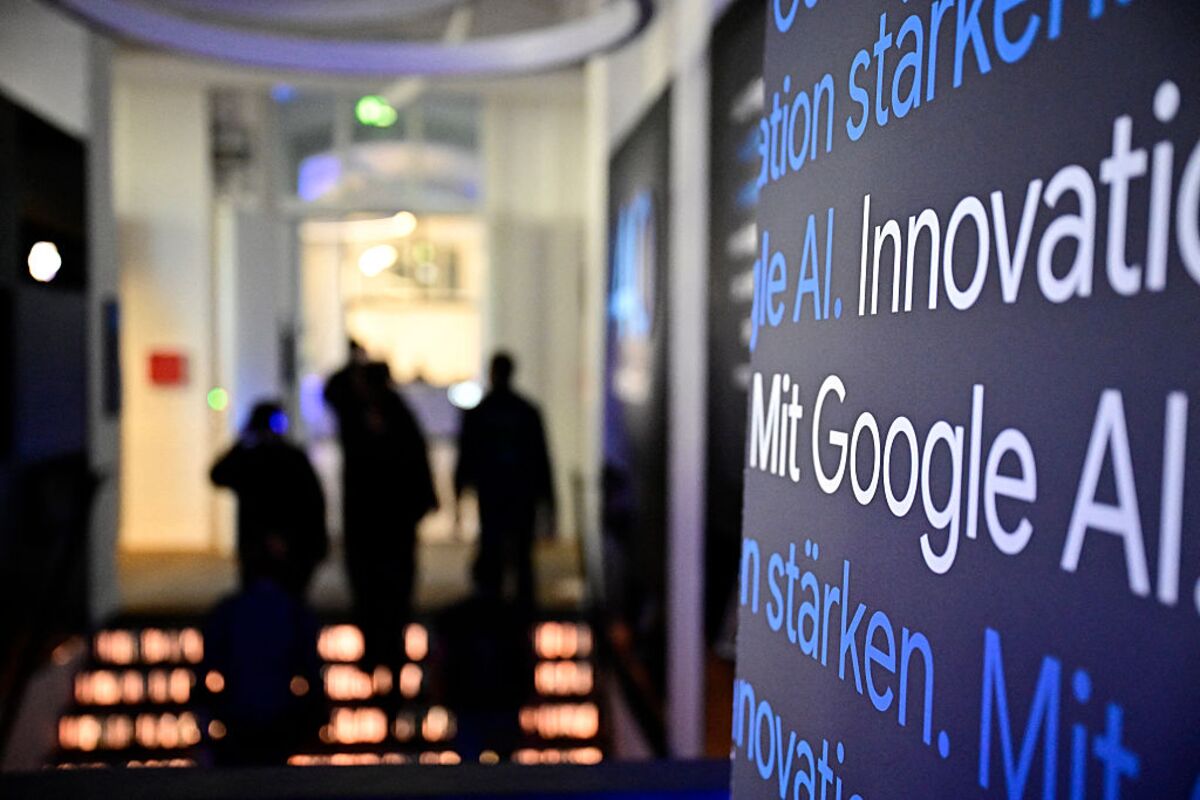

Alphabet Poised to Overtake Nvidia as AI Dominance Reshapes Tech Landscape
How Google’s Parent Company Became the Unstoppable Force in Artificial Intelligence
In just one year, Alphabet Inc. has transformed from an overlooked contender in artificial intelligence to the undisputed leader across nearly every segment of the AI revolution. With its vast resources, cutting-edge research, and strategic acquisitions, the Google parent company is now on the verge of surpassing Nvidia Corp. as the world’s most valuable firm—a staggering shift that underscores how rapidly AI is reshaping global markets.
What began as a race for AI supremacy has turned into a coronation for Alphabet, whose investments in large language models, quantum computing, and custom AI chips have positioned it as the most comprehensive player in the industry. Analysts now predict that Alphabet could dethrone Nvidia within months, marking a pivotal moment in the battle for technological dominance.
From AI Underdog to Market Leader
Just a year ago, Alphabet was perceived as lagging behind rivals like OpenAI and Microsoft in the generative AI boom. While competitors raced to deploy chatbots and image generators, Google’s cautious approach led some to question whether the tech giant had lost its innovative edge.
But behind the scenes, Alphabet was executing a sweeping AI strategy—one that leveraged its unparalleled data infrastructure, cloud computing dominance, and deep research expertise. The company’s DeepMind division, already a leader in machine learning, accelerated breakthroughs in reinforcement learning and protein folding. Meanwhile, Google Brain and other internal teams pushed forward with Gemini, its most advanced AI model yet, designed to outperform OpenAI’s GPT-4.
At the same time, Alphabet made strategic moves to reduce reliance on external AI chip suppliers. Its custom Tensor Processing Units (TPUs) have become a critical asset, allowing Google to train and deploy AI models faster and more cost-effectively than competitors dependent on Nvidia’s GPUs.
The Nvidia Challenge: Can the AI Chip King Hold Its Crown?
Nvidia’s rise to a $3 trillion valuation was fueled by its near-monopoly on AI hardware. The company’s graphics processing units (GPUs) became the backbone of AI development, powering everything from OpenAI’s ChatGPT to Tesla’s autonomous driving systems.
But Alphabet’s aggressive push into custom silicon has disrupted that dominance. By designing its own AI-optimized chips, Google has significantly reduced its dependence on Nvidia, setting a precedent that other tech giants—including Amazon, Microsoft, and Meta—are now following.
Industry experts warn that Nvidia’s explosive growth may slow as more companies seek alternatives to its expensive hardware. While CEO Jensen Huang insists demand remains insatiable, Alphabet’s vertically integrated approach—controlling both AI software and hardware—gives it a structural advantage that could soon translate into market supremacy.
The Broader AI Arms Race: Who Else is in the Running?
Alphabet’s ascent doesn’t mean the AI race is over. Microsoft, with its multi-billion-dollar partnership with OpenAI, remains a formidable competitor. Amazon is betting big on its Bedrock AI platform and custom Trainium chips, while Meta continues to open-source its AI models in a bid to shape industry standards.
Yet none of these players can match Alphabet’s end-to-end AI ecosystem. From search and advertising to cloud computing and autonomous vehicles, Google’s AI integration is unmatched. Its recent rollout of AI-powered features across Google Search, Workspace, and Android has further cemented its lead in consumer-facing applications.
What’s Next for Alphabet—and the AI Industry?
As Alphabet closes in on Nvidia, the implications extend far beyond stock valuations. The company’s dominance raises critical questions about competition, data privacy, and the ethical deployment of AI. Regulators in the U.S. and EU are already scrutinizing Big Tech’s influence over AI development, with potential antitrust actions looming.
For now, though, Alphabet’s momentum appears unstoppable. With its vast resources, relentless innovation, and control over critical AI infrastructure, the company is not just leading the AI revolution—it’s redefining what it means to be a tech powerhouse in the 21st century.
The only question left is whether anyone can catch up.
