



Emerging Markets Surge Amid AI Boom, Defying Geopolitical Tensions
By Global Financial News Desk
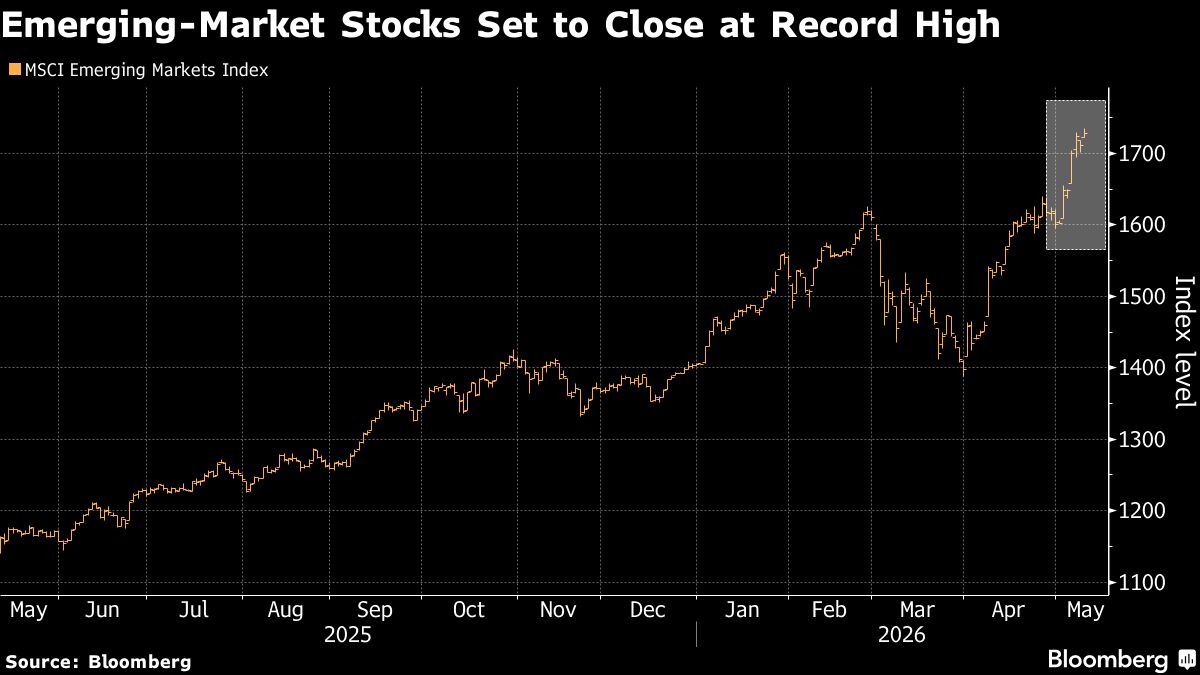
Global emerging markets experienced a robust rally this week as investors flocked to equities tied to the artificial intelligence (AI) sector, shrugging off escalating geopolitical tensions and stalled peace talks between the United States and Iran. The surge underscores the growing influence of AI-driven investments in shaping market sentiment, even as geopolitical uncertainties loom large.
The MSCI Emerging Markets Index, a benchmark for stocks in developing economies, climbed significantly, buoyed by gains in technology-heavy markets such as Taiwan, South Korea, and India. Analysts attribute the rally to heightened investor optimism around AI advancements, which have spurred demand for semiconductors, software, and other tech-related assets. This trend marks a notable shift in focus from traditional geopolitical risks to the transformative potential of cutting-edge technologies.
AI’s Dominance in Emerging Markets
The AI boom has been a driving force behind the recent outperformance of emerging-market equities. Companies involved in semiconductor manufacturing, cloud computing, and AI-related hardware have seen their stocks soar, attracting both institutional and retail investors. Taiwan Semiconductor Manufacturing Company (TSMC), a global leader in semiconductor production, posted impressive gains, reflecting its pivotal role in the AI supply chain. Similarly, South Korea’s Samsung Electronics and India’s Infosys have benefited from the growing appetite for AI-related investments.
“AI is no longer a niche sector; it’s becoming a cornerstone of global economic growth,” said Rachel Wong, a senior analyst at Hong Kong-based Capital Dynamics. “Emerging markets, with their strong manufacturing capabilities and tech talent, are uniquely positioned to capitalize on this trend.”
The AI sector’s momentum has been amplified by recent breakthroughs in generative AI technologies, such as OpenAI’s ChatGPT and Google’s Bard, which have sparked widespread interest in AI applications across industries. This enthusiasm has translated into increased funding for AI startups and heightened demand for the infrastructure needed to support AI development, including advanced semiconductors and data centers.
Geopolitical Concerns Take a Backseat
While AI-driven optimism has dominated market sentiment, geopolitical risks have not disappeared. Investors largely overlooked concerns surrounding the stalled peace talks between the U.S. and Iran, which have raised fears of renewed tensions in the Middle East. The talks, aimed at reviving the 2015 nuclear deal, have hit a stalemate, with both sides accusing each other of inflexibility.
The impasse has heightened uncertainty in the region, particularly around oil supplies, as Iran remains a major producer. However, the impact on global markets has been muted, thanks in part to stable oil prices and the diversification of energy sources in recent years.
“Investors seem to be pricing in the geopolitical risks associated with Iran and focusing instead on the tangible opportunities presented by AI,” said Michael Hartnett, chief investment strategist at Bank of America Merrill Lynch. “It’s a testament to the resilience of markets in the face of uncertainty.”
Broader Market Dynamics
The rally in emerging markets also reflects broader trends in global finance. With inflation in developed economies showing signs of moderation, central banks have adopted a more cautious approach to interest rate hikes, easing pressure on emerging markets. Additionally, the weakening U.S. dollar has made emerging-market assets more attractive to foreign investors.
“Emerging markets are benefiting from a confluence of factors, including favorable monetary policy, a weaker dollar, and strong fundamentals in key sectors,” said Priya Gupta, a global markets strategist at J.P. Morgan. “The AI boom is just the latest catalyst driving this outperformance.”
However, not all emerging markets have participated equally in the rally. Countries heavily reliant on commodity exports, such as Brazil and South Africa, have lagged behind their tech-driven peers. This divergence highlights the varying degrees of exposure to the AI boom across emerging economies.
Challenges and Risks Ahead
Despite the current optimism, analysts caution that emerging markets face significant challenges. Inflation remains a persistent issue in many developing economies, and the global economic slowdown could dampen demand for exports. Moreover, geopolitical risks, including tensions between the U.S. and China over semiconductor technology, could disrupt supply chains and weigh on market sentiment.
“While the AI sector offers tremendous growth potential, policymakers and investors must remain vigilant,” said David Li, a senior economist at the World Bank. “Structural reforms and prudent macroeconomic management will be critical to sustaining this momentum.”
Conclusion
The recent surge in emerging-market equities highlights the growing influence of AI-driven investments in shaping global financial trends. As geopolitical risks take a backseat to technological advancements, developing economies are seizing the opportunity to position themselves at the forefront of the AI revolution. However, the road ahead is fraught with challenges, and the sustainability of this rally will depend on how effectively emerging markets navigate the complex interplay of economic, technological, and geopolitical factors.
In a world increasingly shaped by innovation and uncertainty, emerging markets are proving their resilience—but the ultimate test of their strength lies ahead.
