


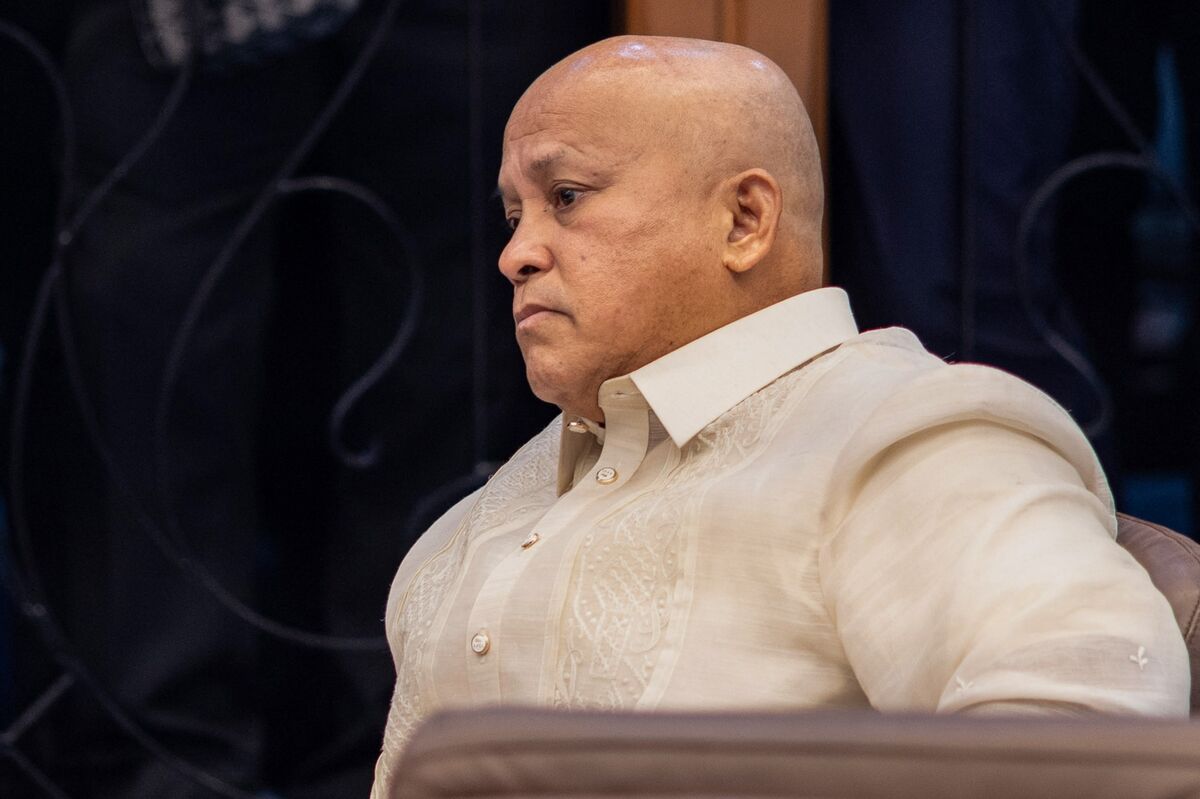

Philippine Politician Takes Refuge in Senate Amid Arrest Warrant Drama: A Political Standoff Captures National Attention
In a startling turn of events that has gripped the Philippines, a prominent politician wanted on an outstanding arrest warrant has sought refuge inside the Senate building in Manila, prompting a tense standoff with law enforcement authorities. The unfolding drama has captivated the nation, highlighting the deep-seated political tensions and legal complexities that continue to shape the country’s governance.
The politician at the center of the storm is Antonio Trillanes IV, a former naval officer-turned-senator known for his vocal criticism of President Rodrigo Duterte. Trillanes, who re-emerged into the public eye two days ago after weeks of silence, was holed up in the Senate on Monday as dozens of police officers gathered outside, ready to execute the warrant issued against him. The scene has been described as one of the most bizarre episodes in recent Philippine political history, underscoring the fraught relationship between the administration and its opponents.
The Arrest Warrant and Its Implications
The arrest warrant stems from a 2011 case involving coup d’état charges against Trillanes, stemming from his role in a failed rebellion against the government in 2003. Although he was granted amnesty in 2010 by then-President Benigno Aquino III, the Duterte administration revoked the amnesty in August 2018, citing procedural irregularities. This move effectively reinstated the charges against Trillanes, who has since maintained that the revocation is politically motivated, designed to silence dissent and intimidate critics of the administration.
Trillanes’ decision to seek refuge in the Senate has added a layer of complexity to the situation. The Senate building, as a legislative institution, enjoys a degree of immunity from law enforcement intervention, raising questions about the legality of executing an arrest warrant within its premises. Legal experts have debated whether the police have the authority to enter the building without consent from Senate officials, turning the standoff into a test of institutional boundaries and the rule of law.
A History of Defiance
Trillanes is no stranger to controversy and confrontation. Before entering politics, he gained notoriety for his involvement in the Oakwood Mutiny in 2003, where he and a group of military officers seized a luxury hotel in Manila to protest corruption within the armed forces and the government. Although the mutiny was quelled, it brought Trillanes into the national spotlight and fueled his eventual transition into politics.
As a senator, Trillanes has been a vocal critic of President Duterte, accusing him of human rights abuses, extrajudicial killings, and authoritarian tendencies. His relentless opposition has made him a frequent target of the administration, which has sought to discredit and prosecute him on multiple fronts. The revocation of his amnesty is widely viewed as part of a broader crackdown on dissent, with critics accusing the government of using the legal system to suppress political opponents.
Public Reaction and Political Ramifications
The dramatic standoff at the Senate has sparked a wave of reactions across the political spectrum. Supporters of Trillanes have hailed him as a symbol of resistance against an increasingly authoritarian regime, while critics argue that he is evading justice and undermining the rule of law. Social media has become a battleground for competing narratives, with hashtags such as #FreeTrillanes and #ArrestTrillanes trending as netizens weigh in on the unfolding drama.
The incident has also reignited debates about the state of democracy in the Philippines under Duterte’s leadership. Since taking office in 2016, Duterte has pursued a hardline approach to governance, prioritizing his controversial war on drugs and consolidating power through alliances with lawmakers and local officials. Critics argue that his administration has eroded democratic institutions and stifled political opposition, raising concerns about the country’s democratic trajectory.
International Attention
The standoff has not gone unnoticed on the international stage, where human rights organizations and foreign governments have been closely monitoring developments in the Philippines. Amnesty International and Human Rights Watch have expressed concerns about the erosion of civil liberties and the targeting of political dissidents, calling for a transparent and impartial resolution to the Trillanes case.
International observers have also pointed to the broader implications of the standoff for Southeast Asia, a region where democratic norms are increasingly under strain. The Philippines, long regarded as a democratic stronghold in the region, has seen its reputation tarnished by allegations of authoritarian governance and human rights abuses under Duterte. The Trillanes case is seen as a litmus test for the country’s commitment to the rule of law and democratic principles.
The Way Forward
As the standoff continues, questions remain about how the situation will be resolved. Legal experts have suggested that negotiations between Senate officials and law enforcement authorities may be necessary to avoid a potentially violent confrontation. Others have called for judicial intervention to clarify the legal boundaries surrounding the execution of arrest warrants within legislative premises.
The Philippine National Police has so far maintained that it will enforce the warrant in accordance with the law, but it remains unclear how it plans to proceed given the unique circumstances of the case. Trillanes, for his part, has vowed to remain defiant, insisting that he will not surrender until the courts rule on the legality of the arrest warrant.
A Test of Institutions
At its core, the Trillanes standoff is a test of the Philippines’ democratic institutions and their ability to withstand political pressure. The Senate, as a co-equal branch of government, finds itself at the center of a constitutional and legal dilemma, forced to navigate the delicate balance between upholding the rule of law and protecting its own autonomy.
For Trillanes, the standoff represents a moment of reckoning, a defining chapter in his turbulent political career. For the Duterte administration, it is an opportunity to assert its authority and send a message to its critics. And for the Filipino people, it is a reminder of the fragility of democracy and the need for vigilance in safeguarding it.
As the nation watches and waits, one thing is clear: the outcome of this political drama will have far-reaching implications for the Philippines, its democracy, and its future. Whether it serves as a catalyst for accountability or a harbinger of further authoritarianism remains to be seen. In the meantime, the saga of Antonio Trillanes IV continues to unfold, a stark reminder of the complexities and challenges of governance in a deeply polarized nation.
