


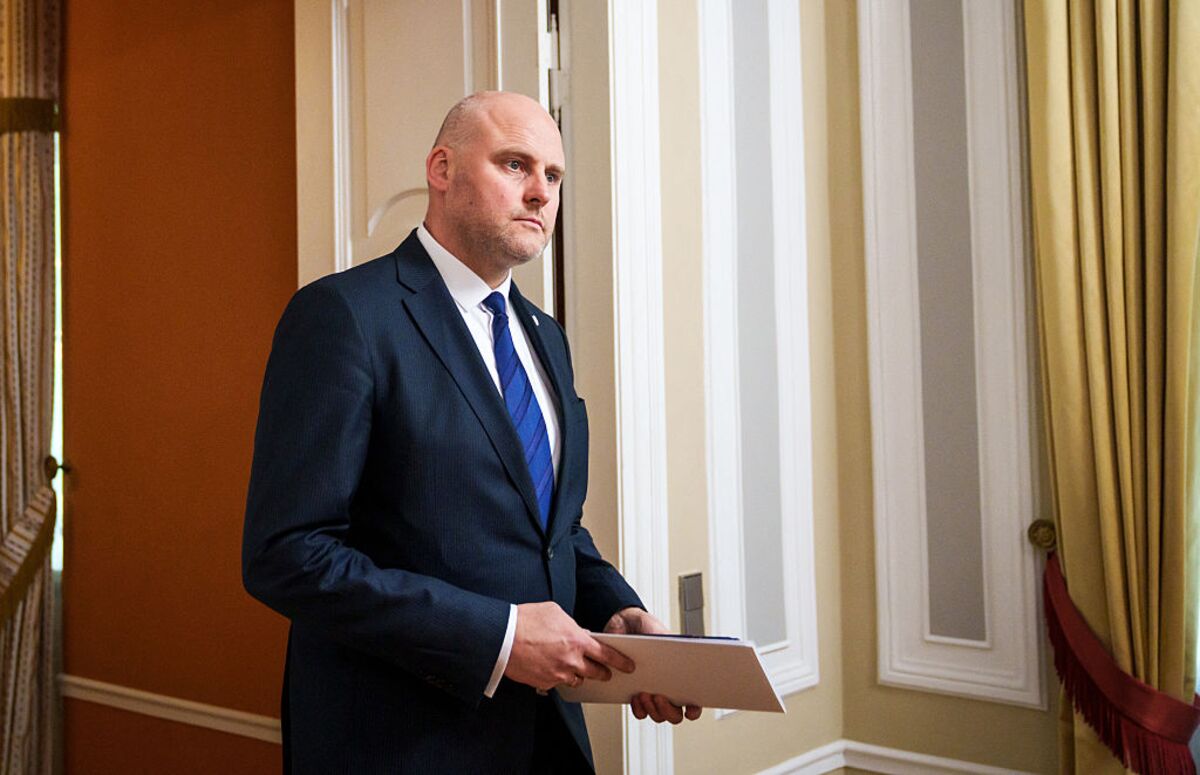

Latvia Faces Political Crossroads as President Nominates New Prime Minister Amid Military Controversy
In a dramatic turn of events, Latvia finds itself at the center of a political storm as President Edgars Rinkevics nominated Andris Kulbergs, a member of the United List party, to form a new government. This pivotal move follows the resignation of Prime Minister Evika Silina on Thursday, triggered by a heated dispute over the handling of a recent drone incursion into Latvian airspace. The incident has not only exposed tensions within the ruling coalition but also raised questions about national security and governance in the Baltic nation, which has long been a staunch ally of NATO amid rising regional tensions with Russia.
A Cascade of Events: From Drone Incident to Political Fallout
The crisis began last week when an unidentified drone breached Latvian airspace, prompting concerns about potential Russian aggression. Latvia, like its Baltic neighbors Estonia and Lithuania, has been on heightened alert since Russia’s full-scale invasion of Ukraine in 2022. The incident, however, took a political turn when questions arose over the Latvian Armed Forces’ response. Critics argued that the military’s handling of the drone incursion was inadequate, raising doubts about the country’s preparedness to defend its sovereignty.
Prime Minister Silina, a member of the New Unity party, faced fierce criticism from coalition partners and opposition lawmakers. Amid mounting pressure, she announced her resignation, stating that she could no longer lead effectively given the escalating divisions within the government. Her departure marks a significant moment in Latvian politics, coming just months after she assumed office in September 2023. Silina’s brief tenure underscores the challenges of maintaining unity in a coalition government, a recurring theme in Latvia’s parliamentary system.
Andris Kulbergs: A New Hope or Familiar Challenges?
President Rinkevics’ nomination of Andris Kulbergs to lead the government reflects an attempt to stabilize the political landscape. Kulbergs, a 45-year-old economist and former finance minister, is seen as a pragmatic leader with experience navigating complex fiscal and economic challenges. His party, the United List, is a center-right coalition that has traditionally focused on rural development, economic growth, and conservative values.
However, Kulbergs faces an uphill battle in securing the support of Latvia’s fragmented 100-seat parliament, the Saeima. The United List holds only 15 seats, requiring Kulbergs to negotiate alliances with multiple parties to form a majority. Analysts suggest this could lead to protracted talks, further delaying the formation of a stable government at a time when Latvia faces pressing economic and security concerns.
Context: Latvia’s Geopolitical Significance
Latvia’s political turmoil comes at a time of heightened geopolitical tensions in the Baltic region. As a member of NATO and the European Union, Latvia has been a vocal advocate for increased military support to Ukraine and stronger deterrence measures against Russia. The recent drone incident highlights the vulnerabilities of Latvia’s air defense systems, which have been a topic of concern among NATO allies.
The Baltic states, often described as NATO’s eastern flank, have been at the forefront of efforts to counter Russian aggression. Latvia, with its sizable Russian-speaking minority, has also grappled with internal challenges, including concerns about potential fifth-column activities and misinformation campaigns. The government’s ability to maintain national unity and security will be critical in the coming months, especially as Russia continues to exert pressure on Ukraine and its neighbors.
Economic Pressures Amid Political Uncertainty
Beyond security concerns, Latvia’s new government will need to address economic challenges that have been exacerbated by the war in Ukraine and global inflationary pressures. The country’s economy has faced headwinds, with rising energy costs and inflation straining households and businesses. Kulbergs’ background in economics may prove advantageous, but his ability to pass meaningful reforms will depend on securing broad political support.
Latvia’s economy has historically been driven by sectors such as agriculture, manufacturing, and logistics. However, the government has recently sought to diversify its economic base, emphasizing innovation and digital transformation. Critics argue that political instability could hinder these efforts, potentially slowing Latvia’s recovery and undermining investor confidence.
Public Sentiment and the Road Ahead
The resignation of Prime Minister Silina has elicited mixed reactions from the Latvian public. While some view it as a necessary step to address governance issues, others worry that frequent leadership changes could undermine the country’s stability. Public trust in political institutions remains fragile, a legacy of years of corruption scandals and economic challenges.
As Kulbergs prepares to take on the role of prime minister, he will need to navigate these complexities while addressing the pressing issues of national security and economic recovery. His success will depend not only on his ability to build consensus within parliament but also on his capacity to reassure Latvians that their government is capable of protecting their interests in an increasingly uncertain world.
Conclusion: A Nation at a Crossroads
Latvia’s political drama underscores the challenges facing small nations in an era of geopolitical upheaval. The nomination of Andris Kulbergs offers a chance for stability, but it also highlights the fragility of coalition politics in a country where unity is often hard-won. As Latvia looks to the future, its leaders must balance the demands of national security with the need for economic resilience, all while maintaining the trust of their citizens. In a region where the stakes are high, Latvia’s next steps will be closely watched by allies and adversaries alike.
