


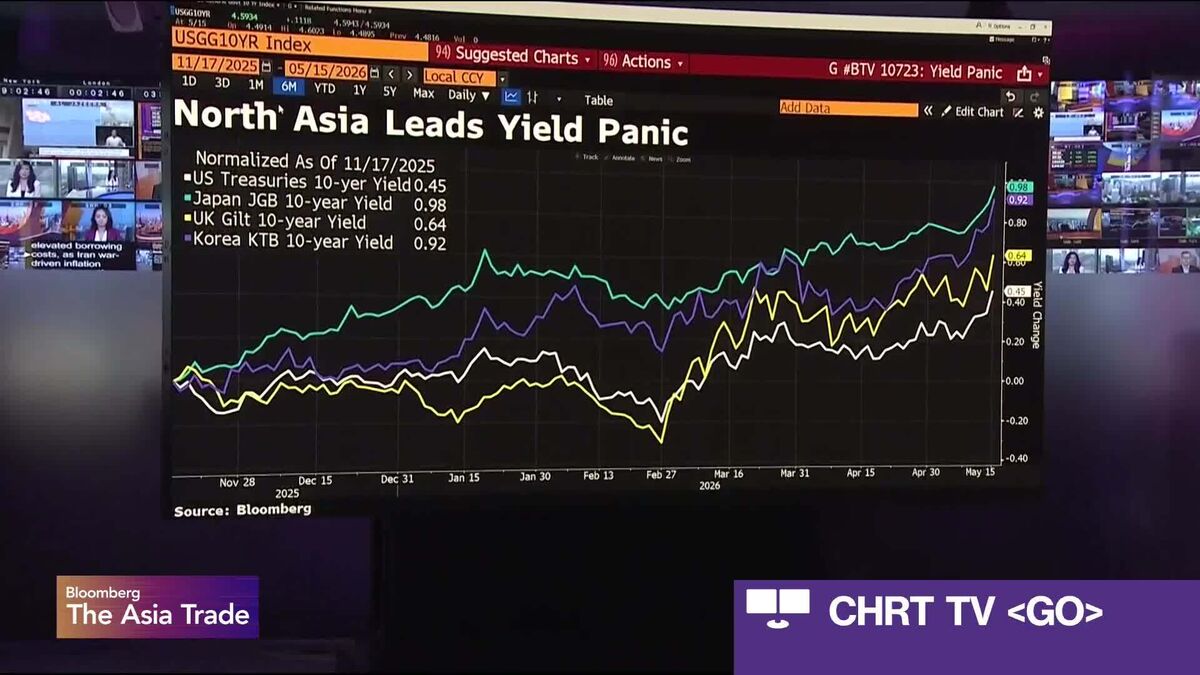

Global Bond Yields Surge as Rising Oil Prices Reignite Inflation Worries
In a sharp reversal of recent trends, long-term bond yields across major global markets have surged to multi-year highs, driven by escalating oil prices and mounting fears of persistent inflation. The sudden shift has sent shockwaves through financial markets, prompting investors to reassess their strategies amid growing uncertainty about the global economic outlook. The situation underscores the delicate balance central banks must strike as they navigate the dual challenges of curbing inflation while avoiding a deeper economic slowdown.
Oil Prices Fuel Inflation Fears
The primary catalyst for the recent turbulence in bond markets has been the dramatic rise in global oil prices. Brent crude, the international benchmark, has climbed to over $95 per barrel, its highest level in nearly a year, while U.S. West Texas Intermediate (WTI) crude has followed suit. Analysts attribute the surge to a combination of factors, including supply cuts by major oil producers such as Saudi Arabia and Russia, coupled with stronger-than-expected demand from key economies like China and India.
The spike in energy costs has reignited concerns about inflation, which had shown signs of moderating earlier this year. Higher oil prices not only raise the cost of transportation and manufacturing but also have a cascading effect on other goods and services, making it harder for central banks to achieve their inflation targets. This has led to a sharp sell-off in government bonds, pushing yields higher as investors demand greater compensation for the risks of prolonged inflation.
Bond Markets React Sharply
The ripple effects of rising oil prices have been felt most acutely in the bond market, where yields on long-term government securities have soared. In the United States, the yield on the benchmark 10-year Treasury note recently crossed the 4.5% threshold, its highest level since 2007. Similarly, Germany’s 10-year bund yield has climbed to 2.8%, marking a 12-year peak, while the UK’s equivalent gilt yield has reached 4.4%, a level not seen since the 2008 financial crisis.
The surge in bond yields reflects growing market expectations that central banks may need to maintain elevated interest rates for longer than previously anticipated. Higher borrowing costs could weigh heavily on economic growth, particularly in sectors like housing and consumer spending, which are highly sensitive to interest rate changes.
Central Banks in a Tight Spot
The inflationary pressures caused by rising oil prices come at a time when many central banks are already grappling with the aftermath of aggressive monetary tightening over the past year. The U.S. Federal Reserve, the European Central Bank (ECB), and the Bank of England (BoE) have all raised interest rates significantly to combat inflation, but the recent spike in energy costs threatens to undermine their efforts.
Analysts warn that central banks may face a difficult dilemma in the coming months. While higher interest rates are necessary to keep inflation in check, they also risk triggering a recession or exacerbating financial instability. “The resurgence in oil prices has added a new layer of complexity to the inflation fight,” said Mark Cranfield, a markets strategist at Bloomberg. “Central banks are walking a tightrope, and the margin for error is razor-thin.”
Global Economic Implications
The interplay between rising oil prices and bond yields has far-reaching implications for the global economy. Higher energy costs could erode consumer purchasing power, particularly in emerging markets where fuel subsidies are limited. This, in turn, could dampen demand for goods and services, potentially slowing economic growth.
For businesses, the combination of elevated borrowing costs and rising input prices could squeeze profit margins, leading to reduced investment and hiring. Companies in energy-intensive industries, such as manufacturing and transportation, are especially vulnerable to these pressures.
Meanwhile, governments around the world are facing higher borrowing costs as bond yields rise, complicating efforts to finance public spending and manage debt levels. In the U.S., for example, the federal government is grappling with a mounting budget deficit, which could be further exacerbated by higher interest payments on its debt.
Investor Sentiment and Market Volatility
The recent developments have also roiled financial markets, with investors scrambling to adjust their portfolios in response to shifting economic dynamics. Stock markets have come under pressure as higher bond yields make equities less attractive relative to fixed-income securities. The tech-heavy Nasdaq Composite Index has been particularly hard hit, as many of its constituent companies are highly sensitive to interest rate changes.
At the same time, the U.S. dollar has strengthened against a basket of other currencies, reflecting its status as a safe-haven asset amid global uncertainty. While a stronger dollar benefits American consumers by lowering the cost of imported goods, it can weigh on the earnings of U.S. multinational companies that derive a significant portion of their revenue from overseas.
Historical Context and Lessons Learned
The current situation evokes memories of previous periods of oil-driven inflation, such as the 1970s oil shocks and the more recent surge in energy prices during the early 2000s. During these episodes, central banks faced similar challenges in balancing inflation control with economic growth, often resorting to drastic measures to stabilize their economies.
However, some analysts caution against drawing direct parallels with the past. “Today’s global economy is vastly different from that of the 1970s,” noted Jane Smith, an economist at the International Monetary Fund (IMF). “Technological advancements, changes in energy consumption patterns, and the rise of renewable energy sources have altered the dynamics of oil price shocks.”
Looking Ahead
As policymakers and investors brace for the fallout from rising oil prices and bond yields, much will depend on how central banks navigate the months ahead. The upcoming meetings of the Federal Reserve, ECB, and BoE will be closely watched for clues about the future trajectory of interest rates.
While the immediate outlook remains uncertain, one thing is clear: the stakes are high. The decisions made by central banks in the coming weeks could have lasting repercussions for the global economy, shaping the arc of inflation, growth, and financial stability for years to come.
As the world grapples with this latest chapter in the inflation saga, the ultimate challenge will be to strike a balance between taming prices and sustaining economic momentum—a task that will require careful calibration and decisive action.
