


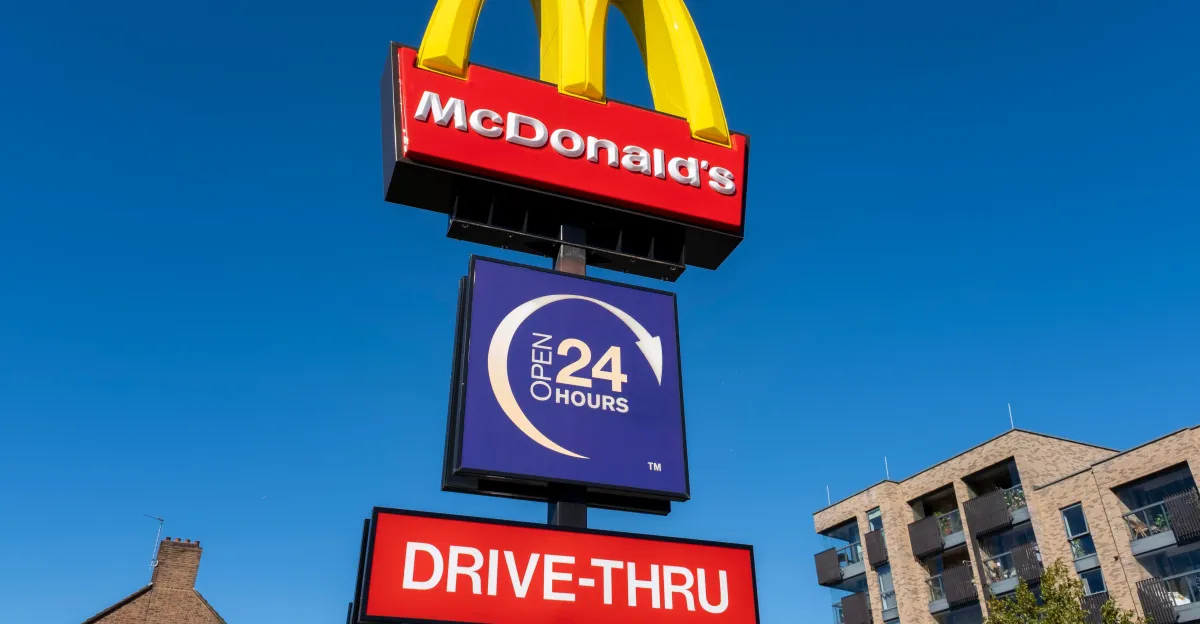

AI Takes the Wheel: The Rise and Challenges of Automated Drive-Thrus in Fast Food
The fast-food industry, long a bastion of human interaction, is undergoing a technological revolution as artificial intelligence (AI) takes center stage. From McDonald’s to Wendy’s, major chains are increasingly deploying AI-powered drive-thru systems to streamline operations, reduce labor costs, and enhance customer experiences. Yet, as these digital assistants proliferate, they are facing significant pushback from customers who miss the human touch, raising questions about the future of automation in one of the world’s most ubiquitous industries.
The Pioneers of Automation
The shift toward AI-driven drive-thrus began in earnest in 2021, when McDonald’s introduced its voice-ordering technology at 10 locations in Chicago. This move marked a significant step in the chain’s broader strategy to integrate AI into its operations. McDonald’s had laid the groundwork for this transition two years earlier, acquiring Apprente, a startup specializing in conversational AI technology. The company later partnered with IBM to scale its automated ordering systems, aiming to improve efficiency and reduce wait times.
McDonald’s was not alone in embracing this trend. In 2022, Checkers and Rally’s teamed up with Presto, an AI company, to deploy chatbots at all corporate-owned drive-thrus across the United States. The goal was twofold: to boost sales by upselling items and to improve order accuracy. The chains also touted the technology as a way to free up employees for other tasks, alleviating some of the pressures of labor shortages.
Wendy’s and Taco Bell soon followed suit. In 2023, Wendy’s launched its “FreshAI” chatbot at a single location in Columbus, Ohio. Developed in collaboration with Google, the system was trained to understand Wendy’s unique menu lingo—recognizing, for example, that a “Frosty” is a milkshake and a “JBC” is a junior bacon cheeseburger. After achieving an 86% success rate in accurate orders without human intervention, Wendy’s began rolling out the technology to additional locations.
Similarly, Taco Bell announced plans to expand its Voice AI drive-thru systems to hundreds of U.S. locations by the end of 2024. The chain emphasized the potential of AI to reduce employee workloads and speed up service. Other fast-food giants, including Panera Bread, White Castle, Carl’s Jr., Hardee’s, Panda Express, and Popeyes, have also been experimenting with AI-powered drive-thrus, signaling a growing industry-wide trend.
Customer Resistance and Technical Glitches
Despite the enthusiasm from fast-food executives, customers have been less than thrilled with the new technology. A January 2025 survey by YouGov found that 55% of Americans prefer human servers at drive-thrus, while only 4% favor AI chatbots. This lukewarm reception has led some chains to reconsider their strategies.
McDonald’s, for instance, ended its partnership with IBM in 2024, citing customer dissatisfaction and technical limitations. Taco Bell, too, has faced challenges. Dane Mathews, the chain’s chief digital officer, revealed in 2025 that the company was reevaluating its AI drive-thru deployment after social media backlash and incidents of customers trolling the system—such as ordering 18,000 water cups in a single transaction.
Technical issues have further eroded trust in AI drive-thrus. In 2023, the Securities and Exchange Commission (SEC) charged Presto with misleading customers about the capabilities of its technology. An investigation revealed that human workers in the Philippines were secretly handling most orders taken by Presto’s AI system, undermining its claims of full automation.
Beyond the Drive-Thru: AI’s Expanding Role
While AI drive-thrus have garnered the most attention, fast-food chains are exploring other applications of artificial intelligence to enhance operations. McDonald’s, for example, is using AI to predict equipment failures, aiming to address the notorious downtime of its ice cream machines. The company has also deployed AI-powered scales to ensure orders meet weight targets, alerting employees if items like fries are missing from a meal.
Burger King is piloting “Patty,” an AI assistant embedded in employee headsets. Patty provides real-time guidance on food preparation—such as the number of bacon strips for a Texas Double Whopper—while also evaluating staff for friendliness by monitoring phrases like “welcome to Burger King” and “thank you.” Additionally, Burger King’s AI systems notify managers of equipment malfunctions and update digital menus when items are out of stock.
Taco Bell is experimenting with dynamic AI-driven menu boards that adjust content and visuals based on individual customers. Meanwhile, chains like Culver’s and Zaxbys are collaborating with Berry AI to implement camera timers at drive-thrus, reducing service times by 20–40% and improving traffic flow management.
The Broader Impact of AI in Dining
The fast-food industry is just one sector embracing AI. Restaurants like Applebee’s and IHOP are exploring AI systems to personalize menu recommendations and upsell items. A 2025 survey by the National Restaurant Association found that 26% of restaurant operators are now using AI, primarily for marketing and administrative tasks.
Grocery stores are also jumping on the AI bandwagon. Retailers like Whole Foods, Wegmans, ShopRite, Kroger, and Sprouts are testing AI-powered shopping carts that streamline the checkout process. These innovations underscore the growing role of AI in reshaping consumer experiences across industries.
Yet, as AI becomes more pervasive, questions about its impact on jobs, privacy, and customer satisfaction remain unanswered. While proponents argue that AI can alleviate labor shortages and improve efficiency, critics warn of potential job losses and the erosion of human interaction.
A Balancing Act
The fast-food industry’s embrace of AI reflects a broader trend toward automation in service sectors worldwide. While the technology promises significant benefits, its success hinges on addressing customer concerns and technical limitations. As chains continue to refine their AI systems, the challenge will be to strike a balance between innovation and the human touch that customers value.
In the end, the rise of AI in fast food is not just a technological evolution—it’s a test of how society navigates the tension between efficiency and empathy in an increasingly automated world.
