


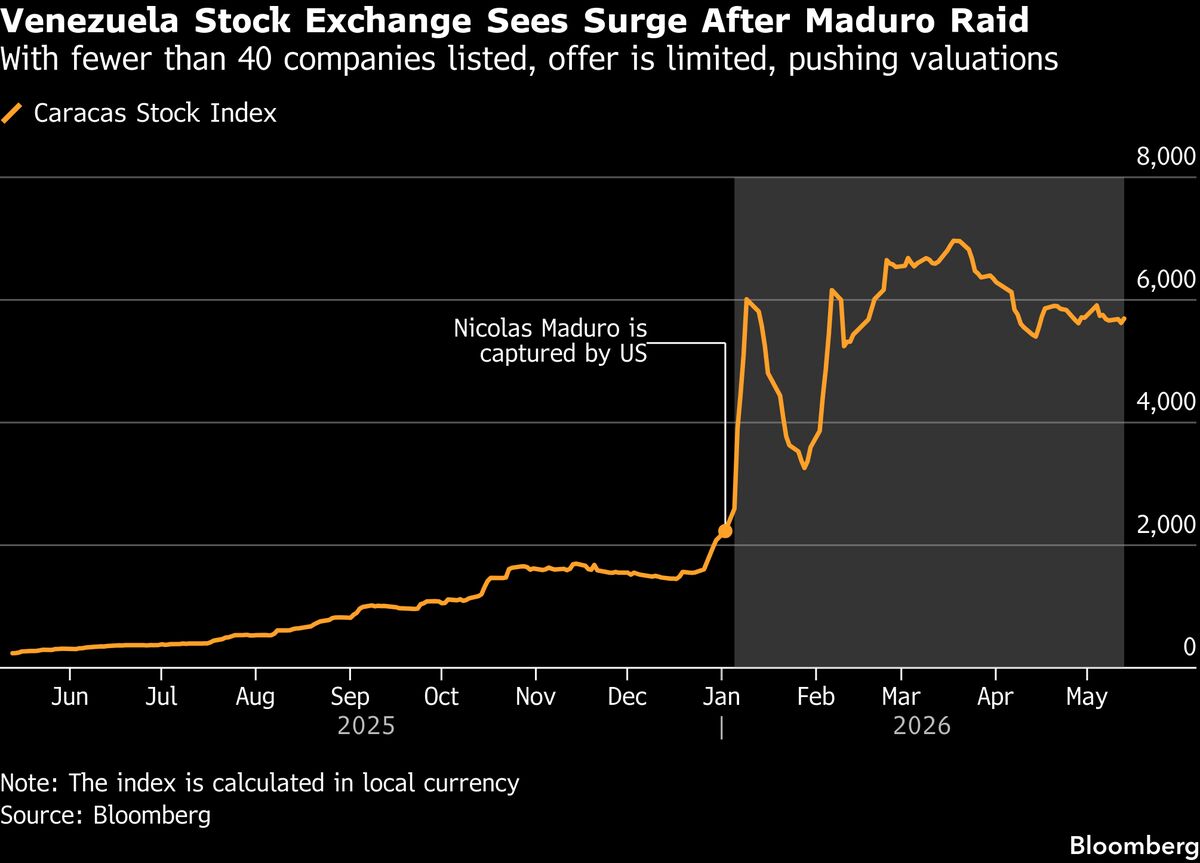

Venezuelan Stock Market Experiences Unexpected Resurgence as Companies Rush to List Shares
CARACAS, Venezuela — In a surprising twist for a nation long plagued by economic turmoil, Venezuela’s stock market is showing signs of life after more than a decade of stagnation. A wave of companies is now preparing to list shares on the Caracas Stock Exchange, signaling a potential turning point in the country’s financial landscape. This sudden surge in activity comes as Venezuela’s economy grapples with hyperinflation, U.S. sanctions, and the lingering effects of socialist policies under former President Nicolás Maduro. While experts remain cautious, the developments hint at a possible shift toward economic diversification and private-sector growth.
The Caracas Stock Exchange, once a hub of activity in Latin America, had become a shadow of its former self during Maduro’s socialist regime. For years, the market was paralyzed by restrictive policies, capital controls, and a government-led push toward state ownership of industries. Private enterprises struggled to survive, and foreign investment dried up amidst political instability and economic mismanagement. The situation worsened as hyperinflation rendered the bolivar practically worthless, and many businesses turned to alternative currencies like the U.S. dollar to stay afloat.
However, recent economic reforms introduced by the Maduro administration—aimed at curbing hyperinflation and stabilizing the economy—have inadvertently created an environment where the stock market is beginning to regain relevance. The government’s decision to loosen currency controls and allow U.S. dollar transactions has provided a lifeline to businesses, many of which are now exploring new avenues for growth.
“We’re seeing a cautious return to the stock market by Venezuelan companies,” said Maria Fernandez, a Caracas-based economist. “It’s partly out of necessity—many firms are in urgent need of capital—but it’s also a sign that confidence is slowly returning to the private sector.”
Among the companies preparing to list shares are small and medium-sized enterprises (SMEs) in sectors ranging from agriculture and manufacturing to technology and retail. These firms are hoping to attract both domestic and international investors, leveraging the growing use of digital platforms to overcome traditional barriers to entry.
The resurgence of the stock market has also been fueled by a broader shift in Venezuela’s economic strategy. In recent years, President Maduro has quietly embraced a degree of market liberalization, allowing private businesses to operate more freely and even inviting foreign investment in key sectors like oil and gas. While critics argue that these reforms are superficial and driven by desperation, they have nonetheless created opportunities for economic renewal.
One notable example is the agricultural sector, which has seen a surge in private investment as companies seek to capitalize on Venezuela’s vast untapped potential. “We believe that listing on the stock exchange will give us access to the capital we need to expand our operations,” said Carlos Romero, CEO of AgroFuturo, a Caracas-based agribusiness. “Venezuela has the resources to become a major food producer, and we want to be part of that transformation.”
The renewed interest in the stock market is also being driven by Venezuela’s younger generation, many of whom are eager to embrace entrepreneurship and innovation. With limited opportunities in the public sector, young professionals are turning to private enterprise as a pathway to economic stability.
“This is a generation that grew up in crisis but is determined to rebuild the country,” said Javier Morales, a 28-year-old entrepreneur who recently launched a tech startup. “We see the stock market as a way to fund new ideas and create jobs.”
Despite these positive developments, significant challenges remain. Venezuela’s economy is still fragile, and the country continues to face intense scrutiny from the international community. U.S. sanctions, imposed in response to Maduro’s contested re-election in 2018, have severely limited Venezuela’s access to global financial markets. Additionally, concerns about corruption and political instability persist, deterring many foreign investors.
“The Venezuelan stock market is far from being a safe bet,” warned Eduardo Gomez, a financial analyst based in Bogotá. “While the recent activity is encouraging, investors need to tread carefully. The country’s economic recovery is still in its early stages, and there are many risks involved.”
Moreover, the government’s selective approach to market liberalization has raised questions about its long-term commitment to reform. While some sectors have been opened to private investment, others remain firmly under state control. Critics argue that without comprehensive economic policies and greater political transparency, Venezuela’s recovery will remain incomplete.
Nevertheless, the renewed activity on the Caracas Stock Exchange has sparked cautious optimism among investors and analysts alike. For a country that has long been synonymous with economic collapse, the possibility of a financial revival offers a glimmer of hope.
“This could be the beginning of a new chapter for Venezuela,” said Fernandez. “But it’s important to remember that Rome wasn’t built in a day. The road to recovery will be long and difficult.”
As Venezuelan companies prepare to take their first steps into the stock market, the world watches closely. While the challenges are undeniable, the resurgence of interest in private enterprise suggests that Venezuela’s economy may yet find a way to rise from the ashes. Whether this marks the start of a sustained recovery or a fleeting moment of optimism remains to be seen. But for now, the Caracas Stock Exchange is buzzing with activity—and hope.
