



Asian Stocks Brace for Losses as U.S. Inflation Fears Send Bond Yields Soaring
Introduction
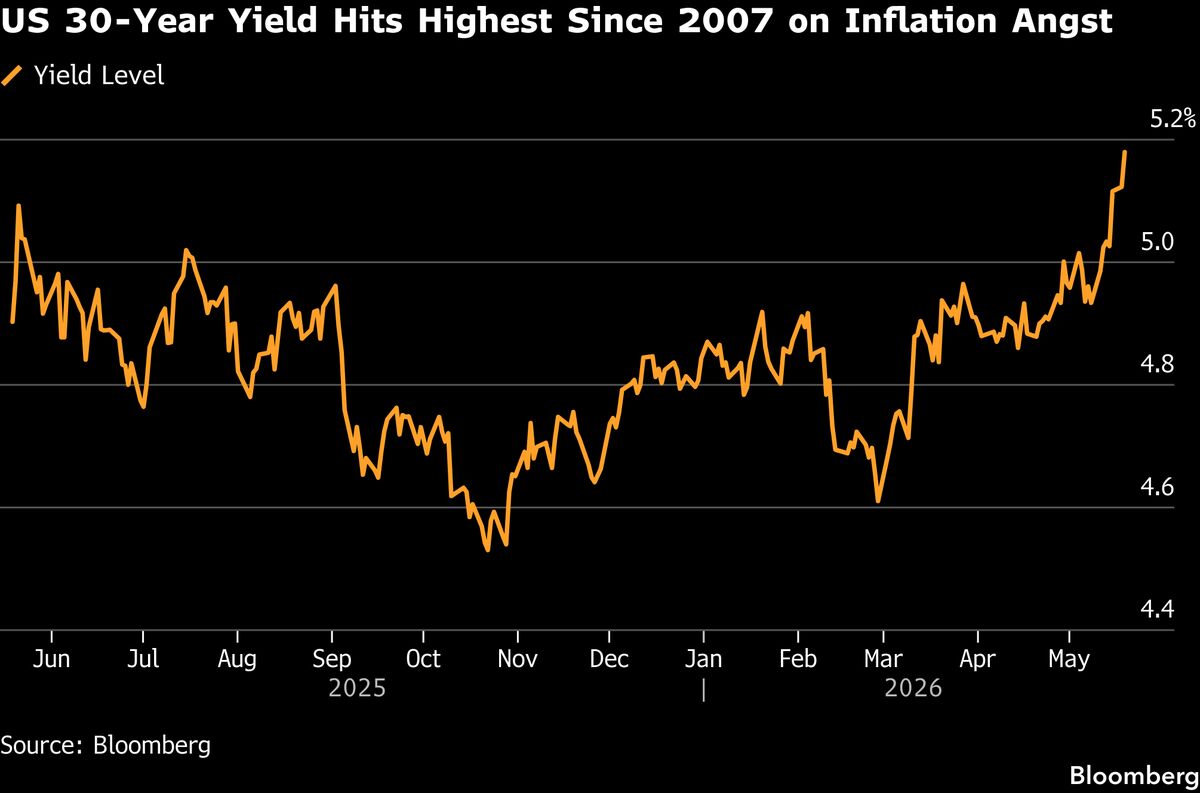
Asian markets are poised to open sharply lower on Wednesday, mirroring Wall Street’s retreat as fears of persistent inflation drove U.S. Treasury yields to levels not seen in over a decade. The yield on the 30-year U.S. Treasury bond surged to its highest point since 2007, signaling growing investor anxiety over the Federal Reserve’s ability to tame rising prices without derailing economic growth. The escalating bond market turmoil has sent shockwaves through global equity markets, with Asian indices expected to bear the brunt of the sell-off as traders grapple with the prospect of prolonged monetary tightening.
Wall Street’s Decline Sets the Tone
The Dow Jones Industrial Average, S&P 500, and Nasdaq Composite all closed in the red on Tuesday, extending a weeks-long decline fueled by concerns over higher interest rates and their potential impact on corporate earnings and consumer spending. The tech-heavy Nasdaq, in particular, was hit hard, shedding more than 1% as rising bond yields dented appetite for growth stocks. The sell-off was exacerbated by the relentless climb in Treasury yields, with the 10-year note also reaching multiyear highs.
Investors are increasingly pricing in the likelihood that the Federal Reserve will maintain its hawkish stance well into 2024, driven by stronger-than-expected economic data and sticky inflation metrics. The latest consumer price index (CPI) report, released last week, showed prices rising faster than anticipated, reinforcing fears that central banks may need to keep rates elevated for longer than initially hoped.
Bond Market Turbulence Reverberates Globally
The surge in long-dated Treasury yields has far-reaching implications for global financial markets. Bond yields, which move inversely to prices, reflect both investor expectations for inflation and the cost of borrowing. As yields rise, borrowing costs for businesses and consumers increase, potentially slowing economic growth. For equity markets, higher yields reduce the relative attractiveness of stocks, particularly those in the technology sector, which often rely on cheap borrowing to fuel expansion.
The 30-year Treasury yield’s ascent to 4.8%—its highest level since the global financial crisis—has sparked concerns that the U.S. economy may be heading toward a period of stagflation, characterized by stagnant growth and persistent inflation. Such a scenario could force the Federal Reserve to tighten monetary policy even further, risking a deeper economic downturn.
Asia’s Vulnerability to U.S. Monetary Policy
Asian markets are especially sensitive to shifts in U.S. monetary policy, given the region’s deep integration with the global economy and its reliance on exports. Countries like Japan, South Korea, and Taiwan depend heavily on demand from the U.S. and other major economies, making them particularly vulnerable to any slowdown in global growth.
In Japan, the yen’s continued weakness against the dollar has compounded inflationary pressures, squeezing household budgets and threatening corporate profitability. The Bank of Japan, which has maintained ultra-loose monetary policy even as other central banks hike rates, faces mounting pressure to adjust its stance. Meanwhile, China’s ongoing economic struggles have added to the region’s challenges, with the property crisis and subdued consumer demand weighing on growth.
Investor Sentiment and Market Outlook
The combination of rising U.S. yields, a strong dollar, and slowing global growth has created a challenging environment for investors. While some analysts argue that the recent sell-off may be overdone, others warn that the current headwinds could persist for the foreseeable future.
“The bond market is sending a clear signal that the era of ultra-low interest rates is over,” said James Chen, chief economist at Global Markets Insights. “This recalibration is painful for equities, especially in regions like Asia where growth projections are already under pressure.”
Despite these concerns, there are reasons for cautious optimism. Historically, equity markets have shown resilience in the face of rising rates, particularly when driven by strong economic fundamentals. Additionally, some sectors, such as energy and commodities, may benefit from a higher inflation environment.
The Broader Economic Context
The current market turbulence underscores the broader challenges facing policymakers as they navigate the post-pandemic economic landscape. The unprecedented fiscal and monetary stimulus deployed during the COVID-19 crisis has left many economies grappling with elevated inflation and heightened debt levels.
In the U.S., the Federal Reserve’s aggressive rate hikes over the past 18 months have succeeded in cooling inflation, but progress has been uneven. The latest CPI data suggests that core inflation—which excludes volatile food and energy prices—remains stubbornly high, complicating the central bank’s task.
Globally, central banks are walking a tightrope between curbing inflation and avoiding a recession. The European Central Bank and the Bank of England have both signaled their willingness to maintain restrictive policies, while emerging markets face the added challenge of capital flight as investors flock to the safety of U.S. assets.
Closing Thoughts
As Asian markets prepare for another volatile session, investors will be closely watching developments in the U.S. bond market for clues about the trajectory of inflation and interest rates. While the near-term outlook remains uncertain, the current market turbulence serves as a reminder of the delicate balance central banks must strike to ensure economic stability. For now, caution reigns supreme as investors brace for further turbulence in what promises to be a challenging end to the year.
“Markets are in a phase of adjustment,” said Priya Sharma, senior strategist at Capital Markets Asia. “The key question is whether this recalibration will lead to a soft landing or a more severe economic slowdown. The answer will shape the investment landscape for months to come.”
