



Close Encounter Over the Black Sea: Russian Jets Intercept RAF Surveillance Plane in High-Risk Maneuver
A Dangerous Game of Cat and Mouse in Contested Skies
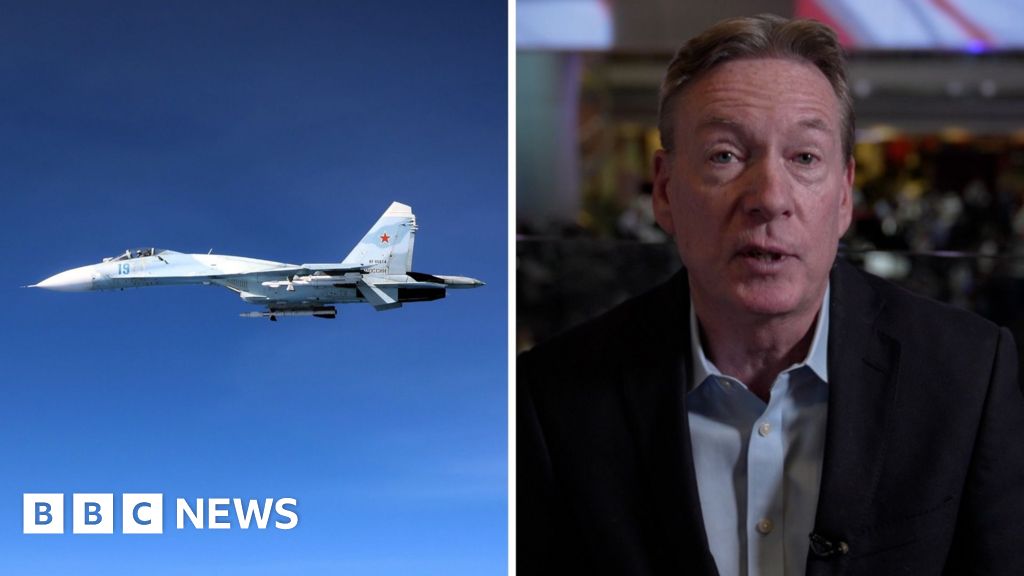
The skies above the Black Sea became the stage for a high-stakes aerial confrontation last month when two Russian fighter jets intercepted an unarmed British surveillance aircraft in what defense officials have called a “dangerously” reckless maneuver. The incident, confirmed by the UK Ministry of Defence, saw a Russian Su-35 approach within close range of the RAF Rivet Joint spy plane—so near that it triggered the British aircraft’s emergency systems. Meanwhile, a second Russian Su-27 executed six aggressive passes in front of the NATO aircraft, raising fears of a potential mid-air collision.
The confrontation underscores the escalating tensions between Russia and NATO, with both sides engaging in increasingly bold military posturing. Analysts warn that such risky intercepts could spiral into unintended conflict, particularly as Moscow continues to challenge Western presence near its self-declared sphere of influence.
The Incident: A Provocative Intercept Over International Waters
According to the UK Ministry of Defence, the RAF Rivet Joint—a sophisticated electronic surveillance aircraft—was conducting a routine reconnaissance mission over the Black Sea, a region of strategic importance for NATO’s eastern flank. The flight was part of broader allied efforts to monitor Russian military activity following its full-scale invasion of Ukraine in 2022.
However, the mission took a perilous turn when two Russian fighter jets—an Su-35 and an Su-27—approached the unarmed British plane. The Su-35 flew so close that it activated the RAF aircraft’s collision avoidance systems, while the Su-27 performed multiple high-speed passes directly in front of it. Such maneuvers are considered highly provocative, increasing the risk of an accidental shootdown or mid-air disaster.
BBC Security Correspondent Frank Gardner described the incident as “really serious,” emphasizing that even minor miscalculations in such encounters could lead to rapid escalation. The Black Sea has long been a flashpoint for NATO-Russia tensions, with frequent intercepts and close calls. But this latest episode highlights a troubling pattern of increasingly aggressive Russian tactics.
Global Context: Why This Intercept Matters
The Black Sea remains a critical geopolitical battleground, serving as a gateway between Europe, the Middle East, and the Caucasus. Since Russia’s annexation of Crimea in 2014, Moscow has sought to assert dominance over the region, frequently challenging NATO and allied aircraft and ships.
This latest intercept follows a series of similar incidents, including:
- 2022: A Russian jet collided with a US Reaper drone over the Black Sea, forcing the American aircraft to crash into international waters.
- 2021: Russian warplanes repeatedly buzzed a British destroyer in contested waters, dropping bombs in its path.
- Ongoing: Russian jets routinely intercept NATO surveillance flights, though most encounters remain within accepted safety margins.
What makes this latest incident particularly alarming is the proximity and frequency of the Russian maneuvers. Unlike standard intercepts—where jets shadow foreign aircraft at a safe distance—this engagement involved direct, high-risk actions that could have easily resulted in catastrophe.
The Broader Implications: Escalation Risks and NATO’s Response
The incident comes at a time of heightened global instability, with Russia’s war in Ukraine entering its third year and NATO expanding its eastern defenses. The alliance has significantly increased reconnaissance flights and naval patrols in the region, prompting Moscow to respond with ever-more assertive countermeasures.
Military experts warn that such encounters could inadvertently trigger a larger conflict. While neither side has an interest in direct war, the lack of clear communication channels and the potential for human error raise the stakes. The UK has formally protested the incident, but Russia has yet to issue an official response.
NATO allies are likely to reassess their surveillance operations, potentially deploying fighter escorts for reconnaissance missions—a move that could further militarize the region. Meanwhile, Moscow’s continued aggression suggests it is testing Western resolve, probing for weaknesses in NATO’s collective defense posture.
Conclusion: A Warning Sign in an Increasingly Volatile World
The Black Sea intercept serves as a stark reminder of how quickly routine military operations can spiral into dangerous confrontations. With Russia and NATO locked in a tense standoff, every close encounter carries the risk of unintended escalation.
As global tensions rise, the need for de-escalation protocols and clear communication becomes ever more urgent. The world cannot afford a single misjudgment in the skies—lest it ignite a conflict no one wants, but one that grows more plausible with each reckless maneuver. For now, the Black Sea remains a tinderbox, and the next incident could prove far harder to contain.
