


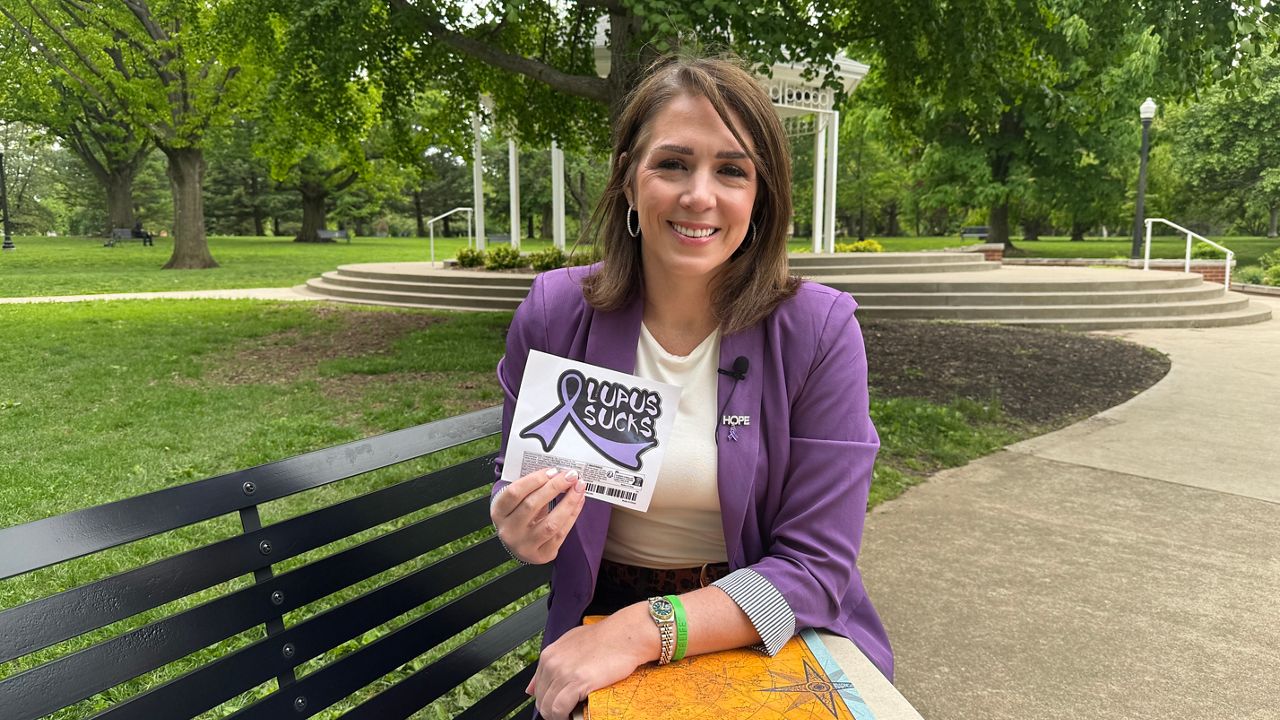

Ohio Woman Finds Strength and Purpose After Lupus Diagnosis and Stroke Recovery
By Nexio News
COLUMBUS, Ohio — Jessica Patz never imagined that staring at a quiet pond could feel like a gift. But after years of battling lupus, surviving domestic abuse, and relearning to walk following a stroke, the 39-year-old motivational speaker now finds beauty in life’s simplest moments.
“I have a completely new appreciation for everything,” Patz said. “Even the hard times—they don’t have to break you. They can reshape you into something stronger.”
A Life Upended by Lupus
Patz’s journey to diagnosis was long and painful. For seven years, she endured unexplained symptoms: extreme fatigue, debilitating joint pain, sudden weight gain, and a severe rash across her chest. At one point, she weighed 277 pounds—a shocking change for her 5’8” frame.
“I felt like I was 99 years old,” she recalled. “Going upstairs, sitting down—everything hurt. My skin was a mess. I had blood clots in my lungs. Doctors couldn’t figure it out.”
Then, in February 2024, she finally got an answer: lupus, an incurable autoimmune disease where the body attacks its own healthy tissues.
Dr. Catherine Strahle, a rheumatologist at The Ohio State University Wexner Medical Center, explained that lupus is often called “the great imitator” because its symptoms mimic other conditions.
“There’s no single test for lupus,” Strahle said. “Symptoms can come and go, making diagnosis difficult. Patients should document their symptoms—even taking photos of rashes—because they might disappear by the time they see a specialist.”
Trauma as a Trigger
Patz believes years of domestic abuse contributed to her condition.
“My entire medical team thinks the trauma triggered my lupus,” she said. “The first time I was physically assaulted, I was three months pregnant with my first child. The abuse continued for years.”
Harvard research supports the link between extreme psychological trauma and autoimmune diseases. While genetics play a role, stress may push the body into attacking itself.
Stroke, Recovery, and a New Perspective
Just months after her lupus diagnosis, Patz suffered a stroke that left her unable to walk. Relearning to move was agonizing—but it taught her resilience.
“I couldn’t just ‘stubborn’ my way out of it,” she said. “But I could change my mindset.”
She celebrated small victories, like completing a Turkey Trot (mostly walking) and carrying the medal as a reminder of progress. A year ago, she relied on a cane. Today, she walks freely.
Living with Uncertainty
Lupus is unpredictable. Patz takes 24 pills daily—immunosuppressants that leave her vulnerable to infections. Some days, she wakes up with a 102-degree fever before giving keynote speeches.
“One day, I’m fine. The next, I could be in the hospital,” she said. “But I refuse to let it stop me.”
Now a sought-after speaker, she shares her story on TEDx stages, encouraging others to find strength in adversity.
Her Message: Gratitude and Resilience
“Don’t take your health for granted,” Patz said. “Even on the worst days, you’re still here. That’s a gift.”
Her advice to others facing hardship?
“Your trauma doesn’t have to destroy you. Your diagnosis doesn’t define you. You decide how your story ends.”
About Lupus
- Affects 1.5 million Americans, mostly women.
- Symptoms include fatigue, joint pain, rashes, and unexplained fevers.
- Early treatment can prevent organ damage.
May is Lupus Awareness Month. If you suspect you have lupus, consult a rheumatologist.
— Reported by Nexio News
