


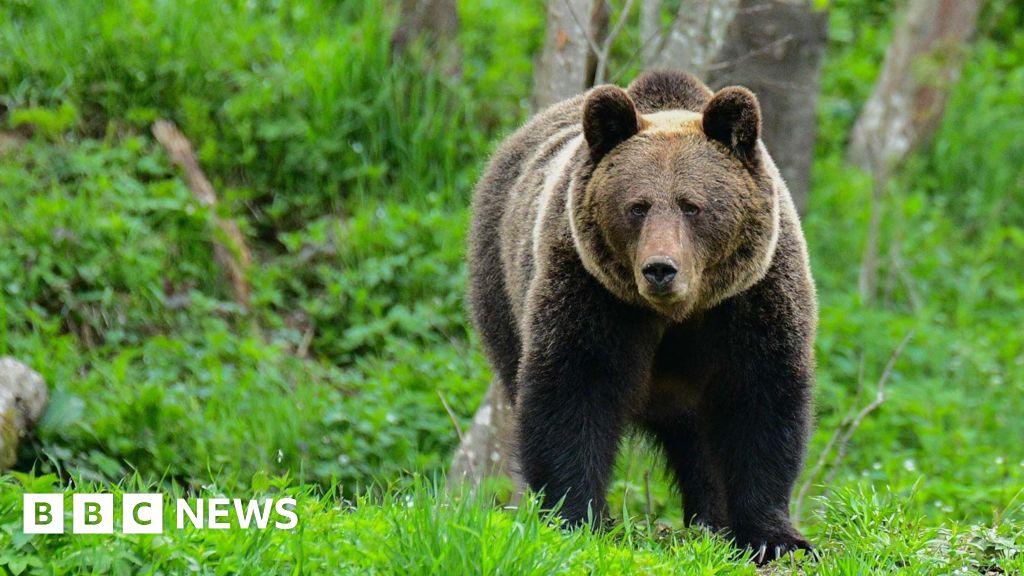

A Terrifying Encounter in the Forests of Poland: Bear Attack Highlights Human-Wildlife Conflict
In the dense, snow-dappled forests of southeastern Poland, the tranquility of nature was shattered this week by a chilling encounter. A man walking his dog stumbled upon a bear, freshly awakened from its winter slumber, in what officials describe as an “unexpected encounter.” The attack, which occurred in the Lesko Forest District, has reignited global concerns about the escalating tensions between humans and wildlife in an era of shrinking habitats and climate change.
As the planet grapples with biodiversity loss and environmental instability, this incident serves as a stark reminder of the delicate balance between human activity and the natural world—a balance that is increasingly under threat.
The Incident: A Sudden and Violent Clash
According to Wojciech Jankowski, a spokesman for the Lesko Forest District, the attack took place in an area where bears are known to roam, particularly during early spring when they emerge from hibernation in search of food. “Bears that have awakened from their winter sleep often come close to human settlements,” Jankowski explained in an interview with Onet, a Polish news outlet. “This was an unexpected encounter for both the bear and the human.”
Details of the attack remain sparse, but such incidents are rare in Poland, where the brown bear population is estimated to be fewer than 150 individuals. The victim, who was walking his dog at the time, sustained injuries but is reported to be in stable condition. The bear, likely acting out of instinct rather than aggression, fled the scene shortly after the encounter.
Global Context: A Growing Crisis
While bear attacks are uncommon in Poland, they are part of a broader global trend of increasing human-wildlife conflicts. From elephants trampling crops in India to wolves encroaching on rural villages in Europe, these encounters are becoming more frequent as human populations expand and wildlife habitats shrink.
Climate change exacerbates the problem. Rising temperatures and erratic weather patterns disrupt ecosystems, forcing animals to venture farther afield in search of food and shelter. In the Arctic, for example, polar bears are increasingly coming into contact with human settlements as melting ice caps reduce their hunting grounds.
According to the World Wildlife Fund (WWF), human-wildlife conflicts affect over 75% of the world’s terrestrial species. As habitats disappear, animals are pushed into closer proximity with humans, leading to deadly consequences for both sides.
Why It Matters: A Question of Coexistence
The Lesko Forest District attack highlights the urgent need for strategies to mitigate human-wildlife conflicts. Poland, like many countries, is grappling with how to protect its wildlife while ensuring the safety of its citizens. Bears, a symbol of wilderness and strength, are often revered but also feared—a duality that complicates conservation efforts.
Globally, the stakes are high. Biodiversity loss is accelerating at an unprecedented rate, with scientists warning of a sixth mass extinction. Protecting keystone species like bears is crucial for maintaining healthy ecosystems, yet doing so requires addressing the root causes of conflict: habitat destruction, resource scarcity, and climate change.
Moreover, these incidents have profound social and economic implications. Farmers, herders, and rural communities bear the brunt of wildlife encounters, often suffering significant losses. Without adequate support and preventive measures, these conflicts could exacerbate poverty and deepen social inequalities.
Moving Forward: Solutions and Challenges
Preventing future incidents will require a multifaceted approach. In Poland, forest officials have emphasized the importance of public awareness and education. Residents in bear-prone areas are advised to take precautions, such as avoiding dense forests during early spring and carrying bear repellent.
On a broader scale, governments and conservation organizations must invest in habitat restoration and wildlife corridors—natural pathways that allow animals to move freely without encroaching on human spaces. Technologies like early warning systems and GPS tracking can also help mitigate risks.
However, addressing the root causes of human-wildlife conflicts requires global cooperation. Climate change mitigation, sustainable land-use practices, and international conservation policies are essential for ensuring the survival of both humans and wildlife.
Conclusion: A Wake-Up Call
The bear attack in Poland’s Lesko Forest District is more than a local tragedy—it is a microcosm of a global crisis. As human activity continues to encroach on the natural world, such encounters will become increasingly inevitable unless decisive action is taken.
This incident serves as a wake-up call for policymakers, conservationists, and citizens alike. The delicate balance between humans and wildlife is fraying, and the time to act is now. In a world where the fates of humans and animals are inextricably linked, the question is not whether we can coexist but whether we will choose to. The answer will shape the future of our planet.
