


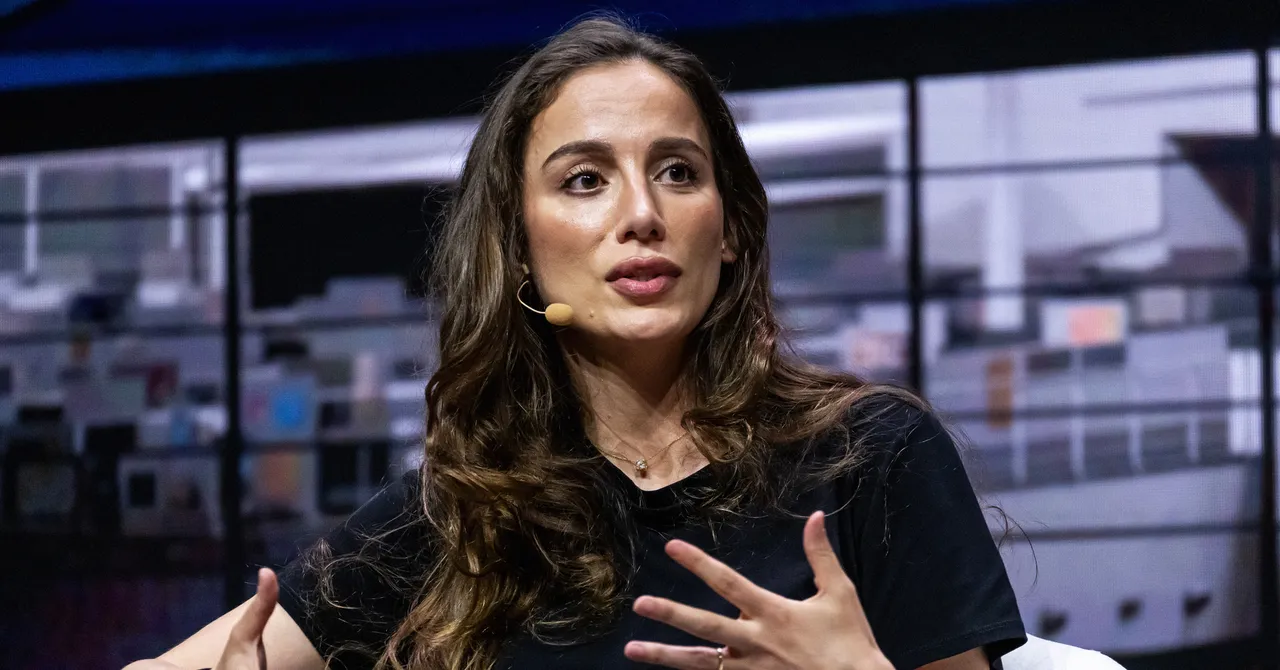

The Future of AI: Mira Murati’s Vision for Human-Inclusive Superintelligence
In an era where artificial intelligence (AI) is often associated with job displacement, corporate monopolies, and existential risks, Mira Murati, former Chief Technology Officer of OpenAI and co-founder of Thinking Machines Lab, offers a refreshingly optimistic perspective. Murati envisions a future where AI superintelligence does not replace humans but empowers them, creating a symbiotic relationship between humans and machines. Her startup, Thinking Machines Lab, recently previewed groundbreaking AI models designed to prioritize human collaboration, marking a significant departure from the trajectory pursued by many of the industry’s biggest players.
A Radical Vision in a Competitive Landscape
Murati’s approach comes at a time when concerns about AI’s societal impact are mounting. Recent studies, including research from Stanford University, have highlighted the potential for AI to disrupt labor markets, particularly for younger workers. Meanwhile, tech giants like OpenAI, Anthropic, and Google are racing to develop increasingly autonomous AI systems capable of performing complex tasks—from drafting legal documents to writing entire software applications—with minimal human intervention.
In contrast, Thinking Machines Lab is betting on a future where AI is not just a tool for automation but a partner in human creativity and problem-solving. “At some point, we will have super-intelligent machines,” Murati told WIRED. “But the best way to ensure good futures is to keep humans in the loop.” This philosophy underpins the company’s latest innovation: interaction models designed to seamlessly integrate into human workflows by understanding the nuances of natural communication.
Redefining Human-AI Interaction
Traditional AI interfaces, such as voice assistants, typically rely on transcribing speech and feeding it into a language model for processing. While effective, these systems often struggle with the complexities of human interaction—pauses, interruptions, shifts in tone, and subtle contextual cues. Thinking Machines’ interaction models, however, are built to natively understand continuous, messy, and dynamic communication.
The company demonstrated this capability in several videos, showcasing AI systems that adapt in real time as users clarify points or change topics. For instance, the model can interpret a hesitation or an offhand remark as a cue to adjust its response, making interactions feel more natural and intuitive. Although not yet available to the public, these models represent a significant leap forward in AI’s ability to engage with humans on their own terms.
Alexander Kirillov, a founding member of Thinking Machines and an expert in multimodal AI, emphasized the transformative potential of this technology. “The model constantly perceives what you’re doing and is there to reply, provide information, or use other tools,” he explained. “This level of responsiveness and adaptability is unprecedented in today’s AI systems.”
A Broader Shift Toward Human-Centered AI
Thinking Machines Lab is not alone in advocating for a more human-centric approach to AI development. Organizations like Humans& are also exploring ways to design AI systems that prioritize collaboration rather than replacement. Economists and ethicists have similarly called for a shift in focus, arguing that AI should empower individuals rather than concentrate power in the hands of a few corporations.
Murati’s vision aligns with this growing sentiment. “The goal is to amplify people’s own preferences and values,” she said. “AI should understand intent and predict intent, working alongside humans to achieve their goals.” This philosophy is already shaping Thinking Machines’ existing products. Tinker, launched in October 2025, allows researchers and engineers to fine-tune open-source AI models using custom datasets, offering a level of customization that aligns with Murati’s emphasis on user agency.
From OpenAI to Thinking Machines
Murati’s journey from OpenAI to Thinking Machines Lab reflects her evolving perspective on AI’s role in society. As CTO of OpenAI, she played a pivotal role in the development of some of the most advanced AI systems in the world. However, her decision to leave the company in 2024 and co-found Thinking Machines signaled a desire to pursue a different path—one that places humans at the center of technological progress.
Since its inception, Thinking Machines has secured billions of dollars in funding, underscoring the industry’s confidence in Murati’s vision. Yet, the startup has remained relatively selective in its product releases, prioritizing quality and innovation over scale. Its focus on interaction models represents the culmination of years of research and experimentation, offering a glimpse into what the future of AI could look like if designed with humans in mind.
Challenges and Opportunities Ahead
While Murati’s vision is compelling, it is not without challenges. Building AI systems that seamlessly integrate with human workflows requires addressing complex technical and ethical considerations. Ensuring that these systems are accessible, transparent, and accountable will be critical to their success. Moreover, persuading corporations and governments to prioritize collaboration over automation may prove difficult in a competitive and profit-driven landscape.
Despite these hurdles, Murati remains optimistic. “We’re showing the first bet on human collaboration,” she said. “Where this is going is amplifying human potential, not replacing it.” Her optimism is shared by a growing number of researchers, policymakers, and industry leaders who recognize the need for a more inclusive approach to AI development.
A Balanced Future
As AI continues to reshape industries and societies, the debate over its role and impact shows no signs of abating. Mira Murati’s vision for human-inclusive superintelligence offers a compelling alternative to the narrative of displacement and domination. By placing humans at the center of AI development, Thinking Machines Lab is charting a path toward a future where technology enhances human potential rather than supplanting it. Whether this vision will prevail remains to be seen, but it undoubtedly represents a critical contribution to the ongoing conversation about AI’s role in shaping our collective future.
