


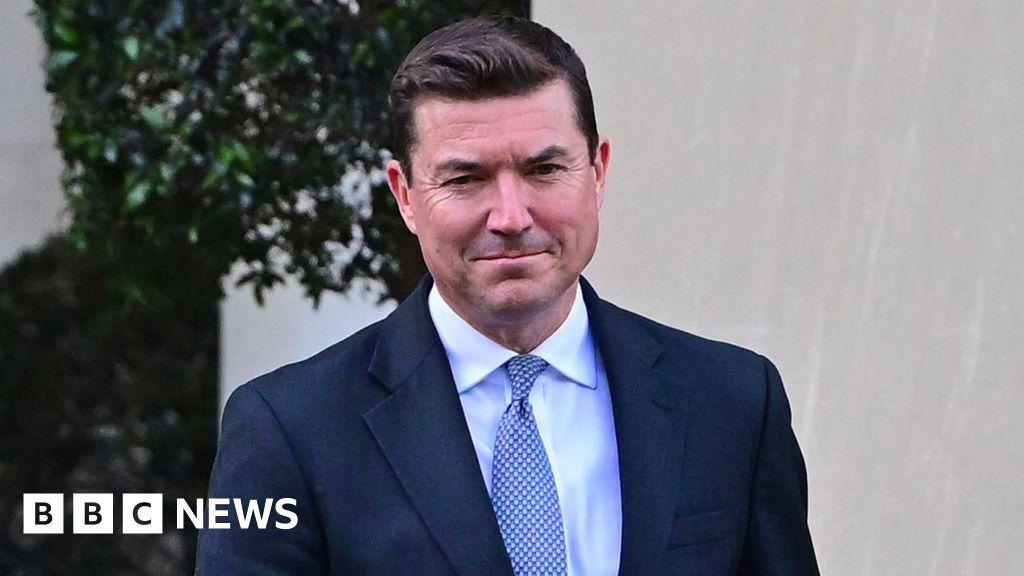

Senior British Diplomat James Roscoe Departs Post in Sudden Exit
LONDON — James Roscoe, one of the most senior figures in the British diplomatic service, has abruptly left his position, sparking questions about the circumstances behind his unexpected departure. Roscoe, whose career spanned key postings in Washington, the United Nations, and Afghanistan, held a high-profile role as the UK’s lead negotiator on global security issues. His exit comes at a critical moment for British foreign policy, as the government navigates escalating tensions in Eastern Europe and the Middle East.
Roscoe’s departure was confirmed by the Foreign, Commonwealth & Development Office (FCDO), though officials provided no immediate explanation for the move. A brief statement acknowledged his service but offered no details on whether he resigned or was reassigned. The lack of transparency has fueled speculation among diplomatic circles, with some suggesting internal disagreements over policy direction may have played a role.
A Distinguished Career Cut Short
With over two decades in the diplomatic corps, Roscoe was widely respected for his expertise in counterterrorism and international security. He served as Britain’s deputy ambassador to the UN from 2018 to 2021, where he played a central role in negotiations on sanctions against North Korea and Iran. More recently, he led the UK’s engagement with NATO allies amid Russia’s war in Ukraine, earning praise for his strategic acumen.
His abrupt exit raises concerns about continuity in British diplomacy at a time of heightened global instability. The UK has been a key player in coordinating Western responses to conflicts in Ukraine and Gaza, and Roscoe’s absence could leave a gap in high-stakes negotiations.
Speculation and Silence
The FCDO’s tight-lipped response has done little to quell rumors. Some insiders suggest Roscoe may have clashed with senior officials over the government’s stance on Israel’s military campaign in Gaza or its approach to post-Brexit trade tensions with the EU. Others speculate his departure could be linked to personal reasons, though no evidence has emerged to support that claim.
Whitehall sources indicate that Roscoe’s responsibilities have been temporarily reassigned to a deputy, but no permanent successor has been named. The timing is particularly awkward for Prime Minister Rishi Sunak’s government, which has sought to project stability amid domestic political turbulence and an upcoming general election.
Why It Matters
Roscoe’s exit underscores broader challenges facing the British diplomatic service, which has seen a wave of high-profile departures in recent years. Critics argue that budget cuts and political infighting have eroded morale, leaving the FCDO struggling to retain top talent. His departure also comes as the UK seeks to redefine its global role post-Brexit, with diplomats under pressure to secure new alliances and maintain influence in multilateral forums.
The lack of clarity surrounding his exit risks damaging confidence in the Foreign Office’s leadership at a time when clear, consistent diplomacy is crucial. With wars in Europe and the Middle East, as well as rising tensions in the Indo-Pacific, the UK cannot afford disruptions in its diplomatic ranks.
What Comes Next
The FCDO is expected to appoint a permanent replacement in the coming weeks, but the delay could hinder ongoing negotiations. Roscoe’s expertise in security matters leaves big shoes to fill, particularly as NATO prepares for its 75th anniversary summit later this year.
Longer term, the incident may prompt scrutiny of the Sunak government’s handling of diplomatic personnel. If Roscoe’s departure was driven by policy disputes, it could signal deeper divisions within the administration over foreign strategy. Alternatively, if the exit was routine but poorly communicated, it may reflect broader mismanagement within the FCDO.
For now, the diplomatic community is left waiting for answers—and wondering whether Roscoe’s sudden departure is an isolated incident or a symptom of deeper turbulence in British foreign policy.
