


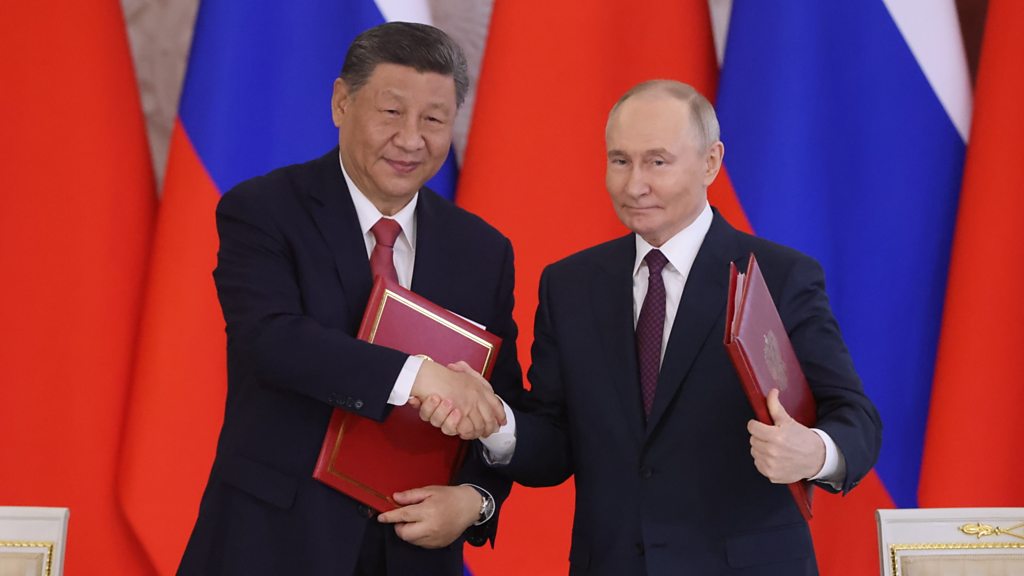

The Evolving China-Russia Alliance: A Global Security Game Changer
The world’s geopolitical landscape is shifting beneath our feet as two of the most powerful nations, China and Russia, deepen their strategic ties. This burgeoning alliance, marked by shared interests and mutual grievances against the West, poses profound implications for global security, trade, and diplomacy. In a volatile era defined by escalating tensions in Ukraine, Taiwan, and beyond, the China-Russia partnership is no longer a footnote in international relations but a central force shaping the future of world order.
A Growing Symbiosis: Historical Context
The relationship between China and Russia has evolved dramatically over the past century. Once ideological rivals during the Cold War, the two nations have found common ground in their opposition to Western dominance. The collapse of the Soviet Union in 1991 left Russia weakened but determined to restore its global influence. Meanwhile, China’s meteoric economic rise transformed it into a superpower with ambitions to reshape the international system.
In recent years, the partnership has grown stronger, driven by mutual strategic interests. Both nations share a desire to challenge U.S. hegemony, reduce dependence on Western financial systems, and assert their sovereignty in regional conflicts. The signing of a “no limits” partnership in February 2022, just weeks before Russia’s invasion of Ukraine, was a stark declaration of their alignment.
Military and Economic Collaboration
The China-Russia alliance extends far beyond symbolic gestures. Militarily, the two nations have engaged in joint exercises, including naval drills in the Pacific and air patrols over the East China Sea. These activities signal their readiness to counter Western military presence in Asia and Europe. Russia has also become a key supplier of advanced weaponry and energy resources to China, while Chinese technology and investment have bolstered Russia’s economy amid Western sanctions.
Economically, the partnership is reshaping global trade dynamics. China has emerged as Russia’s largest trading partner, importing vast quantities of oil, gas, and other commodities. Simultaneously, China’s Belt and Road Initiative has found synergy with Russia’s Eurasian Economic Union, creating new infrastructure corridors that bypass Western-dominated routes.
Global Implications: A Multipolar World
The deepening ties between China and Russia are accelerating the transition to a multipolar world order. By presenting a united front, they challenge the U.S.-led global system and advocate for alternative institutions, such as the Shanghai Cooperation Organization and the BRICS group. This shift has significant implications for international governance, as Western democracies grapple with declining influence in forums like the United Nations.
The alliance also complicates geopolitical flashpoints. In Ukraine, China’s ambiguous stance—offering rhetorical support for Russia while avoiding direct involvement—has frustrated Western efforts to isolate Moscow. Similarly, Russia’s backing of China’s claims in the South China Sea and Taiwan emboldens Beijing’s territorial ambitions. These dynamics heighten the risk of miscalculation and conflict, particularly as U.S. military presence in both regions remains robust.
Why It Matters Globally
The China-Russia partnership matters because it underscores the fragility of the current international order. For decades, the West has relied on economic leverage and military alliances to maintain stability. However, the emergence of a cohesive Sino-Russian bloc undermines this framework, presenting a formidable challenge to Western strategies.
Moreover, the alliance has ripple effects across the globe. Developing nations, particularly in Africa and Latin America, are increasingly courted by both China and Russia as alternatives to Western aid and investment. This competition for influence risks fragmenting global consensus on critical issues like climate change, nuclear proliferation, and human rights.
A Delicate Balance: Risks and Opportunities
While the partnership appears robust, it is not without tensions. China’s reliance on Russia for energy and military technology creates a power imbalance, with Moscow increasingly dependent on Beijing’s economic lifeline. This dynamic could strain relations, particularly if China’s interests diverge from Russia’s in key areas.
For the West, the alliance presents both risks and opportunities. On one hand, the united front challenges Western dominance and exacerbates global instability. On the other, it underscores the urgent need for diplomacy and multilateral cooperation. Engaging both nations constructively, while addressing their legitimate grievances, may be the only way to prevent further polarization.
Conclusion: A New Era of Geopolitics
The China-Russia alliance marks a pivotal chapter in global history, reshaping the contours of power and influence. As these two nations draw closer, the world faces a stark choice: descend into a new Cold War marked by division and conflict, or embrace a more inclusive and equitable international order. The stakes could not be higher. In an interconnected world, the actions of China and Russia reverberate far beyond their borders, affecting billions of lives. The question now is whether global leaders can rise to the challenge, forging a path toward stability in an increasingly uncertain future.
