



Hungary’s New Prime Minister Peter Magyar Warns of Fiscal Challenges Amid Ambitions for Economic Growth
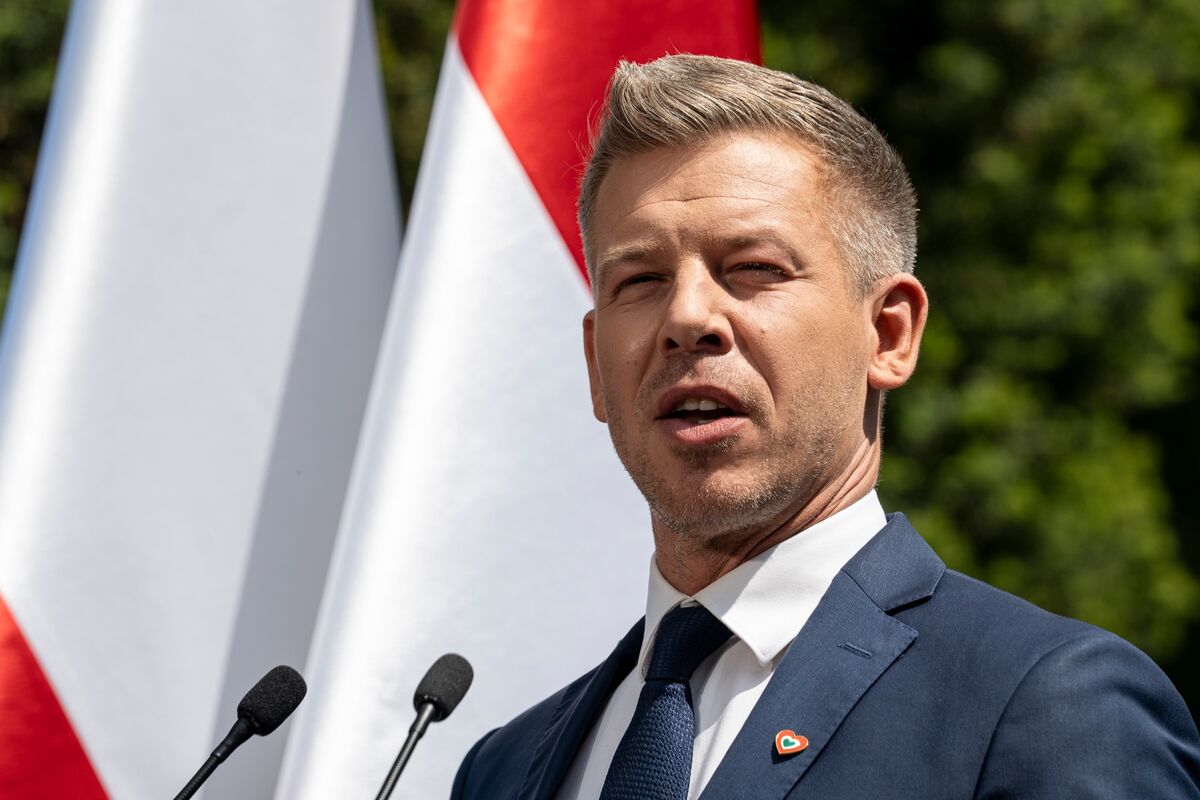
Budapest, Hungary — In his first major address since taking office, Hungary’s newly appointed Prime Minister Peter Magyar struck a cautious yet hopeful tone, outlining his vision for the country’s economic recovery while acknowledging the significant fiscal hurdles inherited from his predecessor. Magyar, who assumed leadership following a period of political turbulence, announced that Hungary’s economy could potentially grow by around 2% this year. However, he emphasized that the precarious state of public finances would make precise predictions difficult, leaving Hungarian voters and international observers alike bracing for what lies ahead.
A Daunting Inheritance
Magyar’s ascension to the premiership marks a pivotal moment in Hungarian politics, coming at a time when the nation grapples with economic stagnation, rising debt, and dwindling public trust in government institutions. His predecessor, Viktor Orbán, who dominated Hungarian politics for over a decade, left behind a legacy of expansive public spending and populist policies that critics argue have strained the country’s fiscal health. Orbán’s government, known for its nationalist rhetoric and close ties with Russia and China, faced mounting scrutiny over its handling of inflation, corruption, and the erosion of democratic norms.
Magyar, a relative newcomer on the political scene, has positioned himself as a reformist leader committed to restoring fiscal discipline, transparency, and economic stability. However, the road ahead is fraught with challenges. Hungary’s public debt has ballooned in recent years, reaching nearly 75% of its GDP, while inflation remains stubbornly high, hovering around 6%. These factors have placed immense pressure on Magyar’s administration to implement austerity measures while simultaneously stimulating growth—a delicate balancing act that could define his tenure.
The Path to Recovery
In his address, Magyar underscored the importance of rebuilding public trust and revitalizing Hungary’s economy. “Our priority is to restore confidence in our institutions and ensure that every citizen feels the benefits of economic growth,” he stated. “However, we must confront the reality that the financial landscape we have inherited limits our ability to make definitive forecasts at this stage.”
The Prime Minister’s cautious optimism reflects the broader economic challenges facing Central and Eastern Europe. The region has been hit hard by the dual shocks of the COVID-19 pandemic and the war in Ukraine, which disrupted supply chains, spiked energy prices, and sapped investor confidence. Hungary, in particular, has felt the ripple effects of its reliance on Russian energy and its vulnerability to global economic headwinds.
Magyar’s administration has signaled its intention to diversify Hungary’s economic partnerships and reduce its dependence on external actors. “We must look beyond traditional alliances and explore new opportunities for trade and investment,” Magyar remarked, hinting at a potential recalibration of Hungary’s foreign policy. This shift could see Budapest strengthening ties with Western partners, particularly the European Union, which has long been critical of Orbán’s democratic backsliding.
Public Reaction and Political Implications
Magyar’s candid assessment of Hungary’s fiscal predicament has elicited mixed reactions from the public and political commentators. Supporters applaud his transparency and willingness to confront uncomfortable truths, viewing it as a stark departure from the Orbán era’s often opaque governance. Critics, however, argue that Magyar’s rhetoric lacks concrete solutions, leaving many Hungarians uncertain about their economic future.
“While it’s refreshing to hear a leader speak honestly about the challenges we face, the lack of a detailed plan is concerning,” said Katalin Nagy, a Budapest-based economist. “Magyar must move swiftly to outline his strategy for reducing debt, curbing inflation, and creating jobs.”
The Prime Minister’s cautious approach also reflects the fragile nature of his coalition government, which relies on the support of smaller parties to maintain a parliamentary majority. Any misstep in implementing unpopular austerity measures could jeopardize his administration’s stability, underscoring the high-stakes nature of his economic agenda.
Global Context and Regional Implications
Hungary’s economic trajectory is being closely watched by its European neighbors, particularly within the Visegrád Group—a regional alliance comprising Poland, Slovakia, and the Czech Republic. Like Hungary, these countries have faced economic headwinds in recent years, raising questions about the region’s long-term prospects. Magyar’s ability to steer Hungary toward recovery could set a precedent for other Central and Eastern European nations grappling with similar challenges.
The European Union, meanwhile, has expressed cautious optimism about Hungary’s new leadership. Brussels has long sparred with Orbán over his government’s alleged violations of democratic norms and the rule of law, freezing billions of euros in EU funds as a result. Magyar’s pledge to restore transparency and strengthen ties with the EU could pave the way for a thaw in relations, potentially unlocking much-needed financial support for Hungary’s economy.
Looking Ahead
As Peter Magyar embarks on his premiership, the path forward is fraught with uncertainty and opportunity in equal measure. His administration’s success will hinge on its ability to navigate complex fiscal challenges, rebuild public trust, and reassert Hungary’s position on the global stage. With the European economy showing tentative signs of recovery and geopolitical tensions continuing to shape the global landscape, Magyar’s leadership will be a litmus test for Hungary’s resilience and adaptability in an increasingly interconnected world.
For now, Hungarians and international observers alike will be watching closely as Magyar seeks to turn his cautious optimism into tangible progress. “This is a moment of reckoning for Hungary,” he concluded. “We must confront our challenges head-on, with honesty, determination, and a shared vision for a better future.”
In a region marked by political and economic volatility, Hungary’s journey under Peter Magyar’s leadership will undoubtedly serve as a bellwether for Central and Eastern Europe’s evolving trajectory. Only time will tell whether his administration can deliver on its promises and chart a sustainable path forward.
