


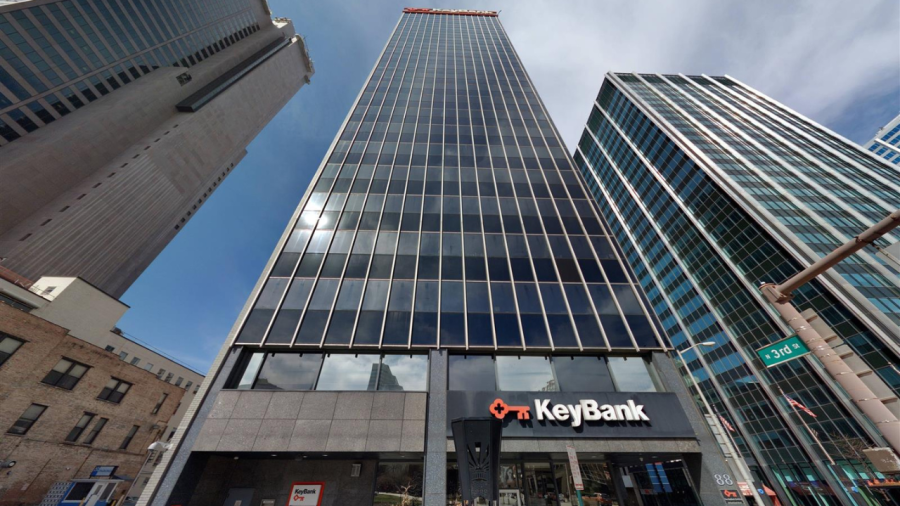

Columbus Landmark KeyBank Building Set for Auction Amid Ongoing Challenges
COLUMBUS, Ohio – The iconic KeyBank Building, a prominent fixture in downtown Columbus, is set to head to auction next month following a tumultuous period of foreclosure proceedings, tenant exoduses, and an alarming rise in maintenance complaints. This 21-story structure, located at 88 E. Broad St., has become emblematic of the challenges facing urban commercial real estate, a sector struggling to recover in the wake of the COVID-19 pandemic.
The online listing for the property has been posted by Apex Commercial Exchange, heightening interest not just from potential buyers but also from city residents who have witnessed the building’s decline. With a prime location in the heart of Columbus, the auction of this significant asset triggers important discussions about the future of downtown development and the economic landscape of Ohio’s capital.
The KeyBank Building has endured a series of setbacks in recent years that have significantly impacted its appeal and value. Once a bustling office space that housed various businesses, the tower has seen a sharp decline in occupancy. Many tenants have vacated, citing growing frustrations over maintenance issues, which have included everything from plumbing failures to inadequate heating systems. Such conditions have raised questions about the building’s long-term viability and the effectiveness of property management.
In addition to internal challenges, the structure has been embroiled in foreclosure proceedings since 2021, a development that reflects broader economic pressures facing many commercial properties across the United States. The ongoing push for remote work has accelerated trends of vacancies in office buildings, leading landlords to re-evaluate their portfolios and seek new ways to attract tenants. As the KeyBank Building enters the auction process, its future remains uncertain, raising concerns about what this means for the surrounding business ecosystem.
This auction is not merely a business transaction; it symbolizes a pivotal moment for Columbus, a city that has witnessed a surge in urban revitalization in recent years. The fate of the KeyBank Building could influence not only the immediate area but also inform the city’s strategies for attracting businesses and residents in a post-pandemic world. With new companies attracted to downtown Columbus, the city has seen a renewedd demand for office space. However, the challenges faced by older buildings like the KeyBank are prompting a critical reassessment of urban development pathways.
Local authorities have expressed concern over the building’s deteriorating condition and its potential implications for the downtown landscape. City officials are committed to ensuring revitalization efforts are not undermined by neglected properties. “We have to ensure that our downtown area remains vibrant and attractive, not only for businesses but for residents as well,” said Columbus City Council President Shannon Hardin. “The KeyBank Building is more than just an office tower; it’s part of our community’s identity. We need to find a way to preserve and revitalize it.”
As Columbus continues to grapple with the evolving nature of work and urban life, the outcome of the KeyBank auction will be closely watched by stakeholders across the region. A successful sale could spark new visions for the space, potentially transforming it from a struggling office building into a hub of innovation or mixed-use development that better serves the community.
However, if the auction fails to attract viable bidders, the consequences could be dire. A lack of investment could lead to further decay and an even greater loss of economic potential for one of the city’s most recognizable structures. Moreover, the building’s fate could discourage other investors who may view the challenges at the KeyBank as indicative of broader market uncertainty.
As the auction date approaches, the future of the KeyBank Building looms large over the Columbus skyline. Will the next owners be equipped to revitalize this once-thriving property, or will it continue to be a symbol of decline? The answer will not just shape the building’s future but could have lasting repercussions for Columbus’s downtown development and overall economic resilience. The stakes are high, and the implications are far-reaching as the city navigates its complex urban landscape in the months and years ahead.
