


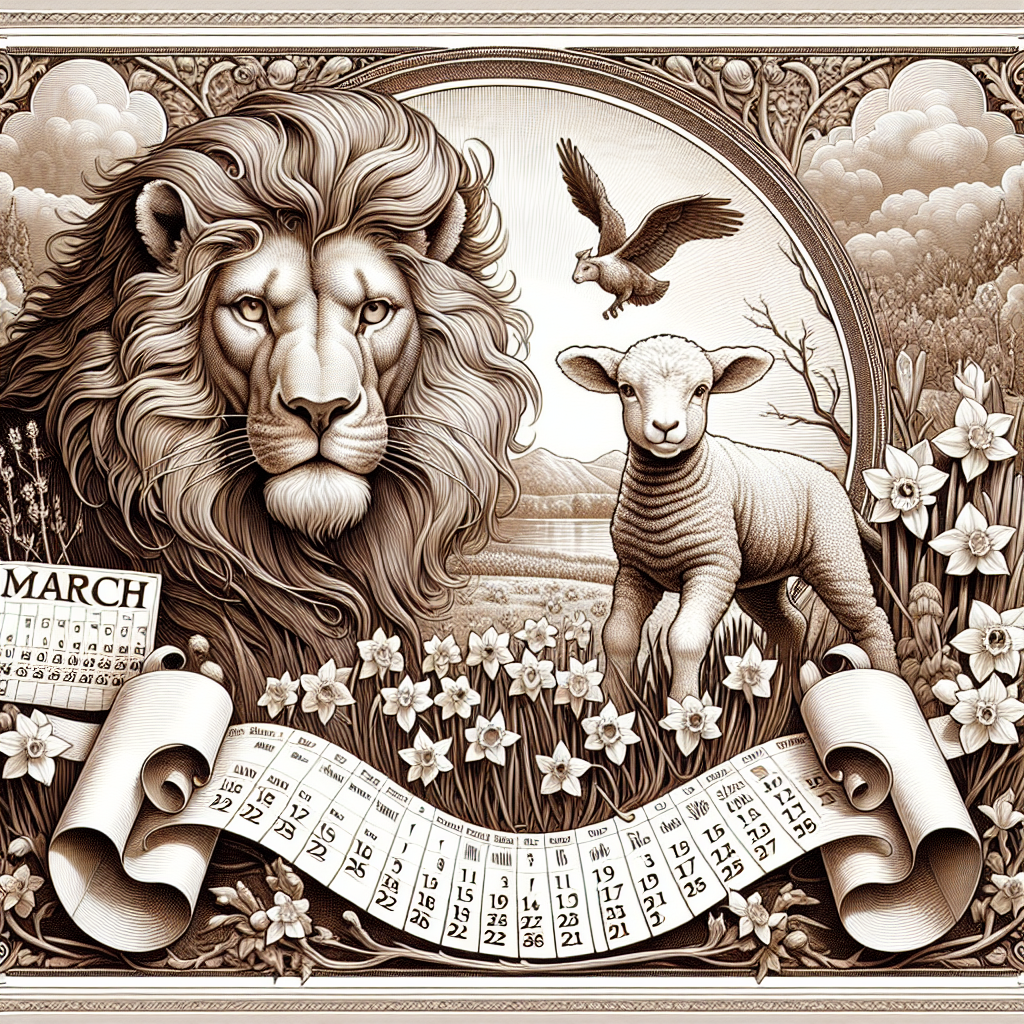

Unraveling the Proverb: Does March Really Come in Like a Lion and Go Out Like a Lamb?
As the calendar flips to March, an age-old saying comes to the forefront of public consciousness: “March comes in like a lion and goes out like a lamb.” For centuries, this proverb has been used to describe the weather patterns typical of this transitional month. But is there any substance to the claim? And where did this folklore originate?
The first recorded use of this phrase traces back to 1732, found in a collection of proverbs written by English author Thomas Fuller. It quickly gained popularity and was featured in farmers’ almanacs, which often served as a weather guide for rural communities. As agricultural societies began to rely more heavily on the rhythms of nature, sayings like this provided a framework for understanding and anticipating the weather.
Some scholars propose that the saying may have connections to astronomy, linking the positions of the constellations Leo (representing the lion) and Aries (associated with the ram or lamb). At the beginning of March, Leo can be seen on the eastern horizon during sunsets, while Aries dominates the western horizon as the month progresses. This celestial relationship offers a poetic backdrop to the proverb, although definitive proof remains elusive.
Meteorologically, March is renowned as a month of transition, marking the shift from winter’s cold grip to spring’s impending warmth. In many regions, early March can bring powerful storm systems and uncharacteristically severe weather, often resulting in snowstorms and other winter phenomena. By the end of the month, milder temperatures and sunnier days typically settle in, creating a distinct contrast in the weather.
Yet, this behavior is not uniform year after year. Each March weathers its own unique pattern, leaving some residents surprised by unexpected frost or lingering chill. The proverb implies a natural balance: if the month begins with force and fury like a lion, it should mellow out by the end, resembling a gentle lamb. However, nature doesn’t always conform to such expectations.
This notion resonates with other weather-related folklore, which often masquerades as long-range forecasting. For example, the woolly bear caterpillar is said to predict winter severity based on its coloration. While many of these sayings lack scientific validation, they can occasionally provide good insight for short-term weather prediction. Common adages like “Red sky at night, sailor’s delight; red sky in the morning, sailor’s warning” have garnered acceptance for their accuracy.
In addition to the lion-and-lamb saying, many other pieces of March-related folklore exist. The Farmer’s Almanac cites numerous sayings, such as “A dry March and a wet May; fill barns and bays with corn and hay,” and “As it rains in March, so it rains in June.” These sayings reflect age-old wisdom gathered through generations of observing nature’s cycles.
As communities prepare for the unpredictability of March, the impacts of climate change loom large. The intensifying effects of a warming planet may lead to greater variability in weather patterns within this traditionally capricious month. Unpredictable storms, earlier warm temperatures, or lingering winter blasts can all be expected to leave their mark.
Understanding the origins and nuances of the lion-and-lamb proverb serves a significant purpose in today’s climate. It encourages a dialogue about humanity’s role in observing and adapting to the world around us. Acknowledging that the patterns of nature can be both predictable and erratic may inform how cities and communities approach disaster preparedness, agricultural planning, and resource management.
In the coming weeks, as citizens look to the skies and anticipate the fluctuations of early spring, they will do so with a renewed sense of awareness. As meteorologists and climate scientists unravel the complexities of our evolving atmosphere, the wisdom of old adages may well serve as both a reminder and a challenge: to remain vigilant in observing nature, respectful of its whims, and prepared for its unpredictability.
Will March indeed usher in a lion’s roar or a lamb’s gentle bleat? As the month unfolds, residents across many regions await the weather with bated breath, hopeful for a gentle transition into spring.
